
The basement is full, your parents’ flat needs clearing, or your wardrobe holds clothes you haven’t worn for years. The weeks before Christmas are a good time to sell, because many people are now looking for gifts and nice things for the holidays. I have been selling vintage online for more than a year, now as a registered dealer on Etsy and eBay. I sell from Germany, so the details below apply there. Here is my overview: which platform suits which item, and what does it cost you?
eBay: the widest reach
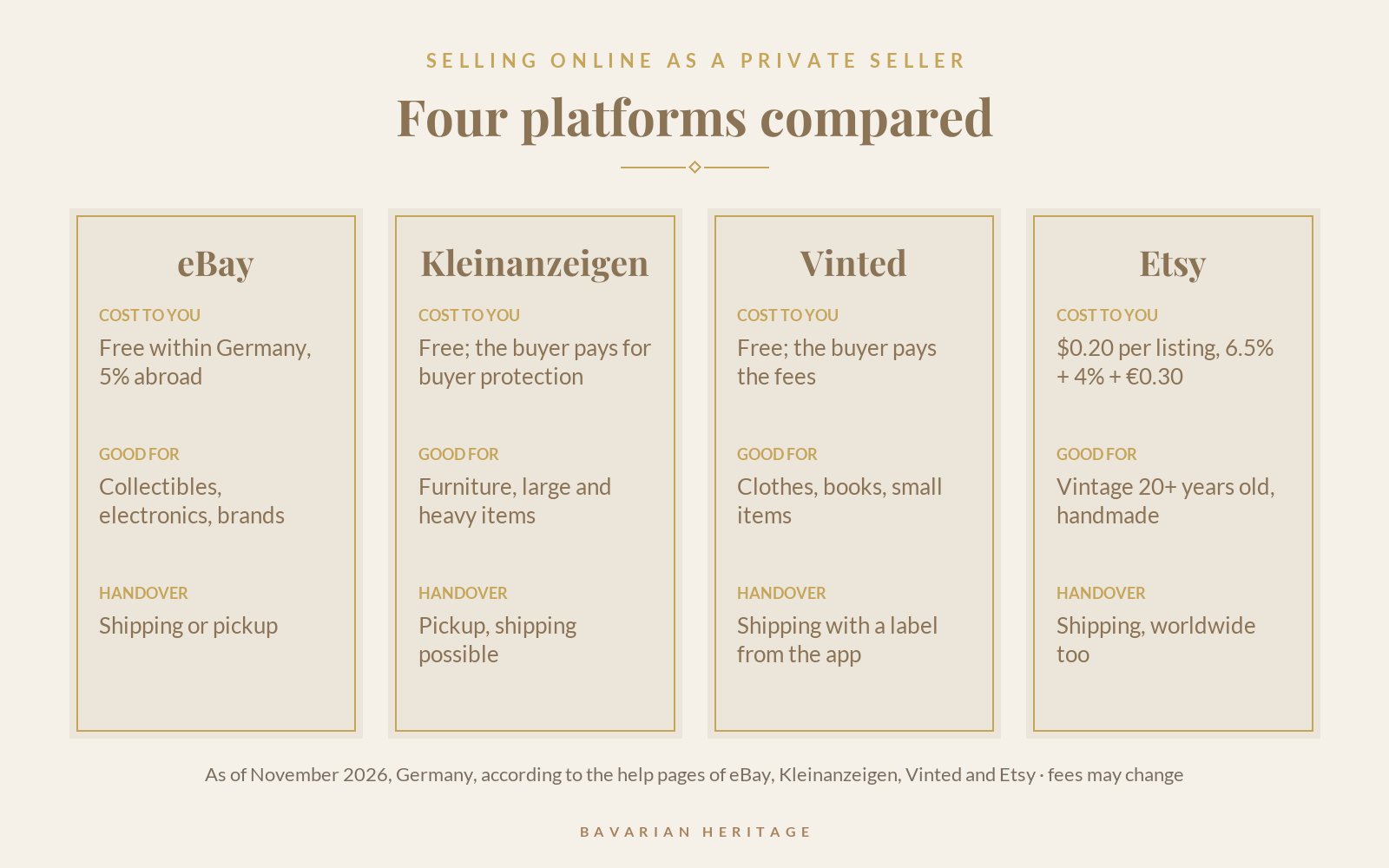
For private sellers based in Germany, selling on eBay within Germany is free: no final value fee and up to 320 listings a month without an insertion fee. You only pay for extras such as Gallery Plus (€0.75) and for sales abroad if you arrange the shipping yourself (5% of the total amount). eBay is worth it for collectibles, electronics and anything people search for specifically. If you don’t know what something is worth, an auction will show you what buyers are willing to pay.
Kleinanzeigen: local, no shipping needed
Kleinanzeigen is Germany’s largest classifieds site. A standard ad is free for private sellers, and there is no sales commission. It is ideal for furniture, lamps and anything heavy or fragile: the buyer collects and pays cash. If you ship, use the “Sicher bezahlen” secure payment service. It is free for you; the buyer pays €0.50 plus 4.5% of the price. Be careful with links to supposed payment pages outside the app, as this is a common scam.
Vinted: clothes and small things
On Vinted you sell without fees; the buyer pays for buyer protection and a service fee. The shipping label comes from the app. Clothes, shoes, bags, books and small home accessories sell best. Expect offers, because haggling is common on Vinted.
Etsy: only vintage and handmade
Etsy is not a marketplace for everything. It allows handmade items, craft supplies and vintage that is at least 20 years old. In return, buyers from all over the world come specifically for porcelain, postcards or music boxes and often pay more for good pieces. Etsy does cost private sellers money, though: $0.20 per listing, a 6.5% transaction fee on price and shipping, and 4% plus €0.30 for payment processing (rates for sellers in Germany). How a find becomes an Etsy listing is shown in From attic find to Etsy listing.
Taxes and obligations: when it gets serious
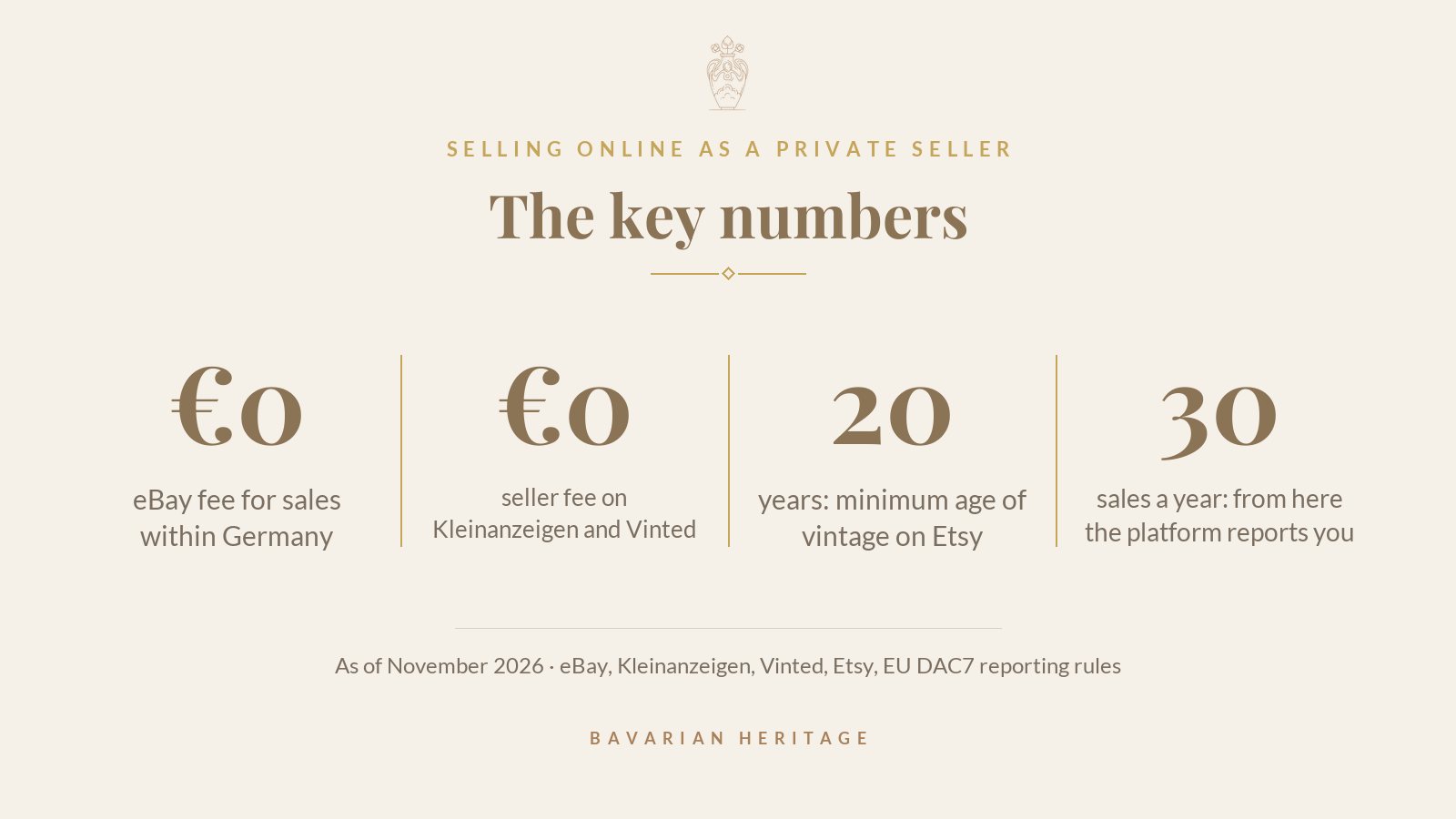
Since 2023, platforms across the EU have reported sellers to the tax authorities once they reach 30 sales or €2,000 in revenue in a year; in Germany the report goes to the Federal Central Tax Office. The count is per platform, and the report on its own is not a tax. In Germany, used items from your own household can usually be sold tax-free. Tax becomes due if you buy things, resell them at a profit within a year and these profits reach €1,000 or more in a year. Anyone who regularly buys in order to resell is trading commercially. Then you need to register a business and provide a legal notice, and you must grant a right of withdrawal. This is not tax advice; if in doubt, ask your tax office.
As a private seller in Germany you may exclude liability for defects, for example with “private sale, no warranty and no returns”. What you describe must still be accurate, and the exclusion does not protect you if you conceal a defect you know about.
Five tips from my everyday work
- Photograph in daylight against a calm background, including the underside with any maker’s mark or stamp.
- State the dimensions and show defects openly. It saves questions and trouble.
- Search eBay for sold items, not just for listed ones. That is how you find realistic prices.
- Before negotiating, decide on the lowest price you will accept.
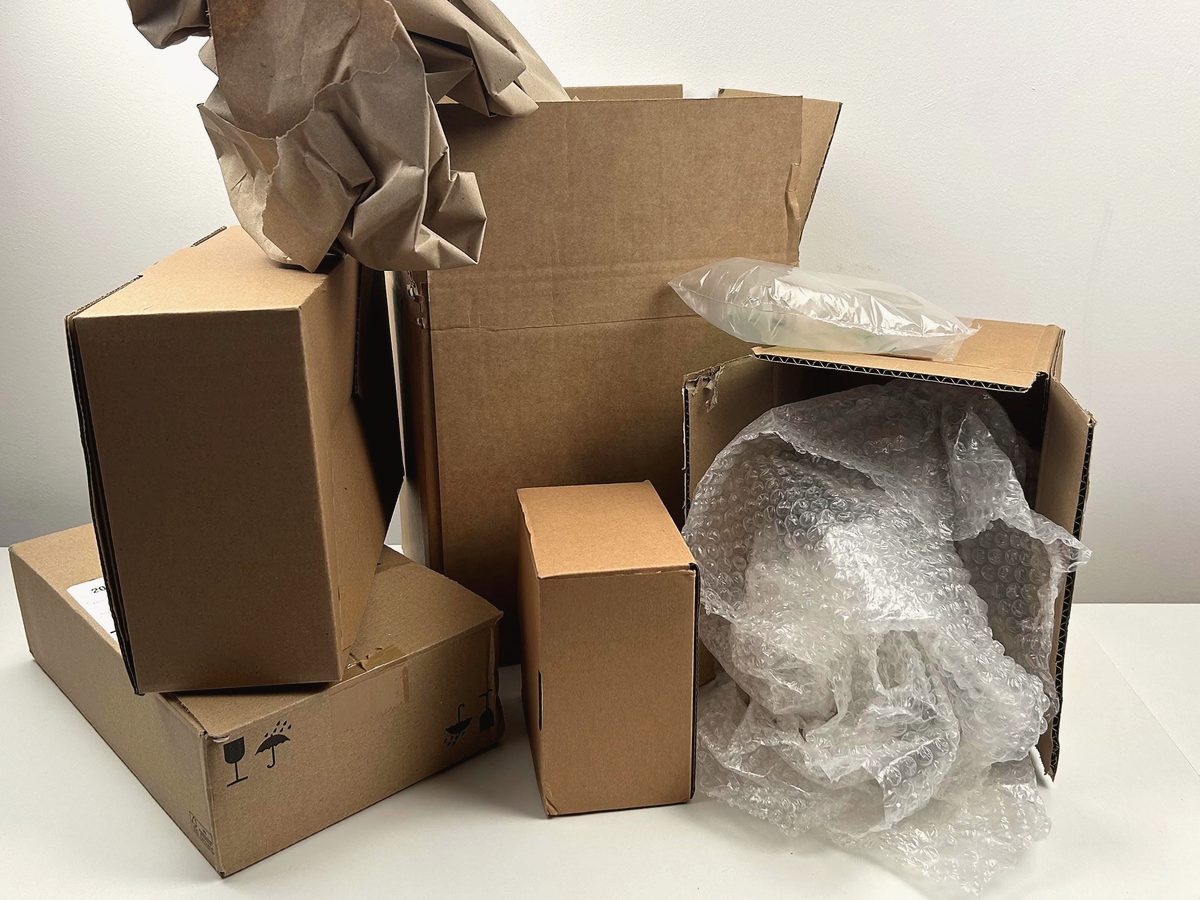
- Double-pack anything fragile and ship with tracking.

Too much for one Sunday at the desk?
With a whole estate or a large collection, selling item by item quickly becomes a full-time job. That is where I can help: I buy suitable pieces, handle estate liquidations and offer coaching if you want to start trading yourself. Just get in touch via the contact page.