Before a piece goes into my shop, it is cleaned, checked and repaired if necessary. On my work table for this are a magnifying glass, brushes, wax sticks, modelling tools, gloves and soft cloths. But the most important rule for caring for old things needs no tools at all: as little as possible, as gently as necessary.
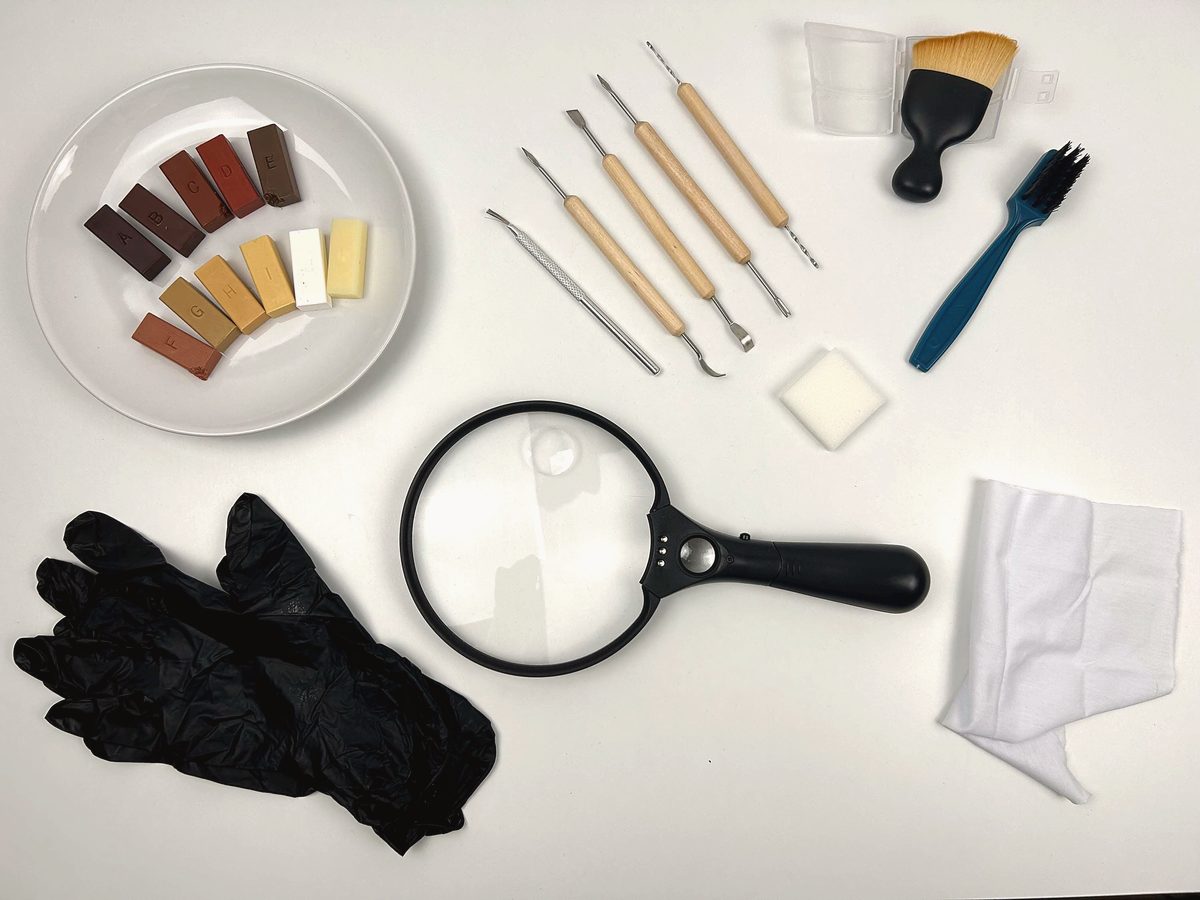
What that means for porcelain, metal, wood and paper is something I’ll show you with pieces from my shop. Always try any cleaning on an inconspicuous spot first.
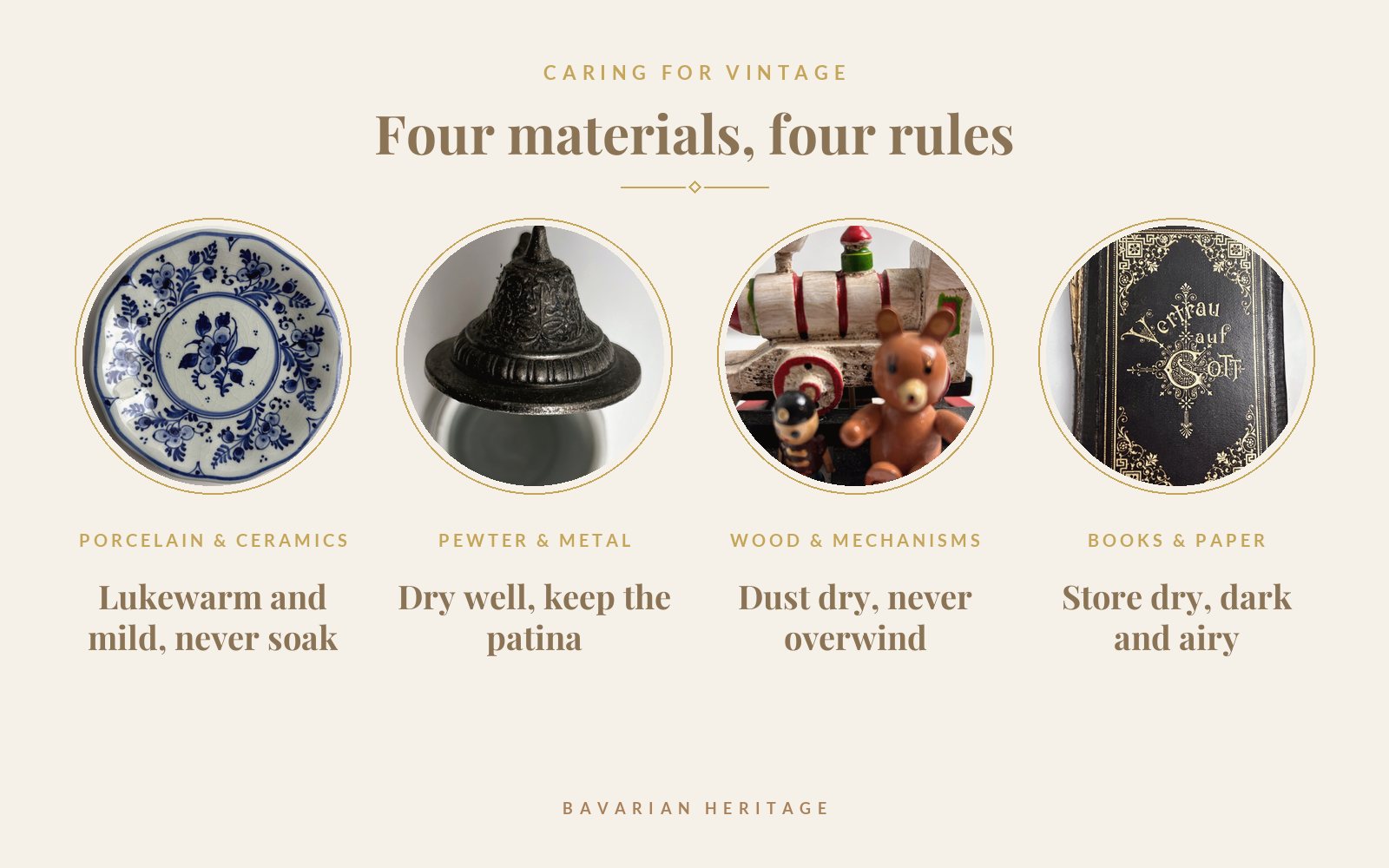
Porcelain and ceramics: lukewarm, mild, never soak
For porcelain and glazed ceramics, lukewarm water, a drop of mild washing-up liquid and a soft cloth are enough. The dishwasher is off limits for old pieces, especially those with hand painting, decals or gold rims.
Careful with crazing. Many old plates and vases have fine hairline cracks in the glaze, known as crazing. Water and dirt can seep into these cracks and leave discolouration. So only wipe such pieces with a damp cloth and never soak them. On the back of this small wall plate you can see the network of fine lines clearly.
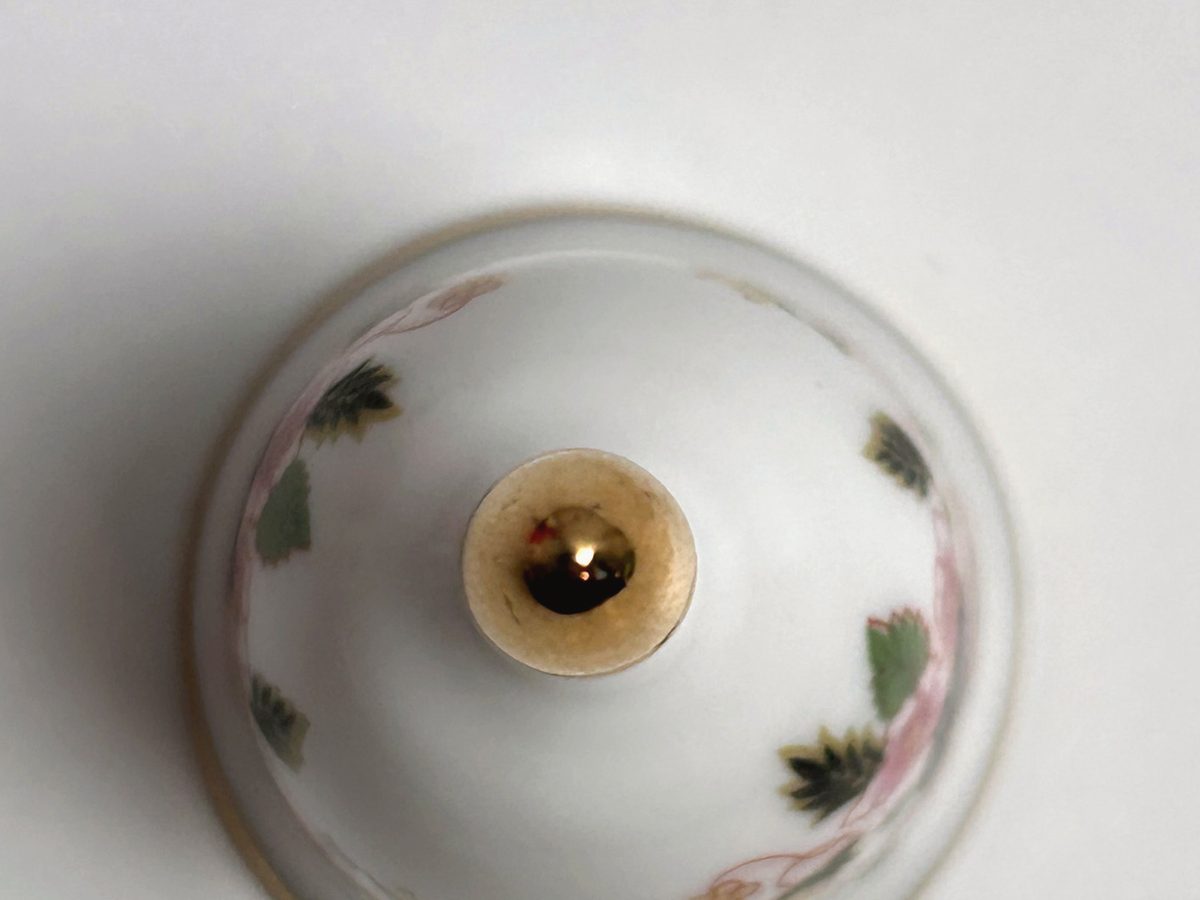
Gold wears off. Gold rims and gilded knobs are delicate. On the porcelain bell from Portugal, the gold on the knob is already slightly worn. Abrasive cleaners, hard sponges and the dishwasher speed this up.
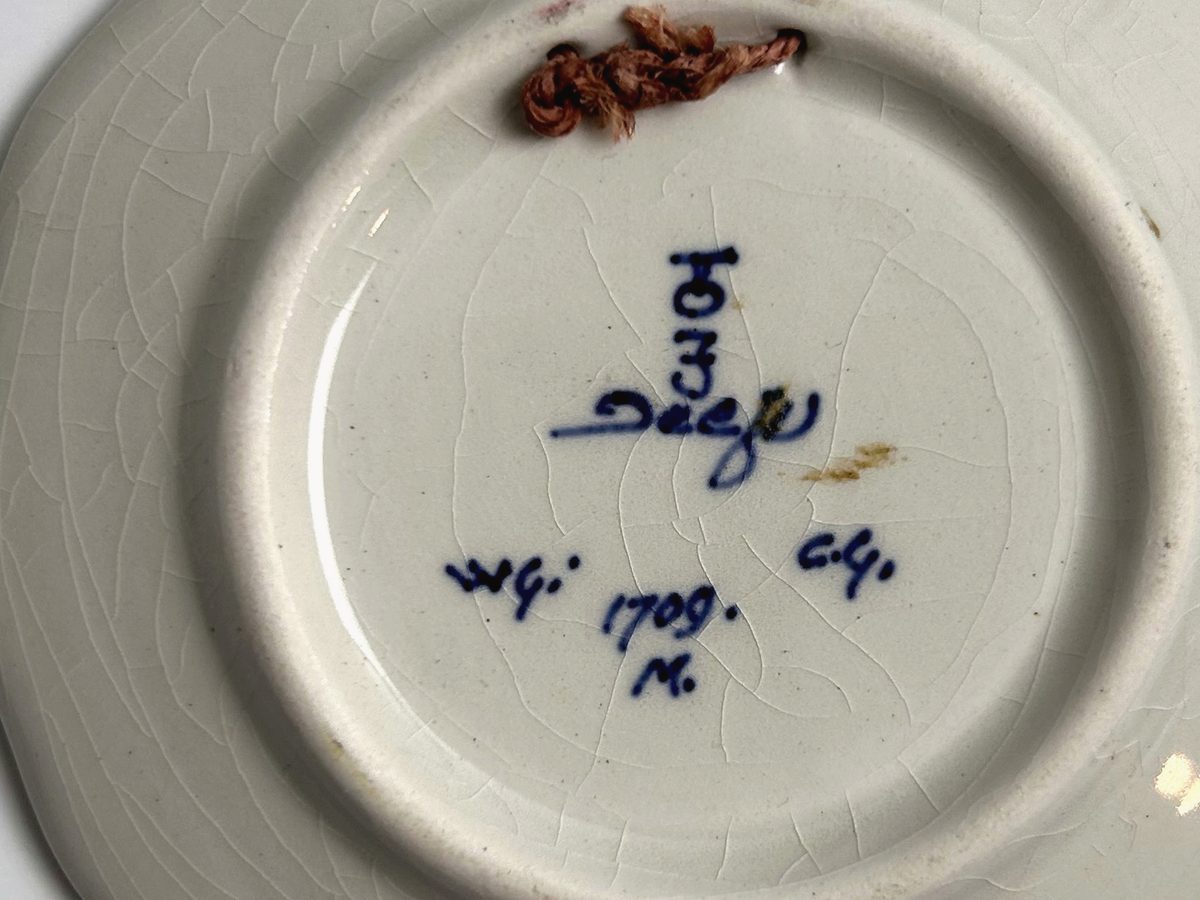
Not every spot is dirt. Dark specks on an unglazed foot ring or firing marks on the back often come from the kiln. They belong to the piece and cannot be cleaned away. Trying to scrub them off is more likely to damage the surface.
Pewter and metal: dry well, keep the patina
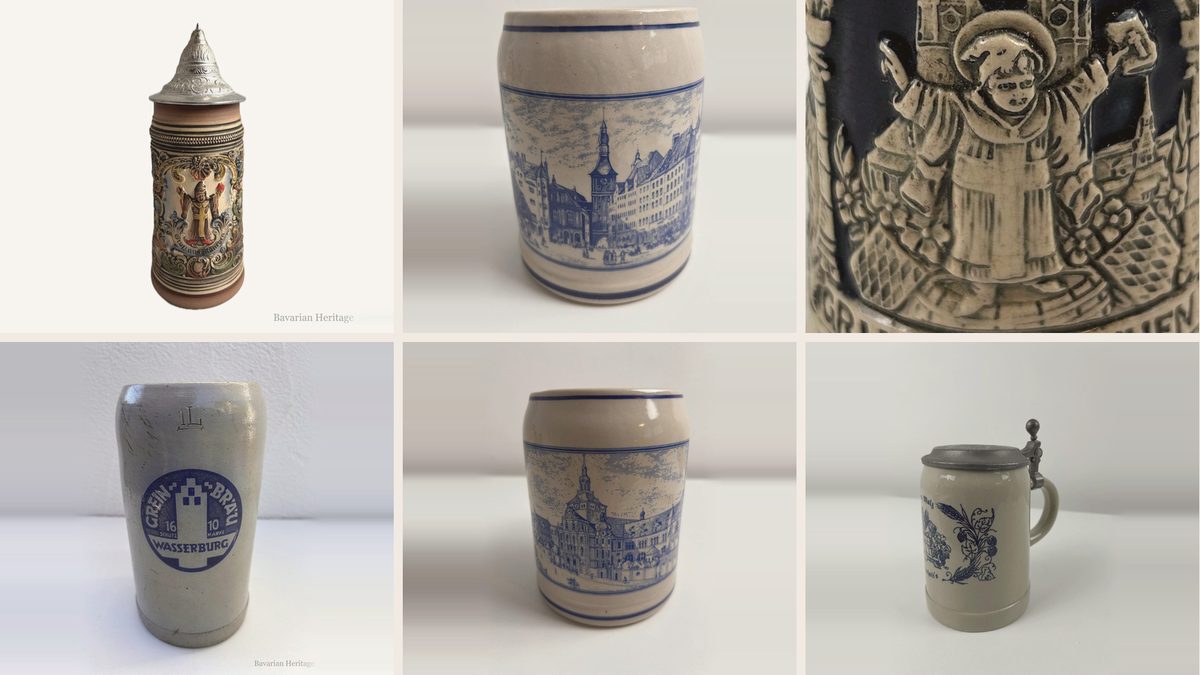
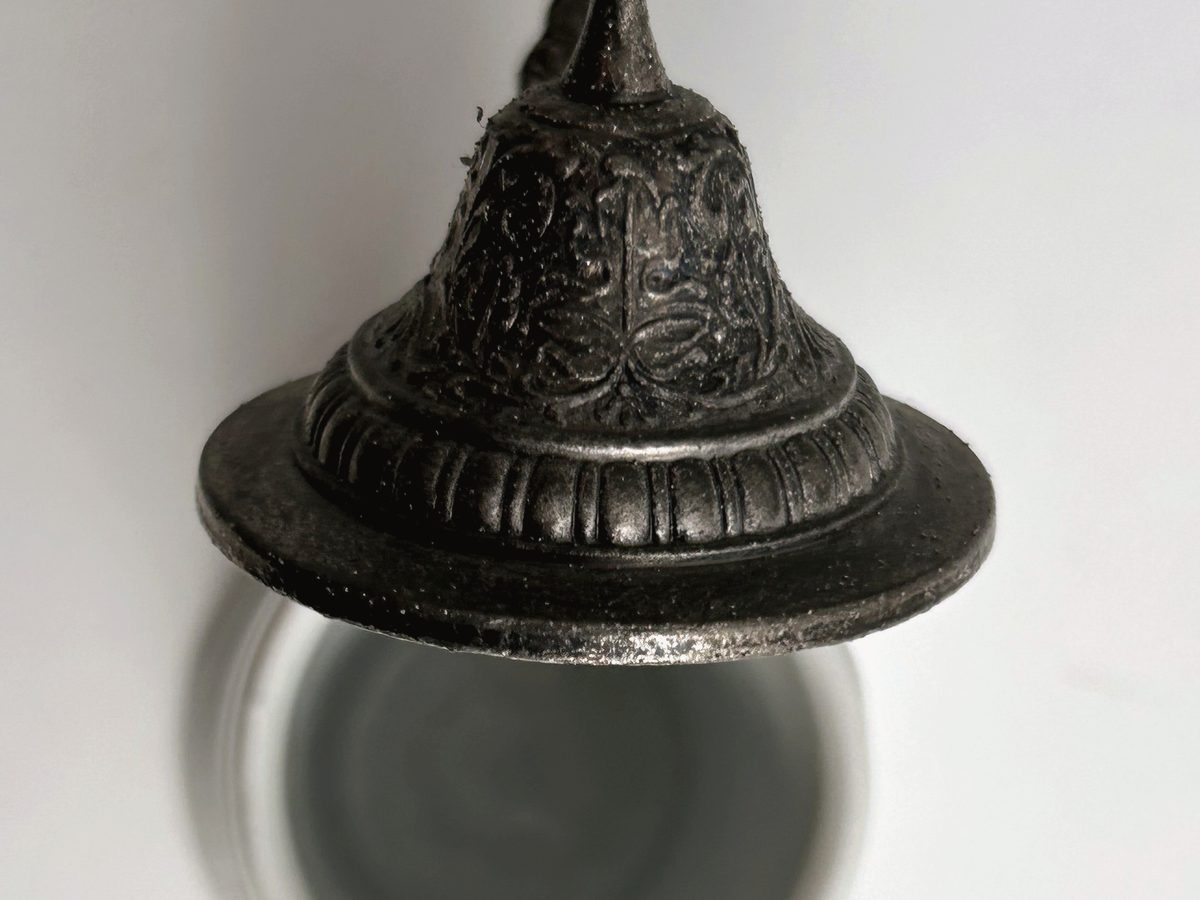
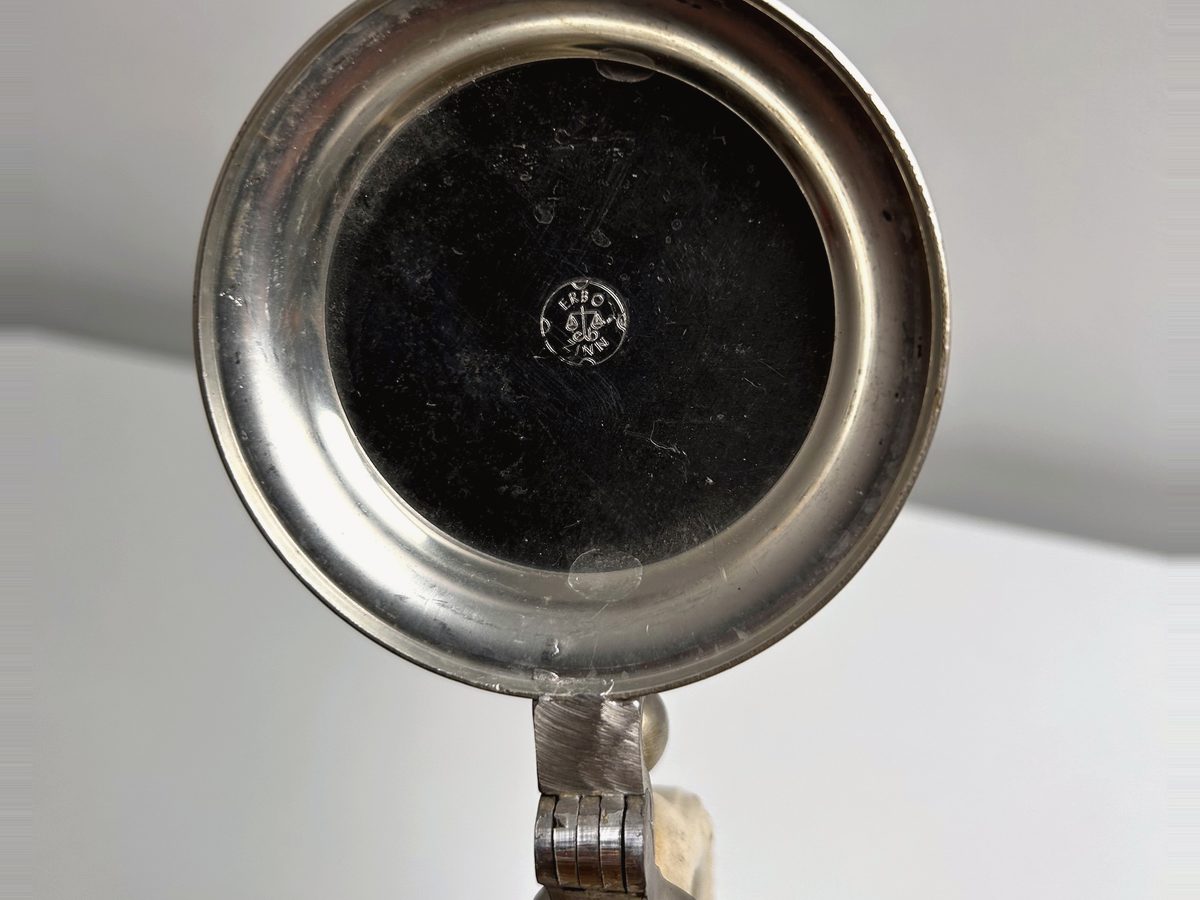
Pewter lids on beer steins darken over time. This patina belongs to them and protects the surface. I don’t polish it away; I only wipe pewter dry or with a slightly damp cloth. Drying is what matters: water spots and scratches on the inside of a lid, as here on the Marzi & Remy stein, often come from moisture that is left standing too long.
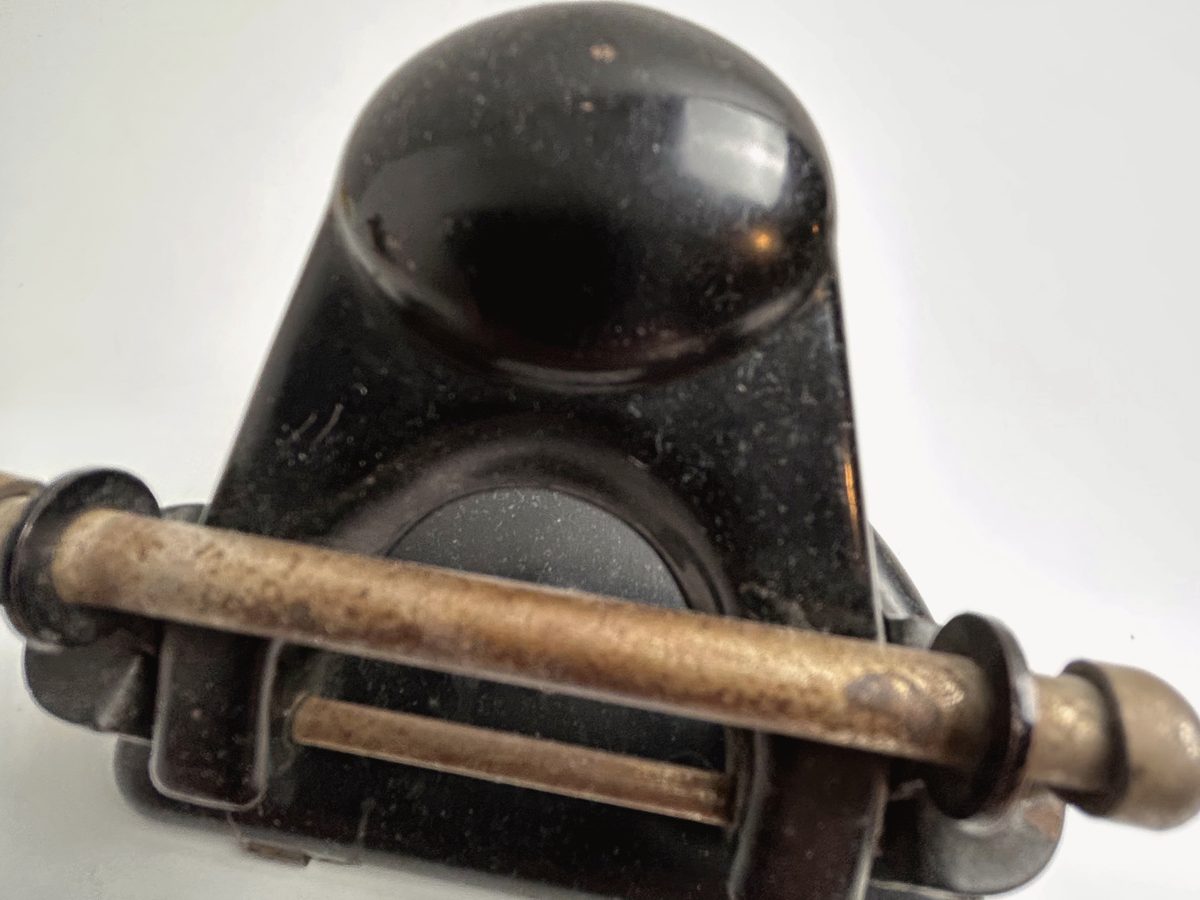
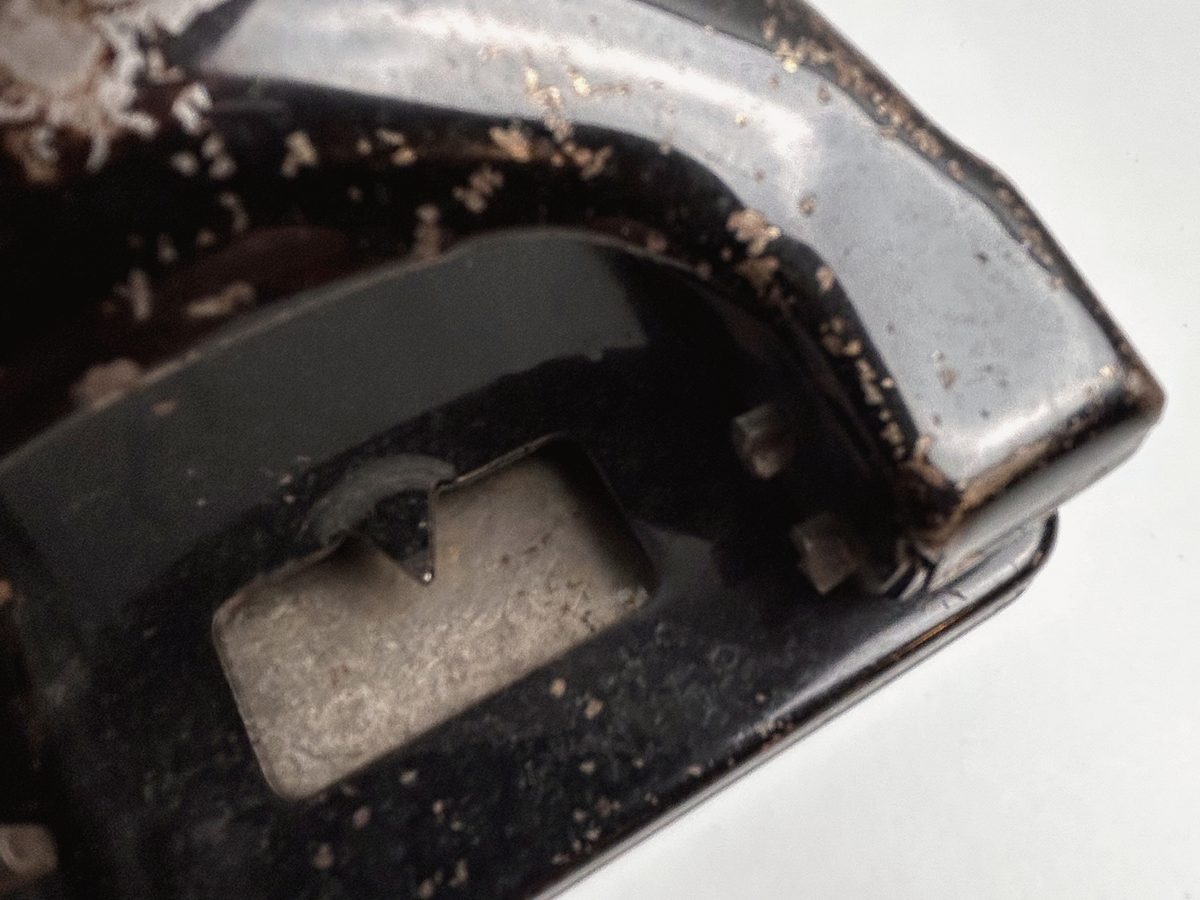
Old sheet-steel hole punches show what moisture does: surface rust on the bars, chipped paint at the edges. Such pieces belong in a dry place. I don’t remove surface rust with a wire brush, because the remaining paint would disappear with it.
Wood and mechanisms: dust dry, never overwind
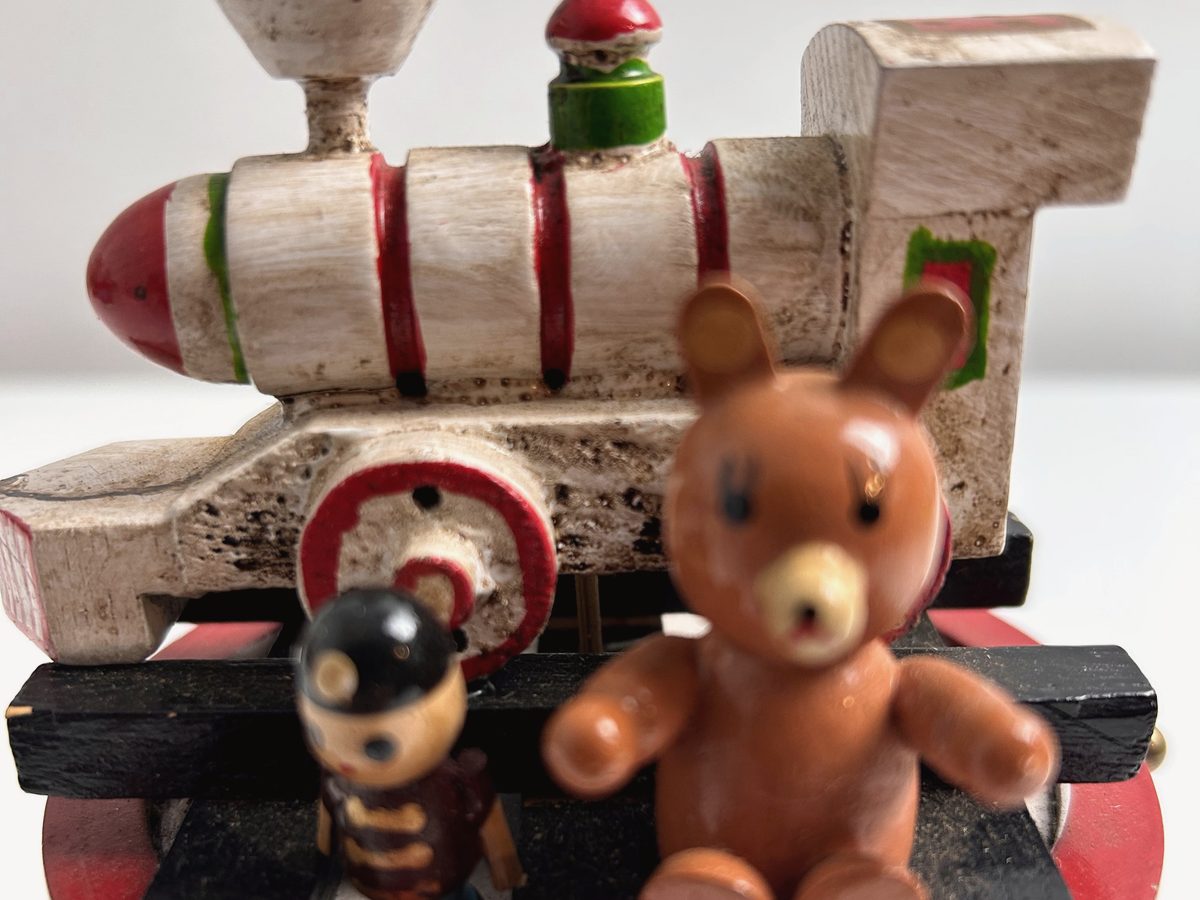
Painted wood, for example on music boxes, is best dusted dry with a soft brush. Water can loosen the paint. The drum music box with the wooden locomotive shows how delicate such painting is: small chips and dark spots on the white.
With music boxes and old alarm clocks, the rule is: wind carefully and never overwind. When you feel resistance, the spring is fully wound. Damp rooms such as bathrooms or cellars are not suitable for mechanisms.
Books and paper: dry, dark, airy
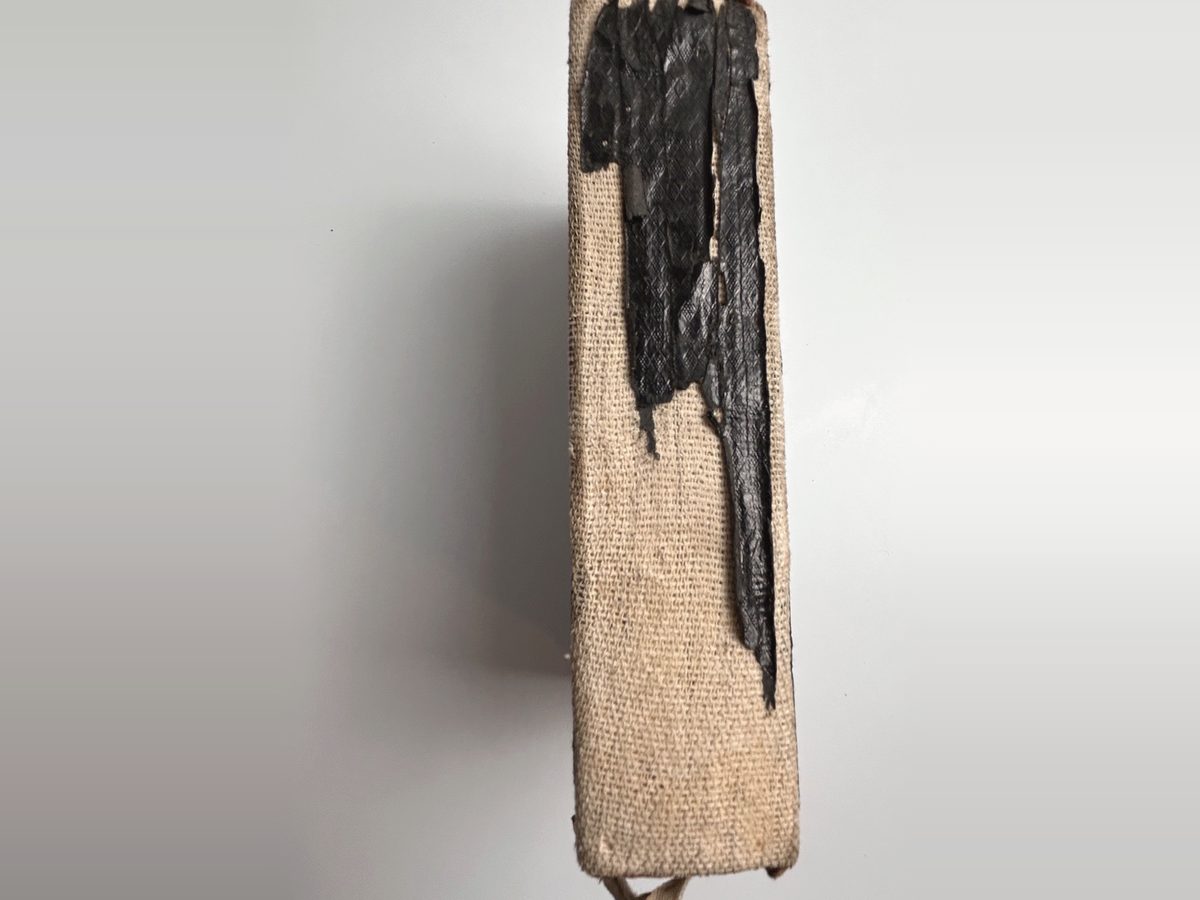
Old books like it dry, at an even temperature and out of direct sunlight, which fades covers and spines. Plastic bags are not a good idea, because moisture can collect inside them. Heavy volumes are better lying flat than leaning at an angle on the shelf. On this old Bible, the covering on the spine has already partly come loose. A spine like that needs support when the book is opened, not more strain.
Repair or leave it?
Small repairs are possible, such as a broken handle. How that works is shown in my post When the handle breaks: Repairing vintage ceramics yourself. The only important thing is that a repair belongs in every description. For my Delft-style tiles, for example, the description states explicitly that one tile was broken at a corner and glued.
Everything else an old piece carries in the way of traces is part of its story. Good care means preserving that story, not scrubbing it away.
Pieces that are already cared for
Every piece in my shop is cleaned and checked before it is shipped. In the product overview and in the Bavarian Heritage Etsy shop you will find porcelain, steins, music boxes and books ready for a new home.