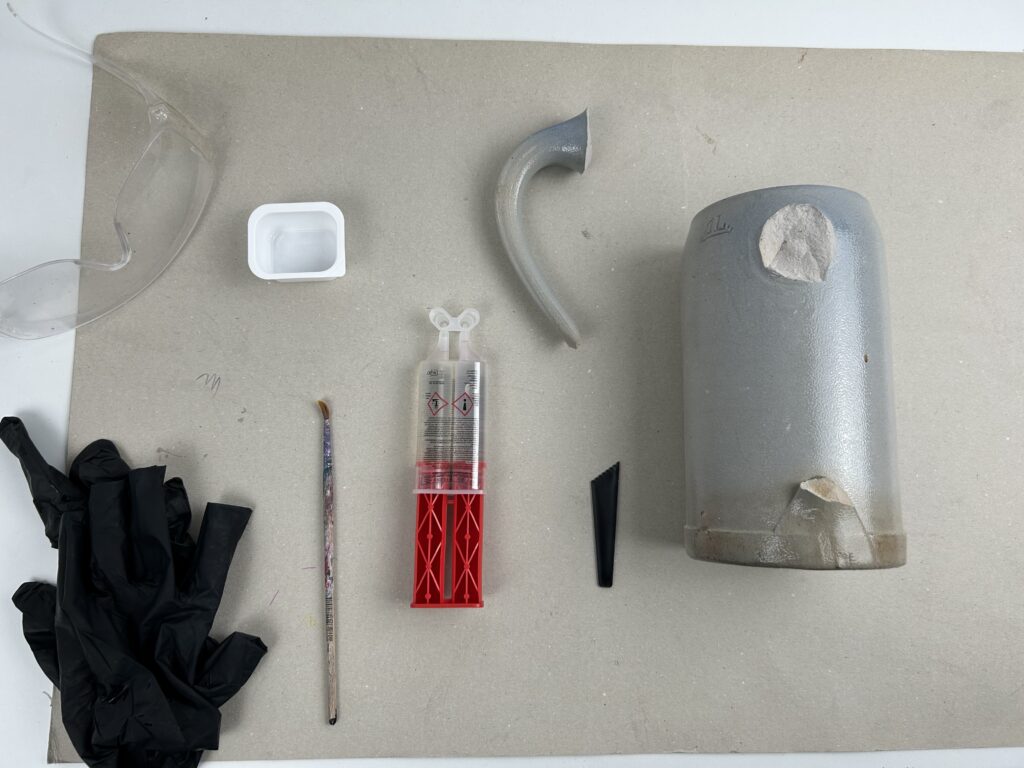
A broken handle does not have to be the end of a beautiful piece. Old beer steins in particular have often survived decades, so a careful repair is worthwhile. Recently, a grey-glazed stoneware stein landed on my work table: the solid handle had broken off cleanly at the top and bottom. A classic case for bonding with two-component adhesive.
Here I’ll show you how I go about it and what really matters.
Preparation makes the difference
Before a single drop of adhesive is used, everything is laid out. In the photo above you can see my equipment for this repair:
- Two-component epoxy adhesive, recognisable by the double cartridge
- Disposable gloves, because epoxy resin is not kind to skin
- Safety glasses
- Fine brush for precise application
- Plastic spatula for mixing and spreading
- Small mixing dish
- Clean base made of cardboard
The broken surfaces must be completely clean, dry and free of grease. Old adhesive residue or dust prevents a stable bond. I carefully clean both surfaces and let them dry completely.
Step by step
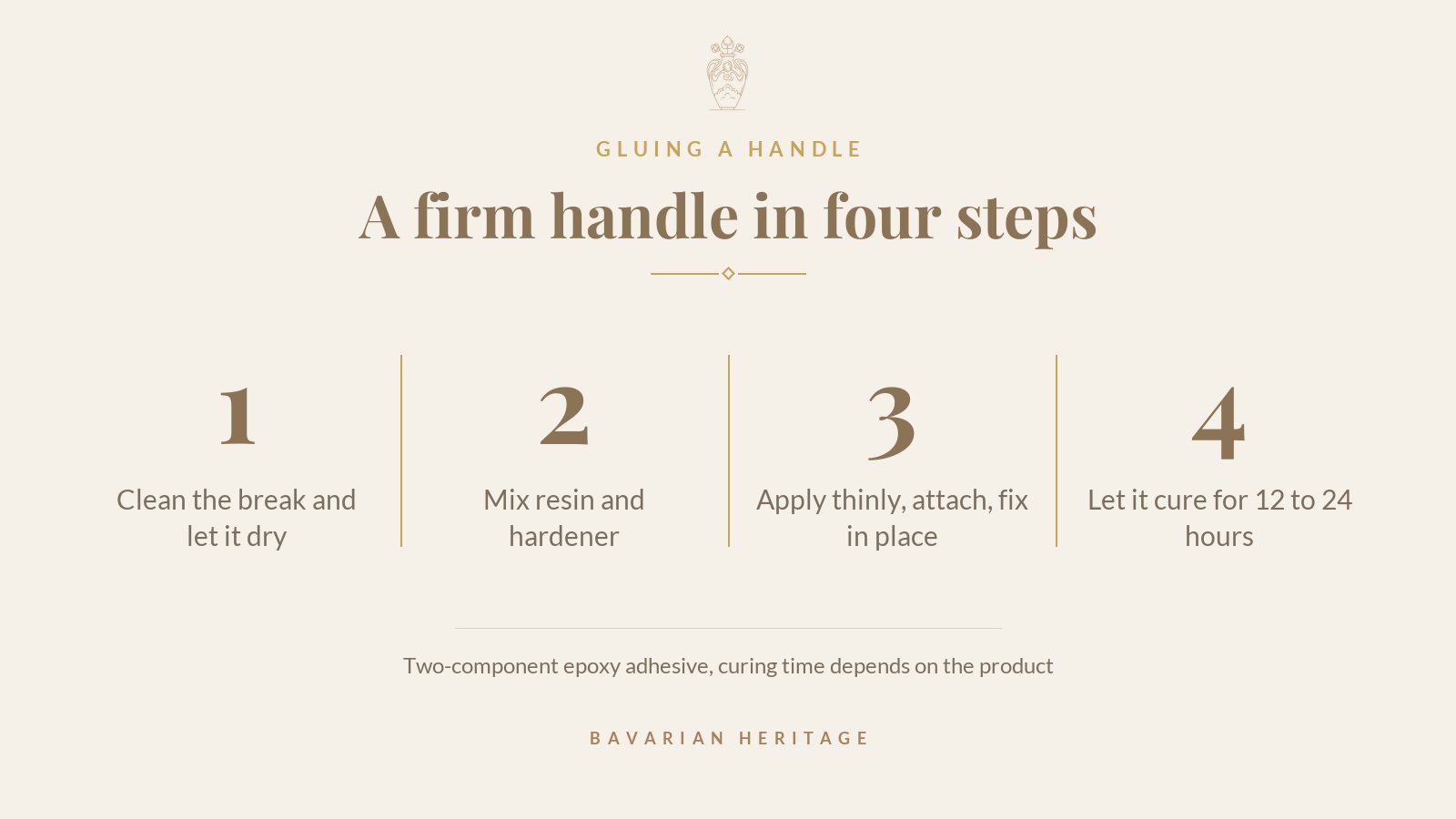
1. Clean the break. Both surfaces, on the stein and on the handle, must be free of dust, grease and old adhesive.
2. Mix the adhesive. Resin and hardener are mixed in the specified ratio, usually 1:1. Depending on the product, the working time is only a few minutes. So the rule is: lay everything out first, then mix.
3. Apply thinly and fix in place. With the brush I apply a thin layer to both broken surfaces. Less is more: too much adhesive squeezes out and leaves marks. Then I position the handle precisely and hold it in place for a few seconds. On this stein its own weight was enough afterwards; with other pieces, tape or makeshift supports help.
4. Let it cure. Full curing takes 12 to 24 hours depending on the adhesive. During this time the piece is not moved or put under strain.
Honestly: what a bond can and cannot do
A glued joint does not reach the original strength of the material. Repaired steins make wonderful decorative pieces, vases or collector’s items. For daily use with hot drinks I would no longer recommend them, and the dishwasher is off limits.
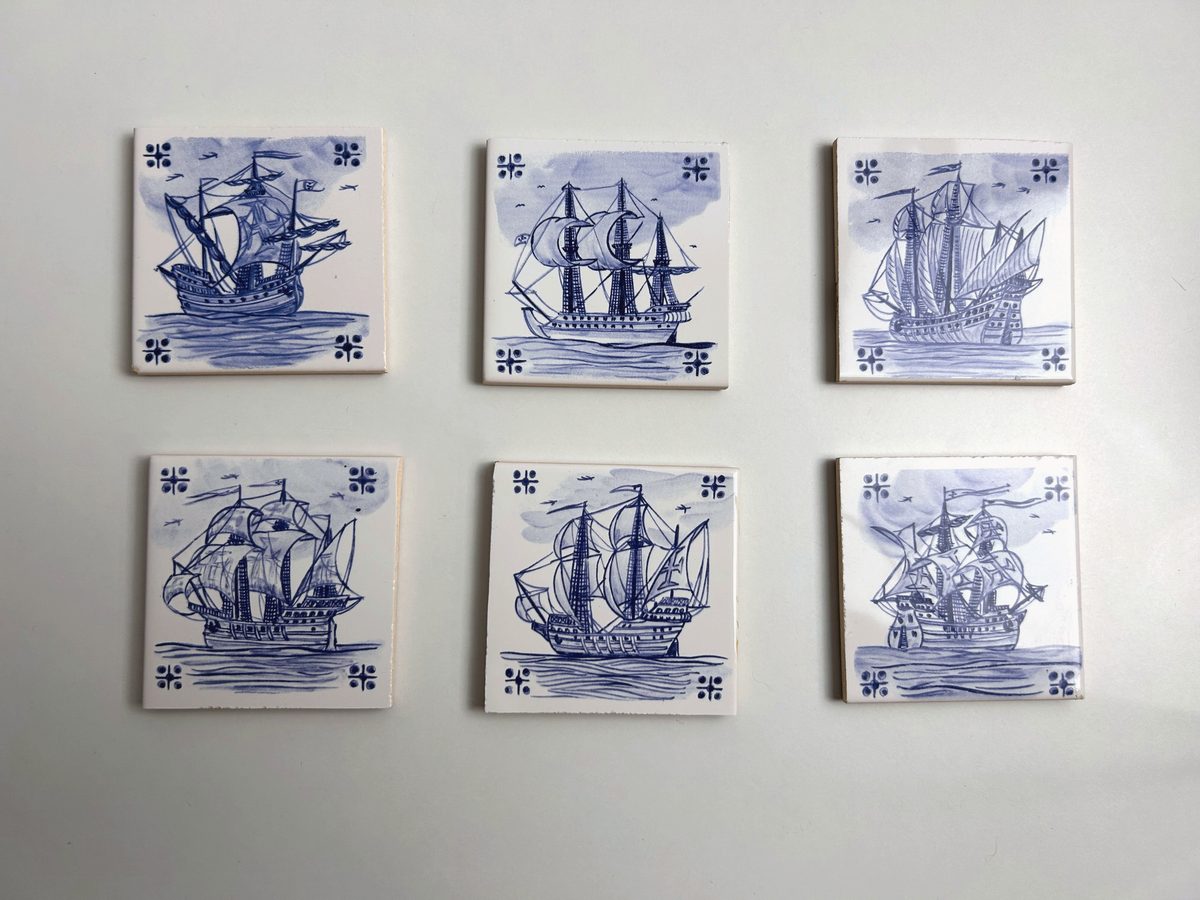
Transparency is what matters. When I offer repaired pieces, it is stated clearly in the description. For my six Delft-style tiles, for example, it says explicitly that one of them was broken at a corner and glued, and that the fine glue line remains visible. Collectors appreciate this honesty. A restored piece with a story is often worth more than none at all.
Preserve instead of throwing away
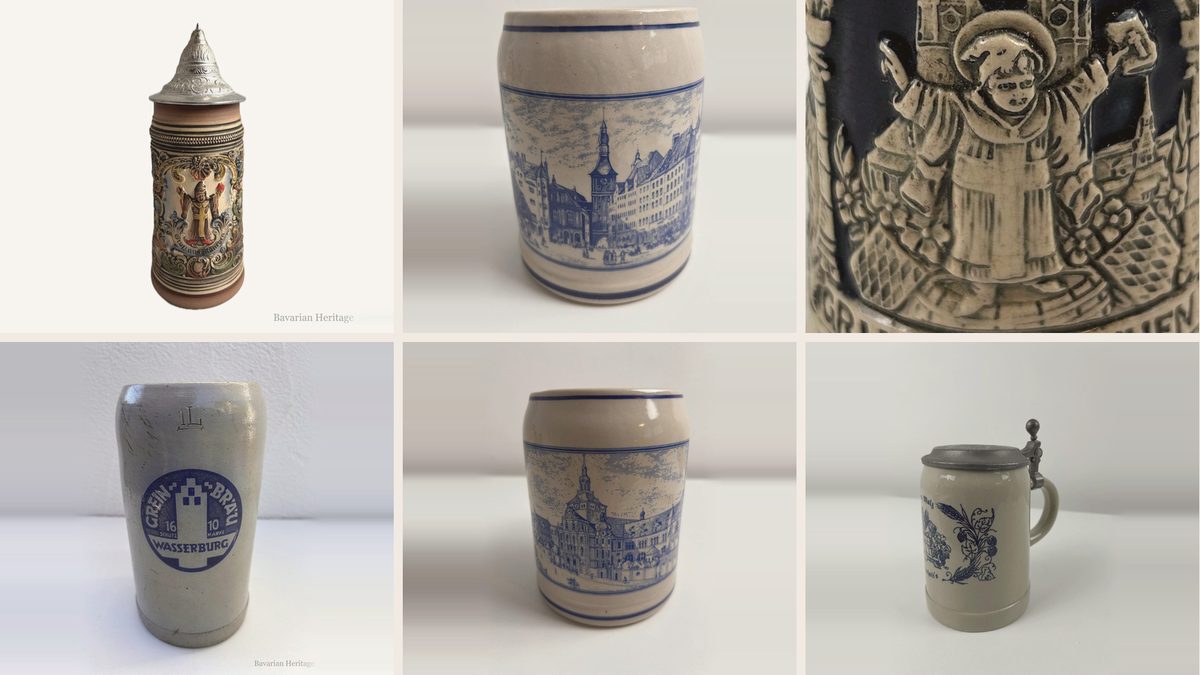
Every repair is a small step against the throwaway mentality. This stoneware stein with its grey glaze and impressed capacity mark already has many years behind it. Keeping it instead of throwing it away feels right.
How to care for ceramics, pewter and other materials in everyday life so that breakage doesn’t happen in the first place is explained in my post How to care for vintage items. And if you would rather find a piece that is already intact: you’ll find steins and ceramics in the product overview and in the Bavarian Heritage Etsy shop.