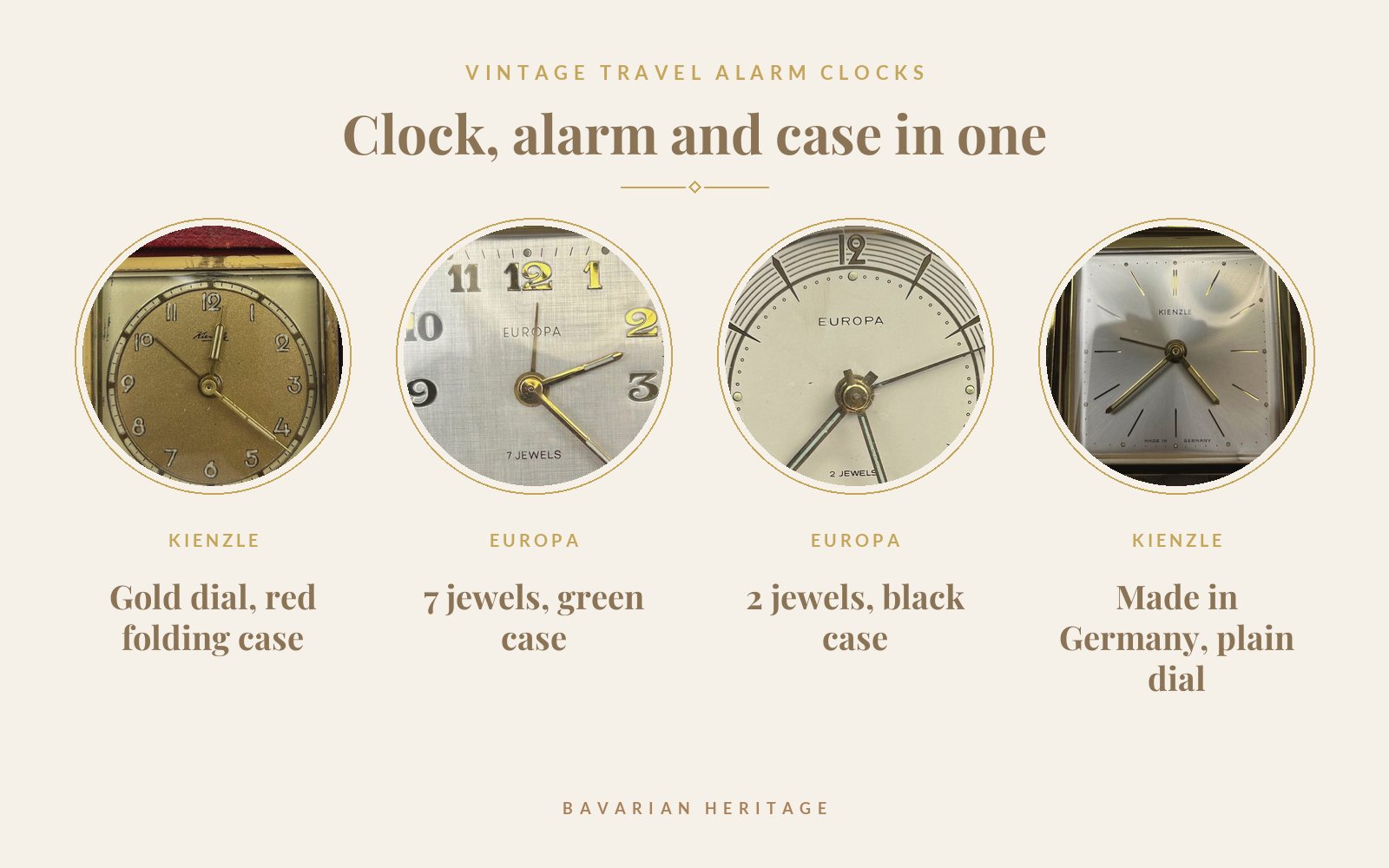
A travel alarm clock is a clock, an alarm and a protective case in one. Folded shut, it fits into any suitcase; opened, it stands on the bedside table. There are currently several of these little clocks in my shop, by Kienzle and Europa, in red, green, brown and black cases. I’ll use them to show how they are built and what matters with an old travel alarm clock.
The principle: a clock in a folding case
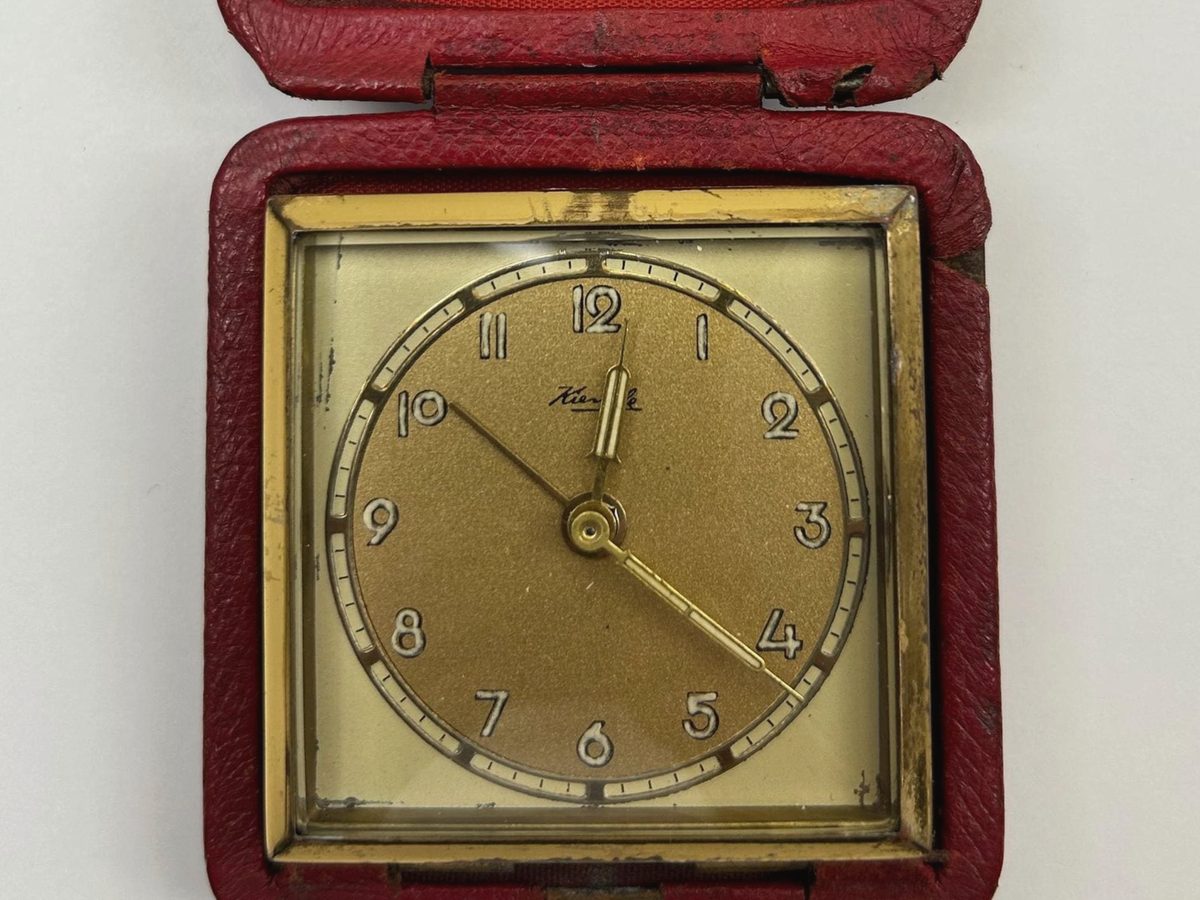
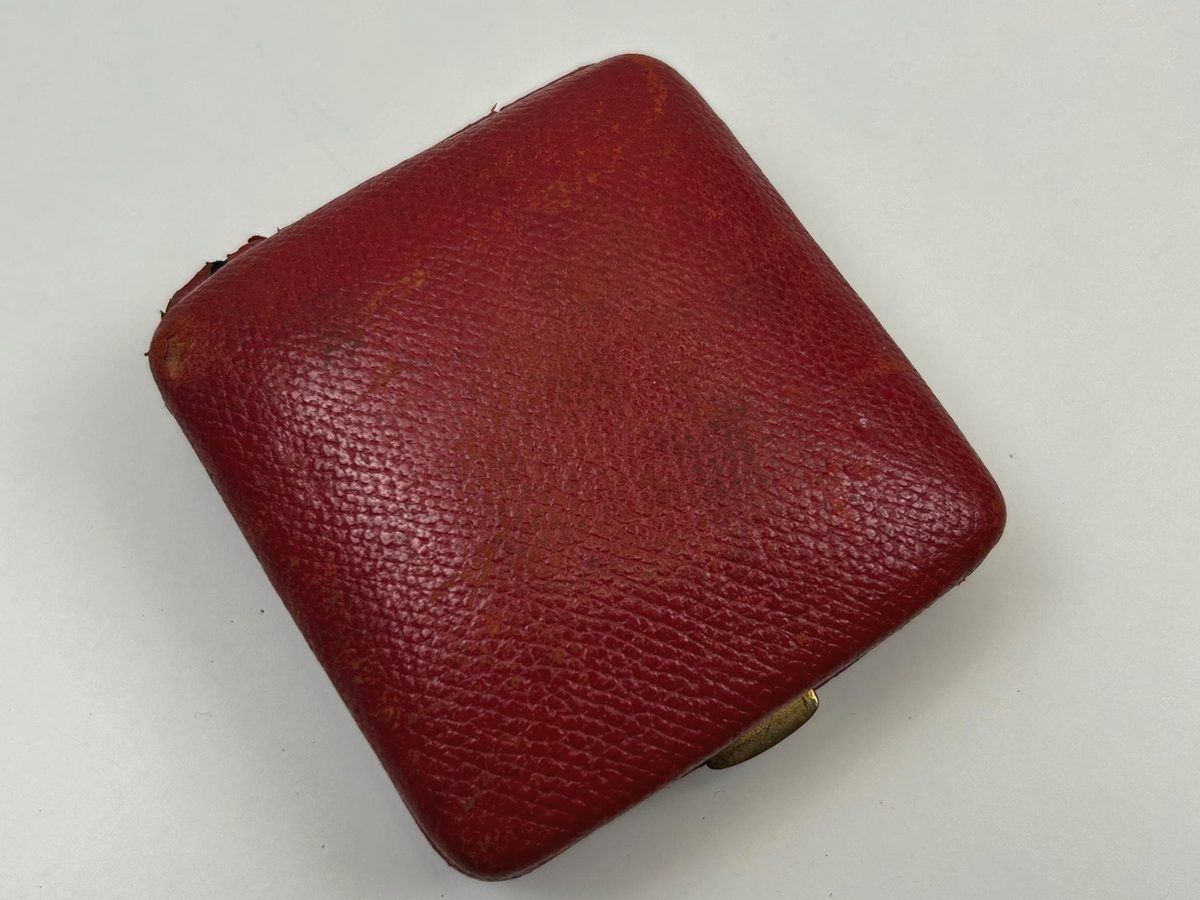
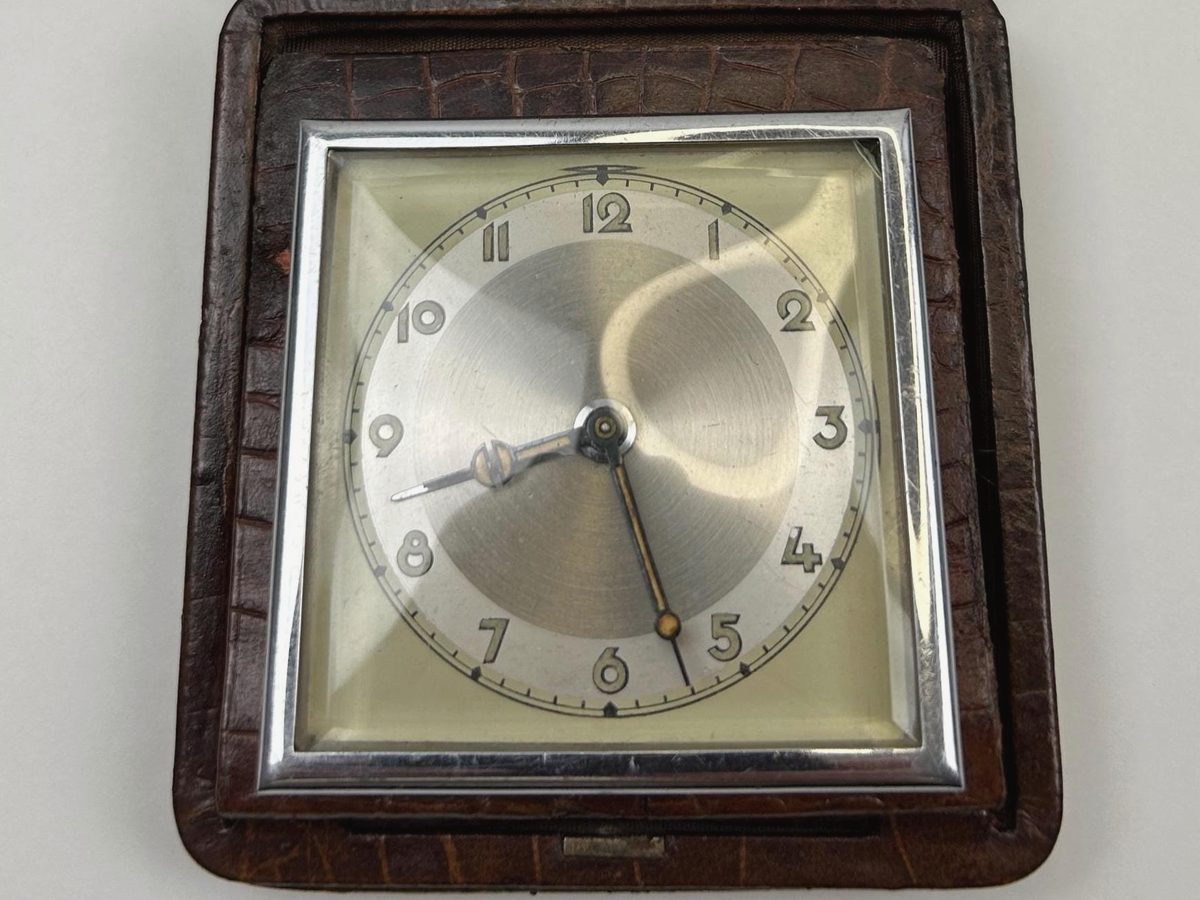
In all the clocks here, the movement sits in a case with a lid. Closed, it protects the glass and hands; opened, the lid becomes a stand. The Kienzle clock’s case is covered in red on the outside and lined with red fabric inside; on the clock without a maker’s name, the brown covering is embossed with a crocodile pattern.
 View on Etsy ↗
 View on Etsy ↗
 View on Etsy ↗
Two German names: Kienzle and Europa
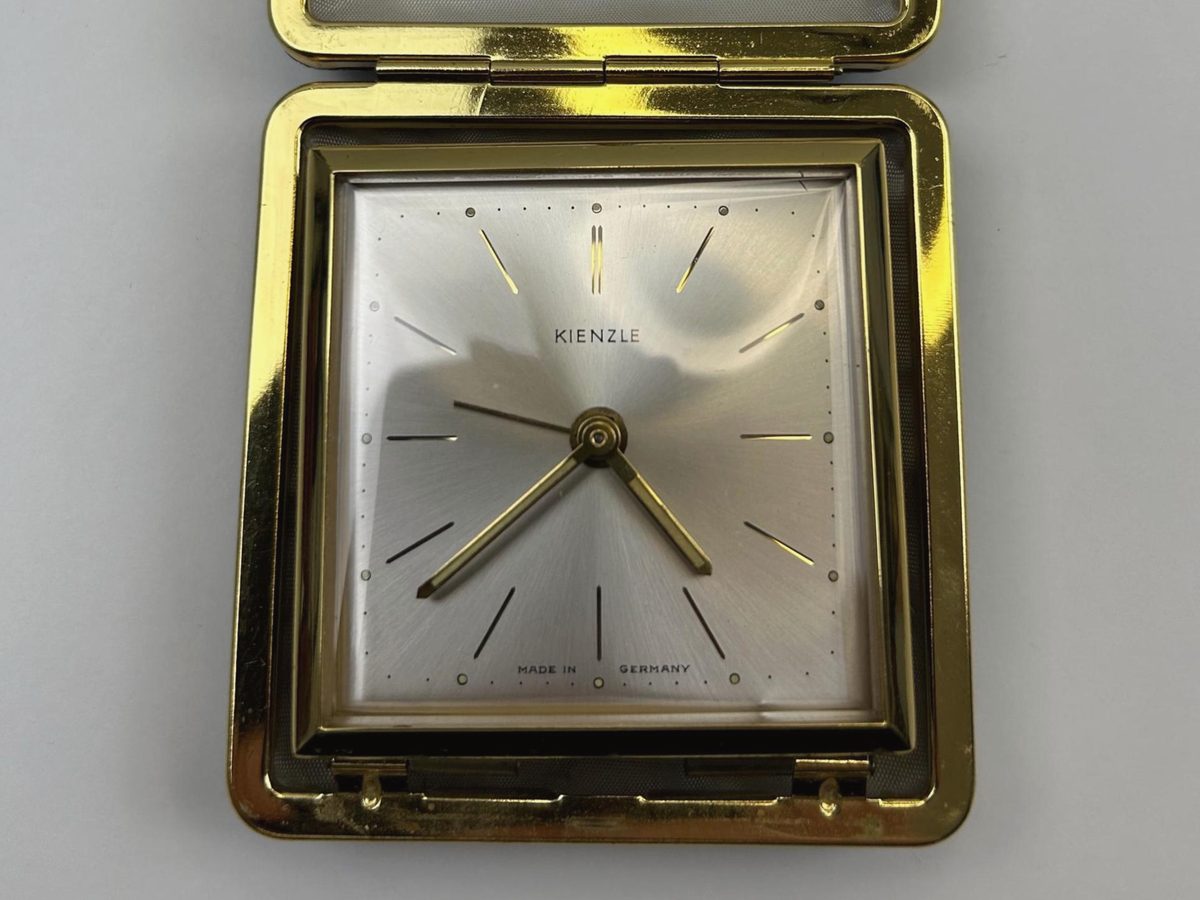
Kienzle from Schwenningen was one of the major German clock makers. There are two Kienzle travel alarm clocks in my shop: one with a gold-coloured dial, Arabic numerals and a flowing script logo in the red case; the other with a plain silver dial, batons instead of numerals and the words “Made in Germany”. I date both to the 1950s.
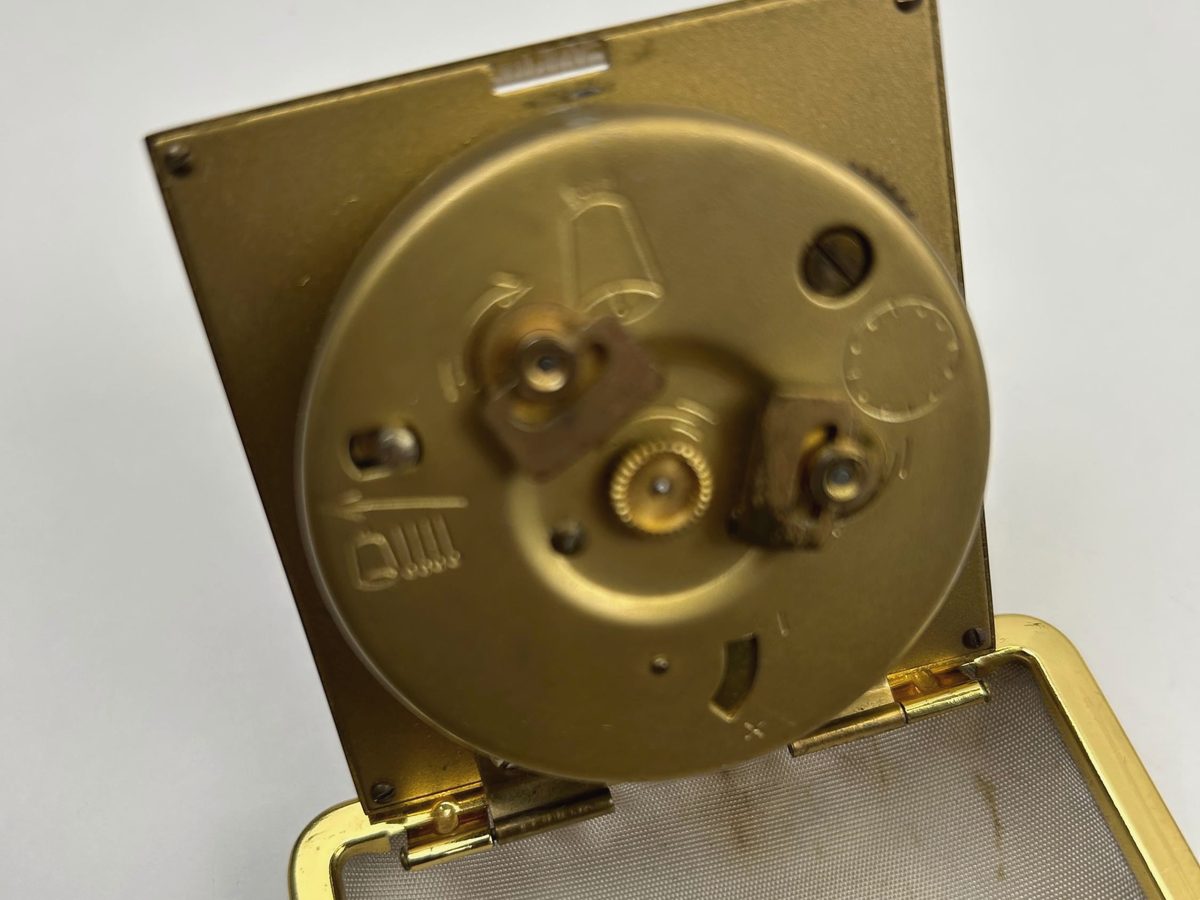
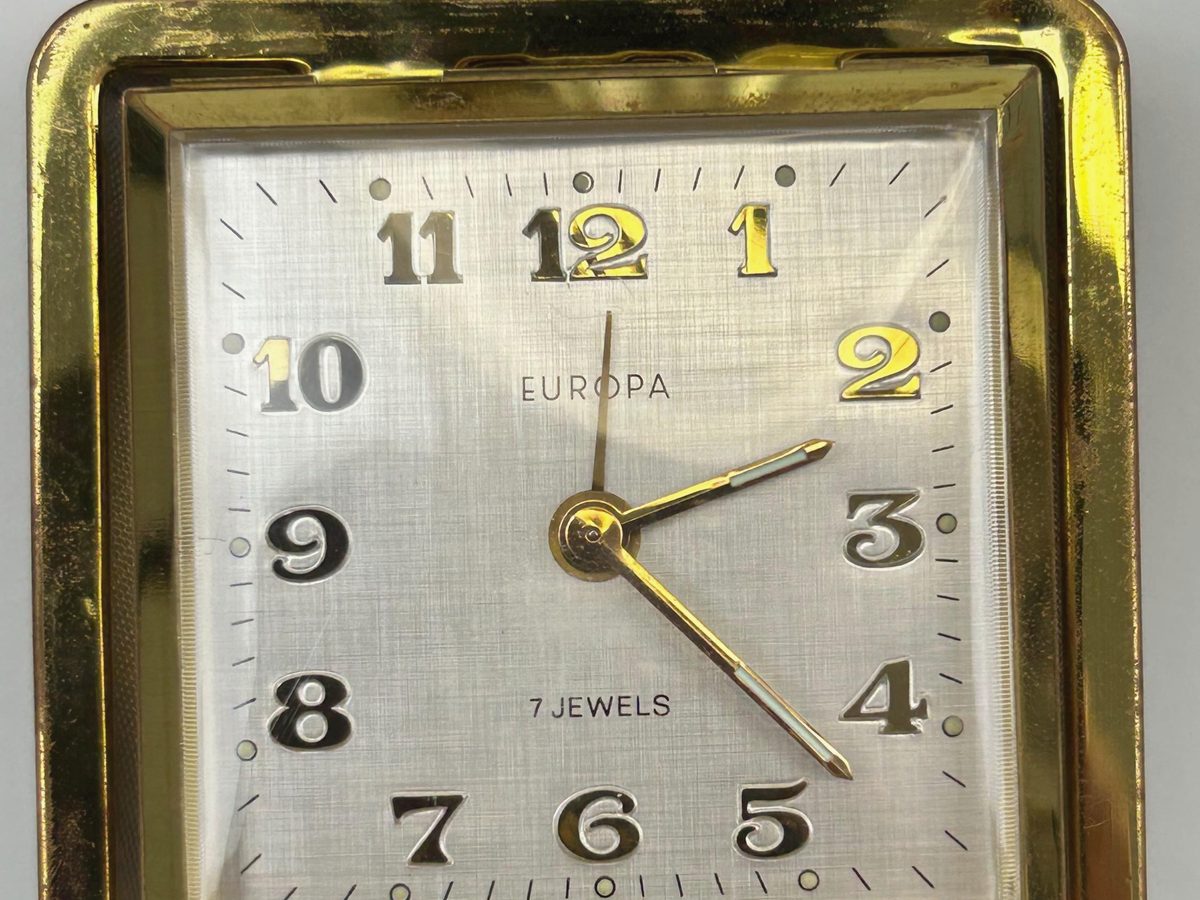
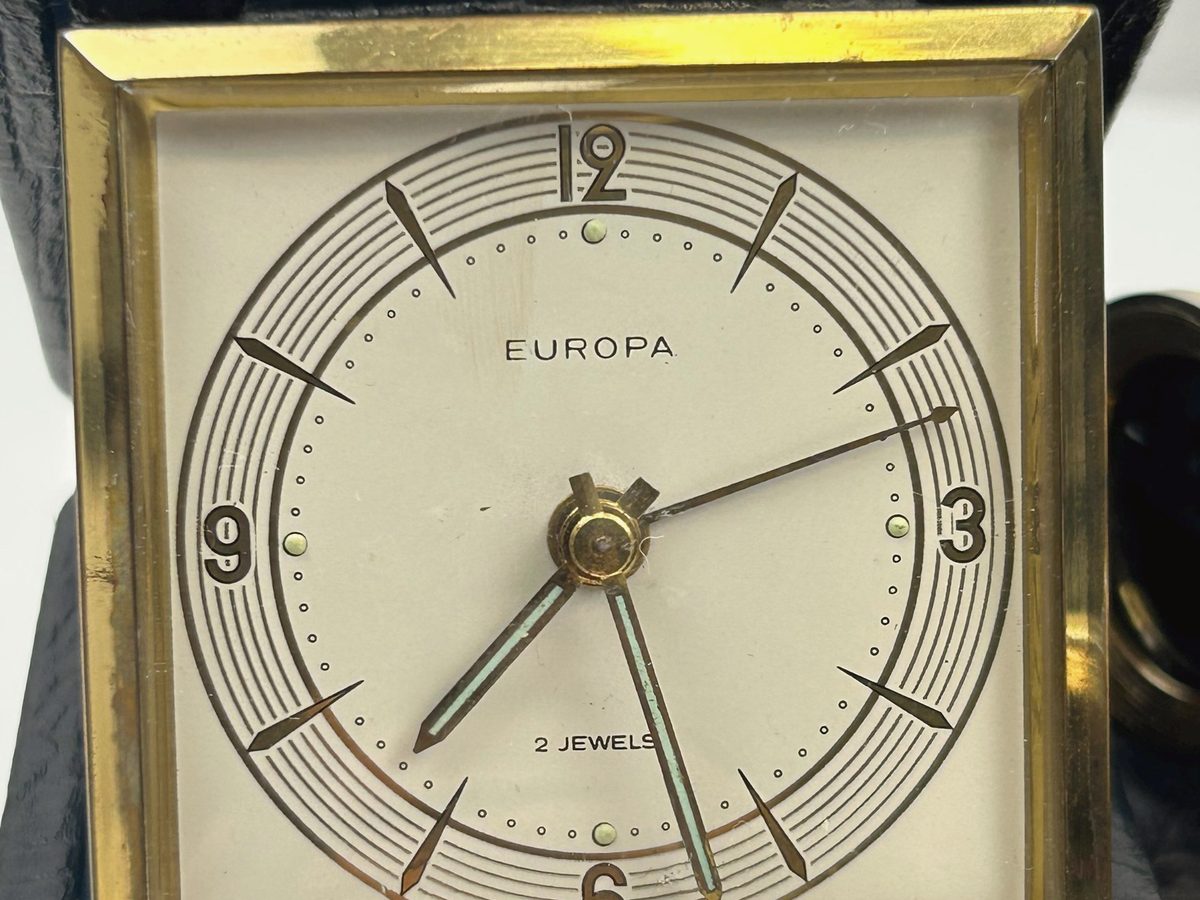
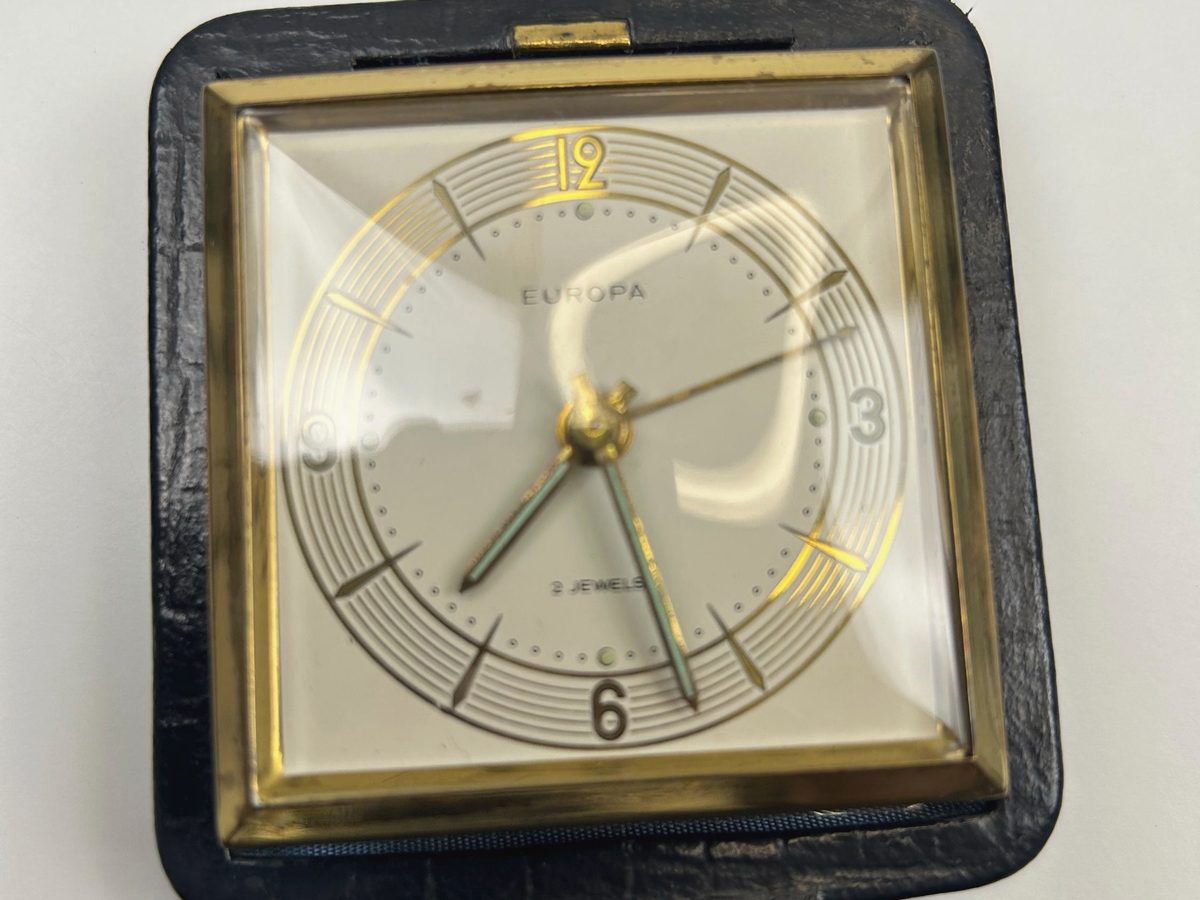
Europa appears on the dials of two more clocks, one in a green case and one in a black case. One says “7 Jewels”, the other “2 Jewels”. The back of the green one is marked “Germany”.
What “jewels” means
Jewels are bearing stones in the movement, usually made of synthetic ruby. They hold moving parts and reduce friction. The number on the dial tells you how many such bearings the movement has. More jewels generally mean a more elaborately jewelled movement. For a collector’s piece, though, what matters most is the condition the movement is in today.
What to look for in an old travel alarm clock
Case and hinge. Does the lid still close? Is the covering worn, the lining stained? On cases, age shows first at the edges and the hinge.
Dial and glass. Scratches in the glass can be lived with; a stained or faded dial shapes the whole piece.
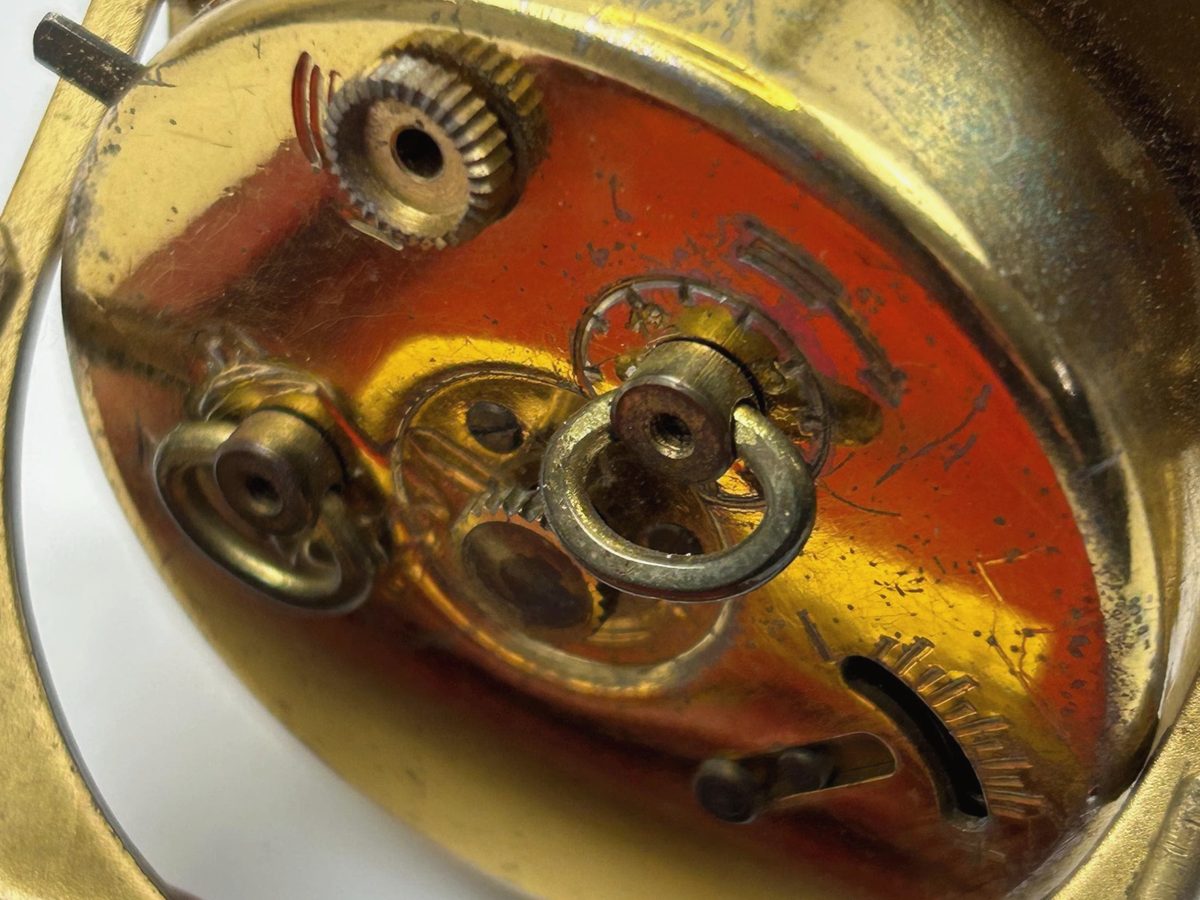
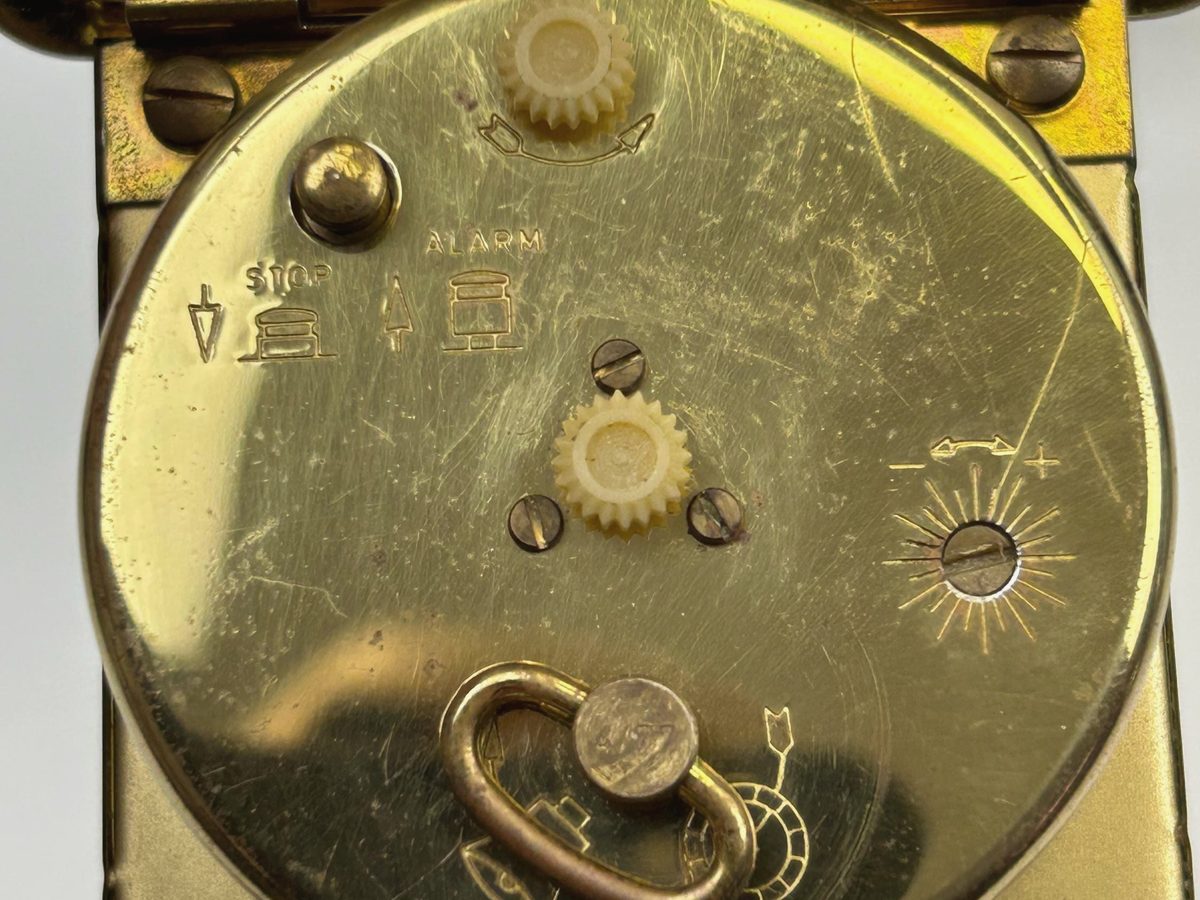
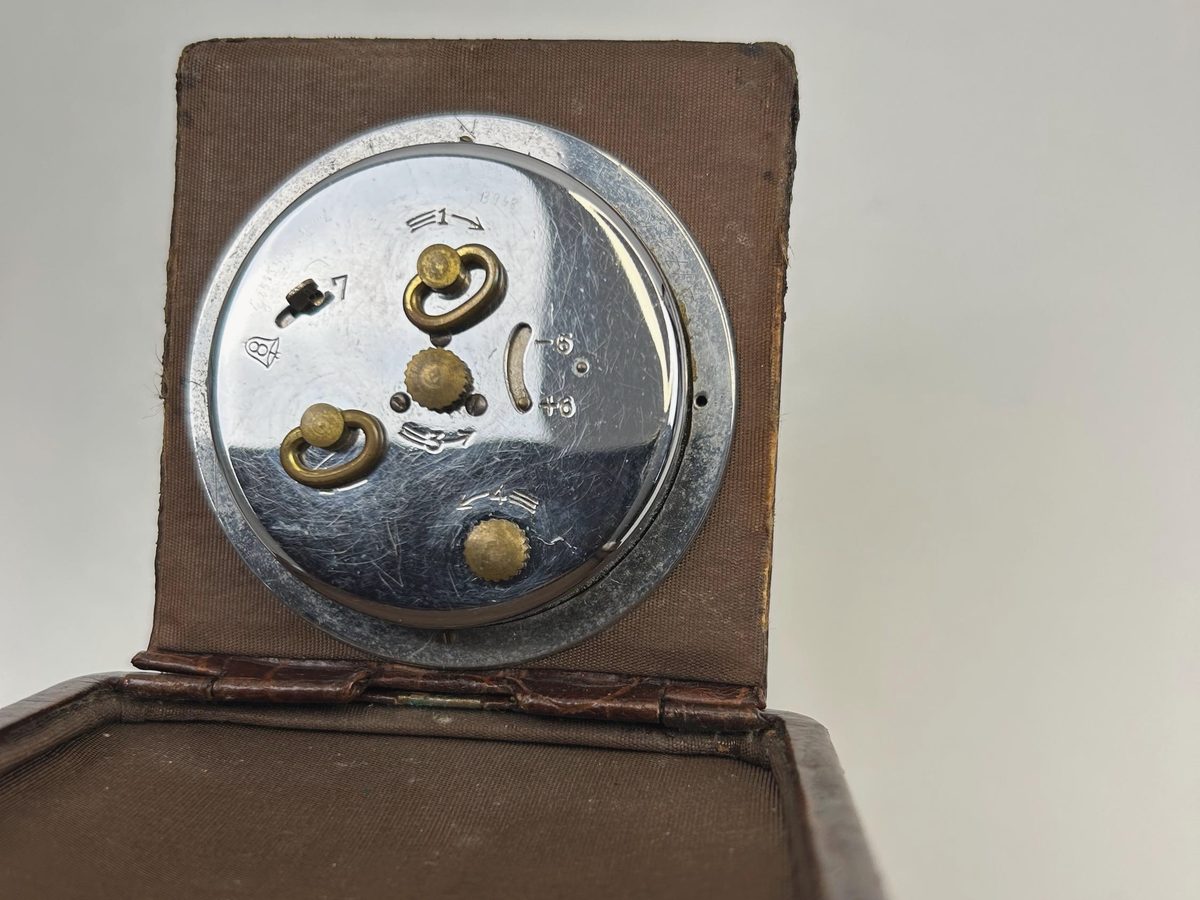
Winding. On the back there are usually two winding keys: one for the time, one for the alarm. Small symbols show which is which. Wind carefully and never force it.
Does it run? This is the most important question, and it belongs right at the top of every description. That a defect on an old clock was not mentioned high enough up was one of the lessons of my first year – you can read about it in My first year on Etsy.
Care in brief
Mechanical clocks like it dry and at an even temperature. Wipe the case with a dry, soft cloth. More tips on metal, wood and mechanisms are in my post How to care for vintage items.
Your travel alarm clock
Whether as a collector’s piece, for the bedside table or as a gift for someone who loves to travel: the travel alarm clocks in this post come from my shop. Some may already be sold. Browse the product overview or the Bavarian Heritage Etsy shop.