Westerwald Stoneware: History, Makers and Beautiful Pieces
· 7 min read
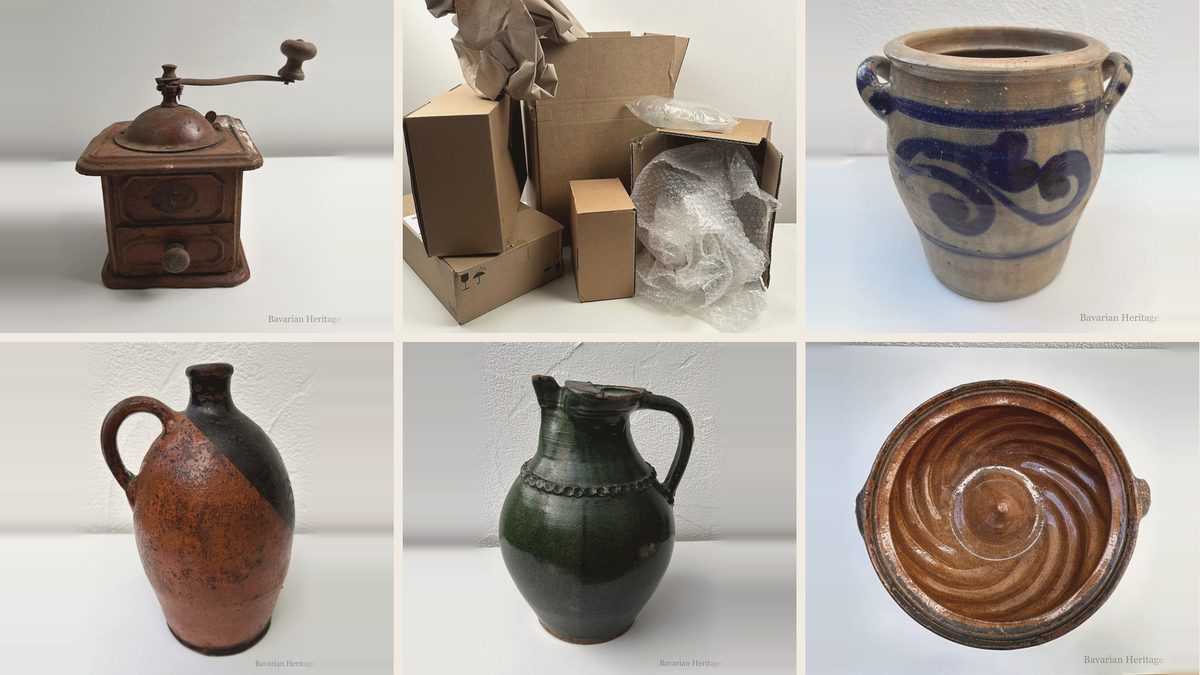
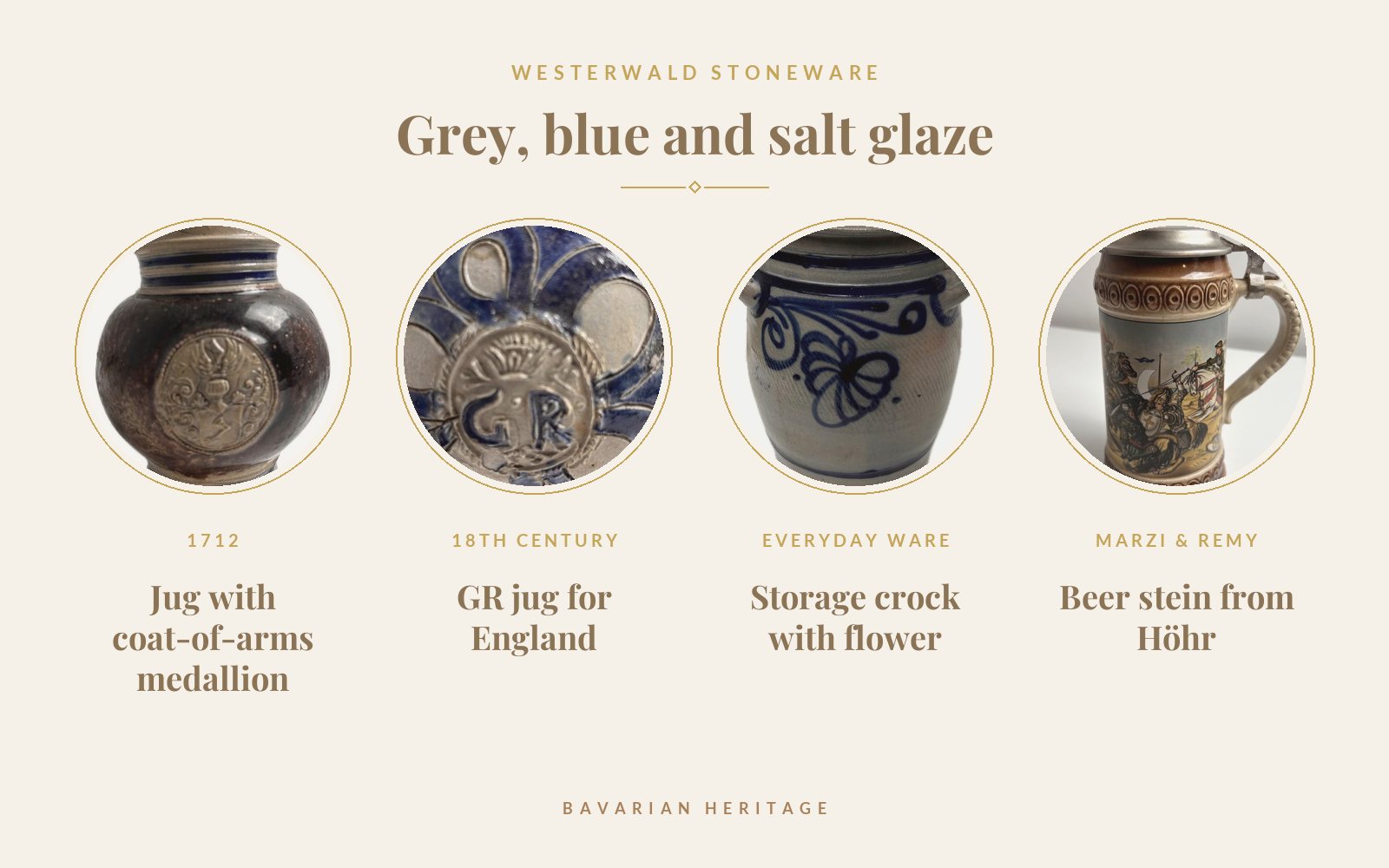
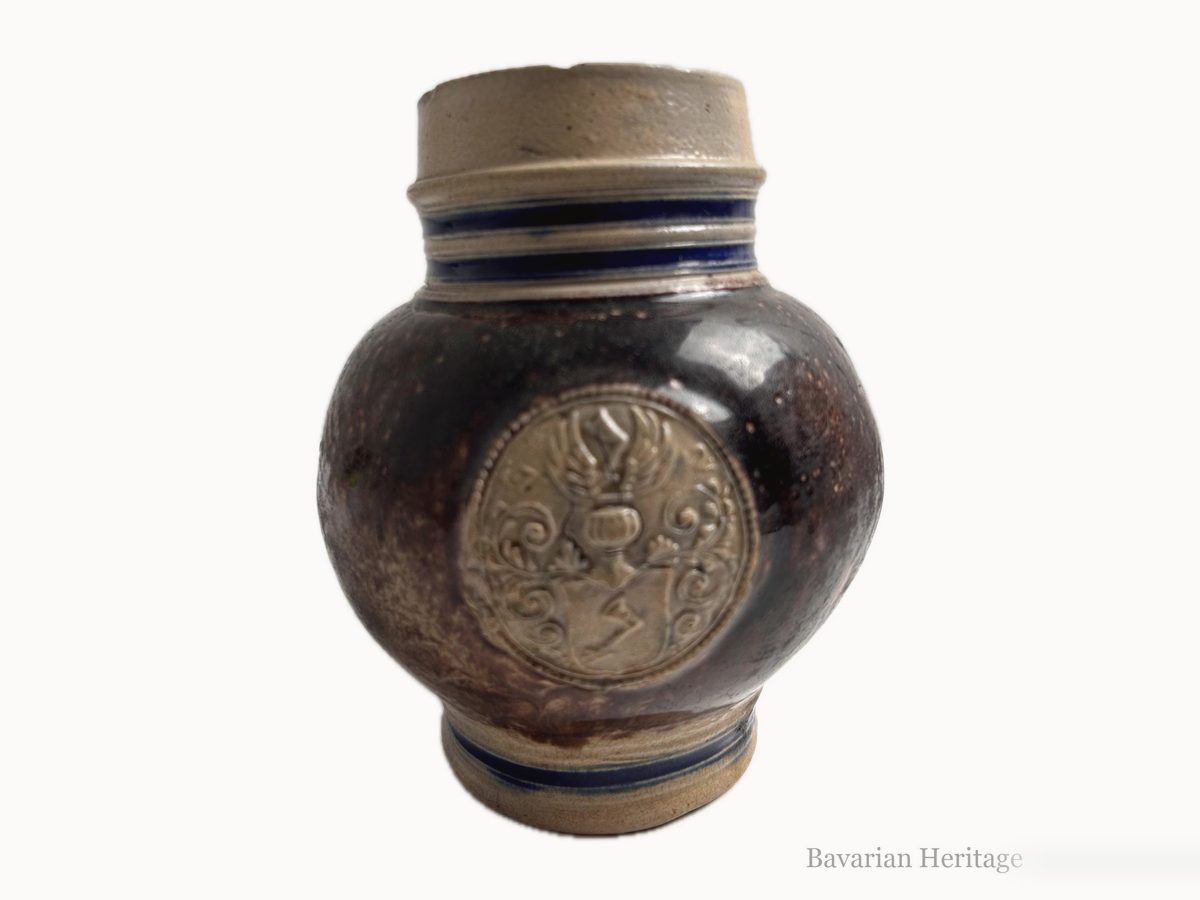
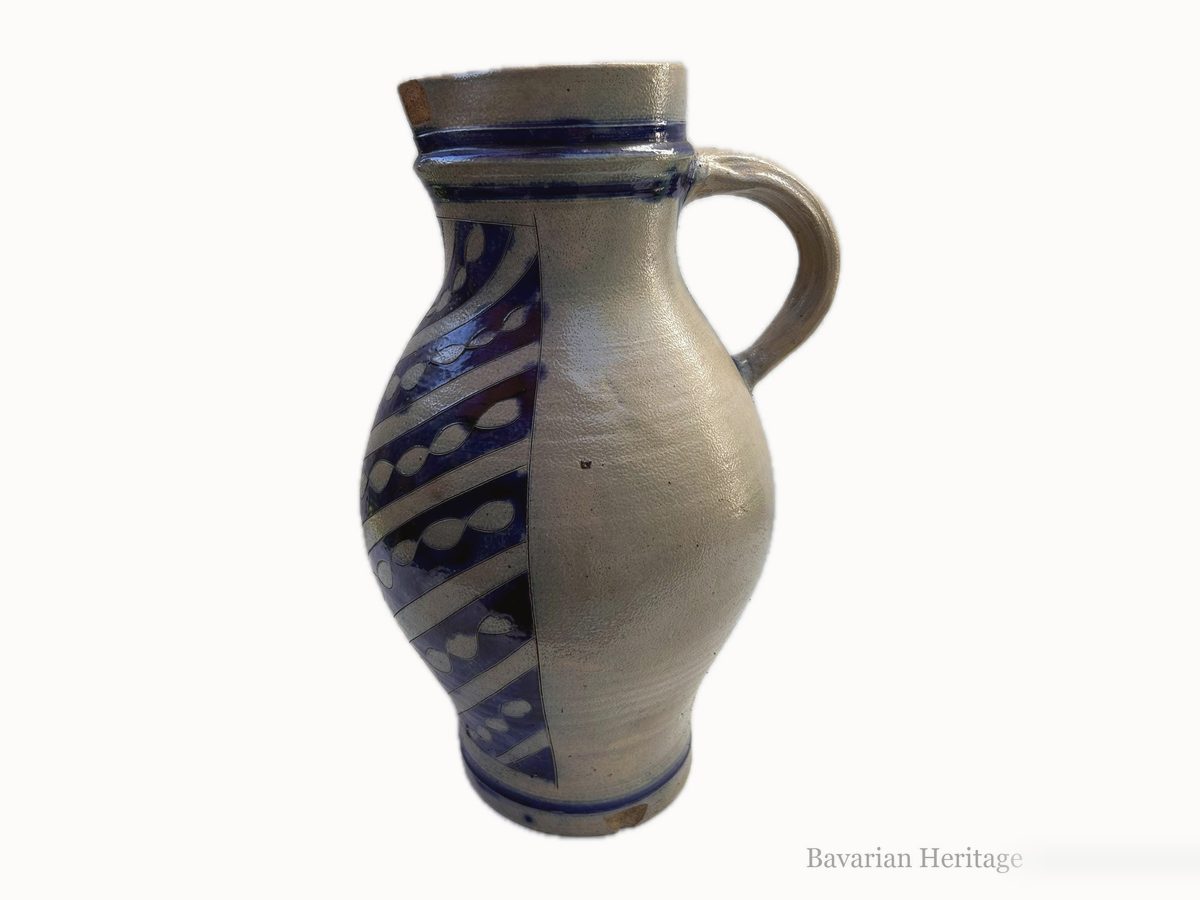
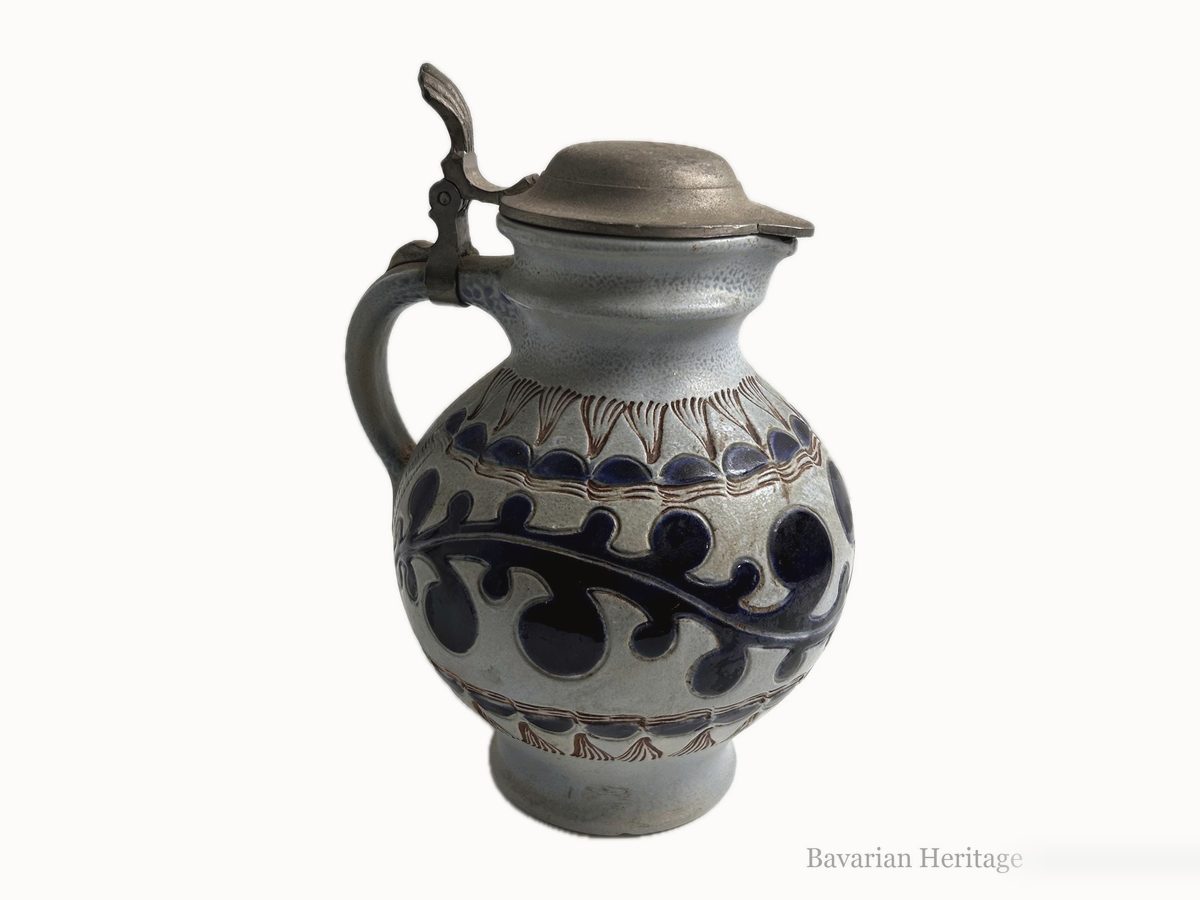
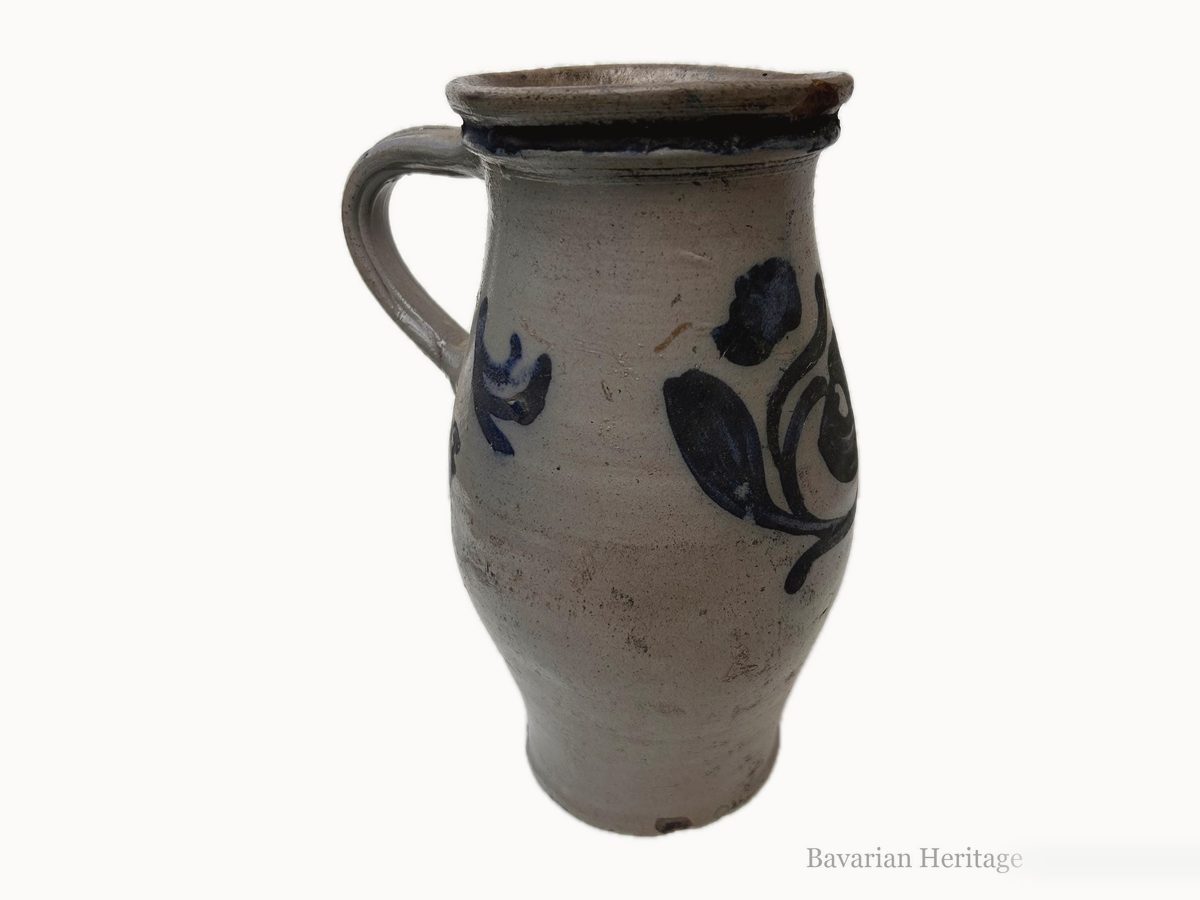
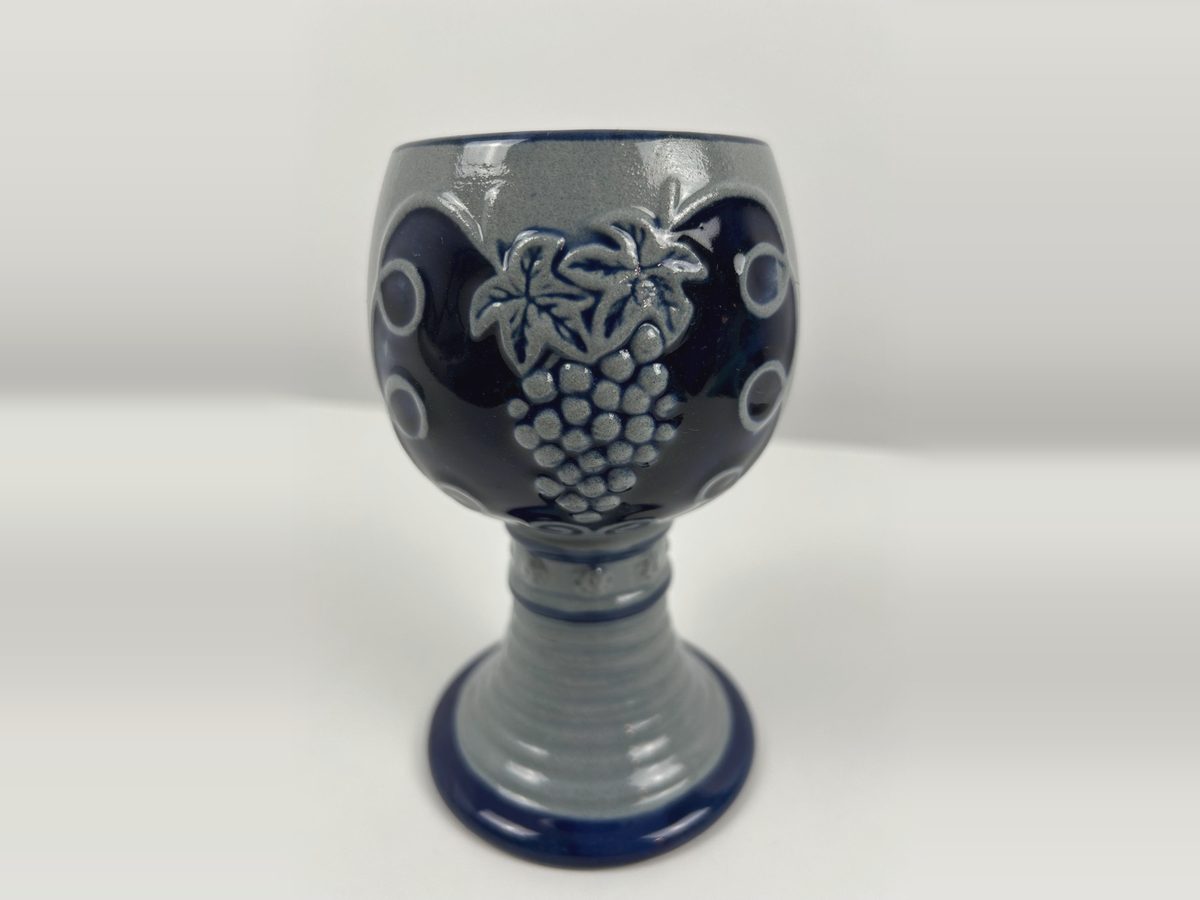
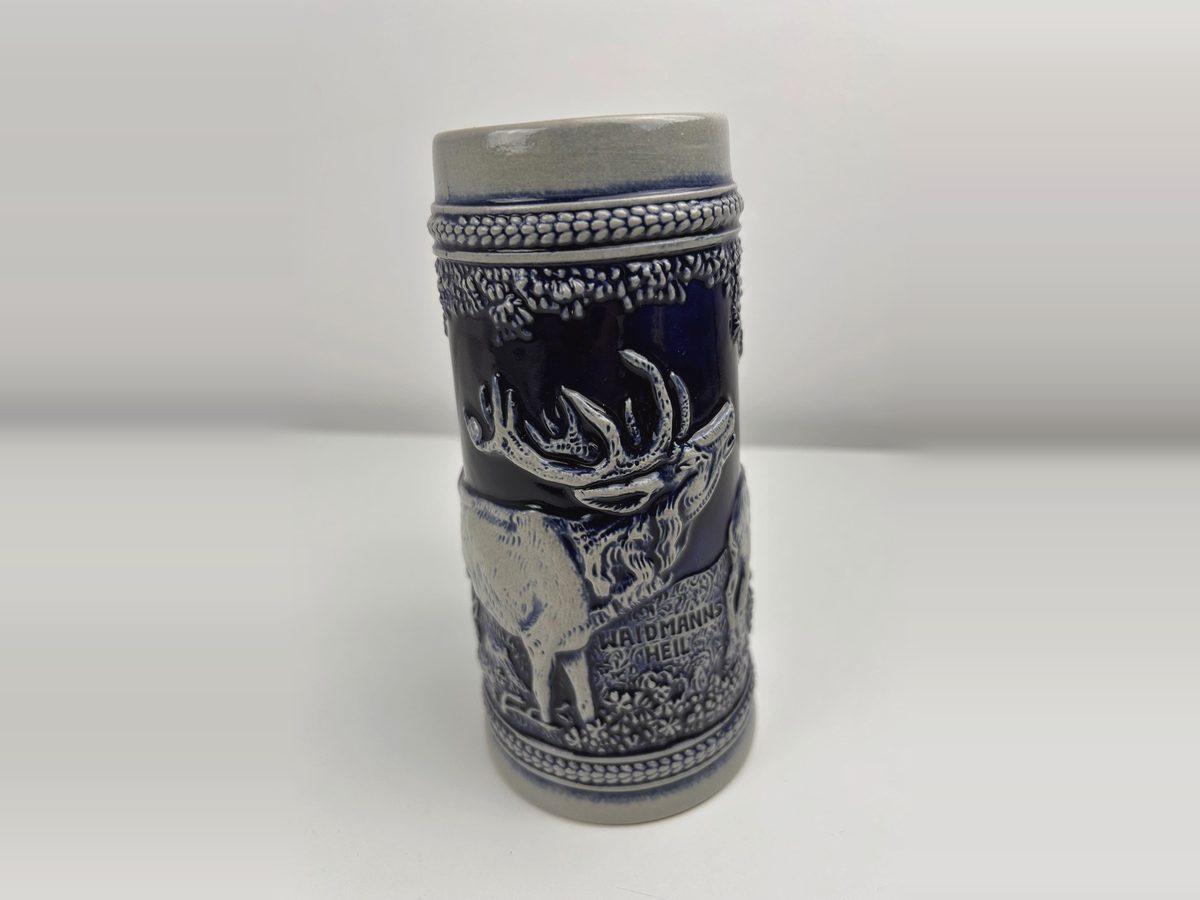
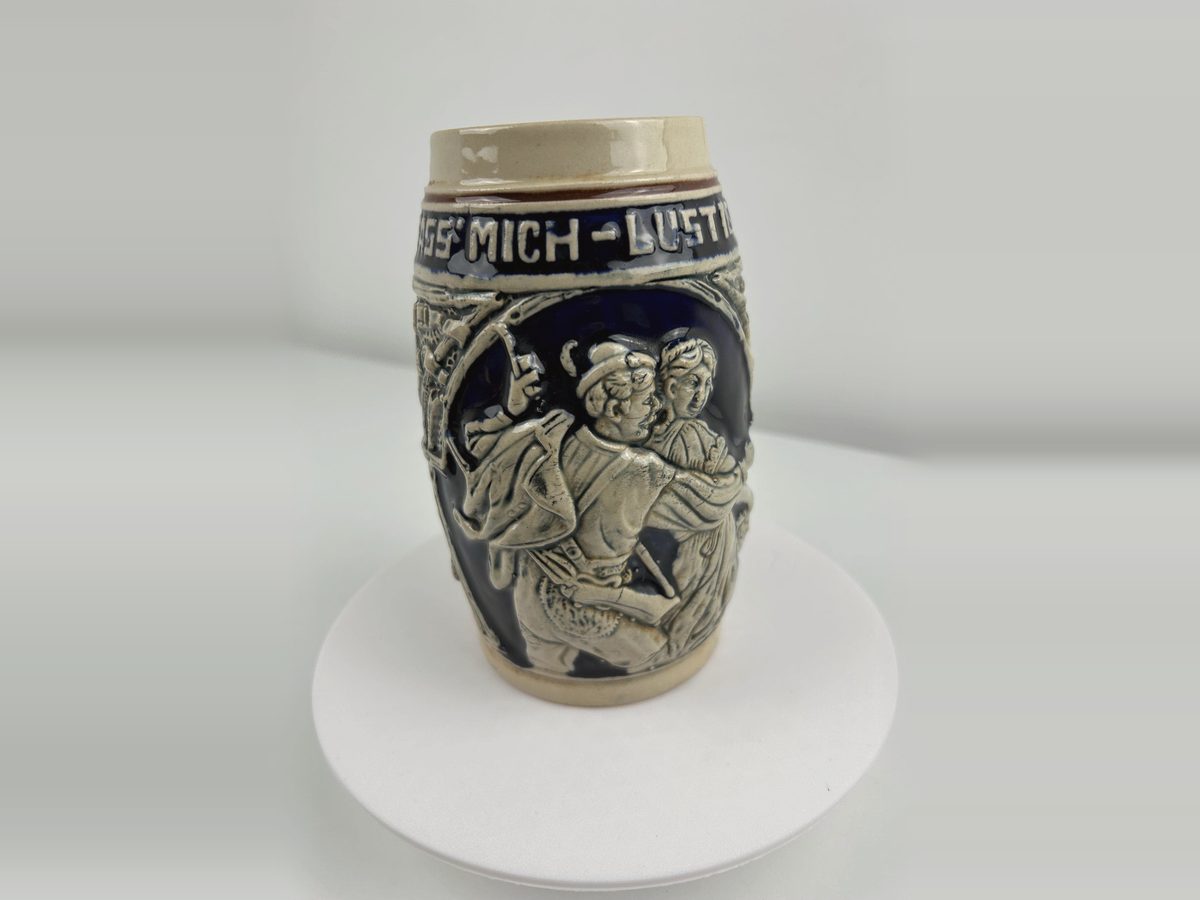
Grey, cobalt blue and a glaze that feels like orange peel: Westerwald stoneware is recognisable at first glance. It has stood in kitchens, taverns and display cabinets for centuries, and it is sturdy enough to use today. My shop currently has a particularly fine selection, from a jug dated 1712 to beer steins from the 20th century.
How the Kannenbäckerland came about
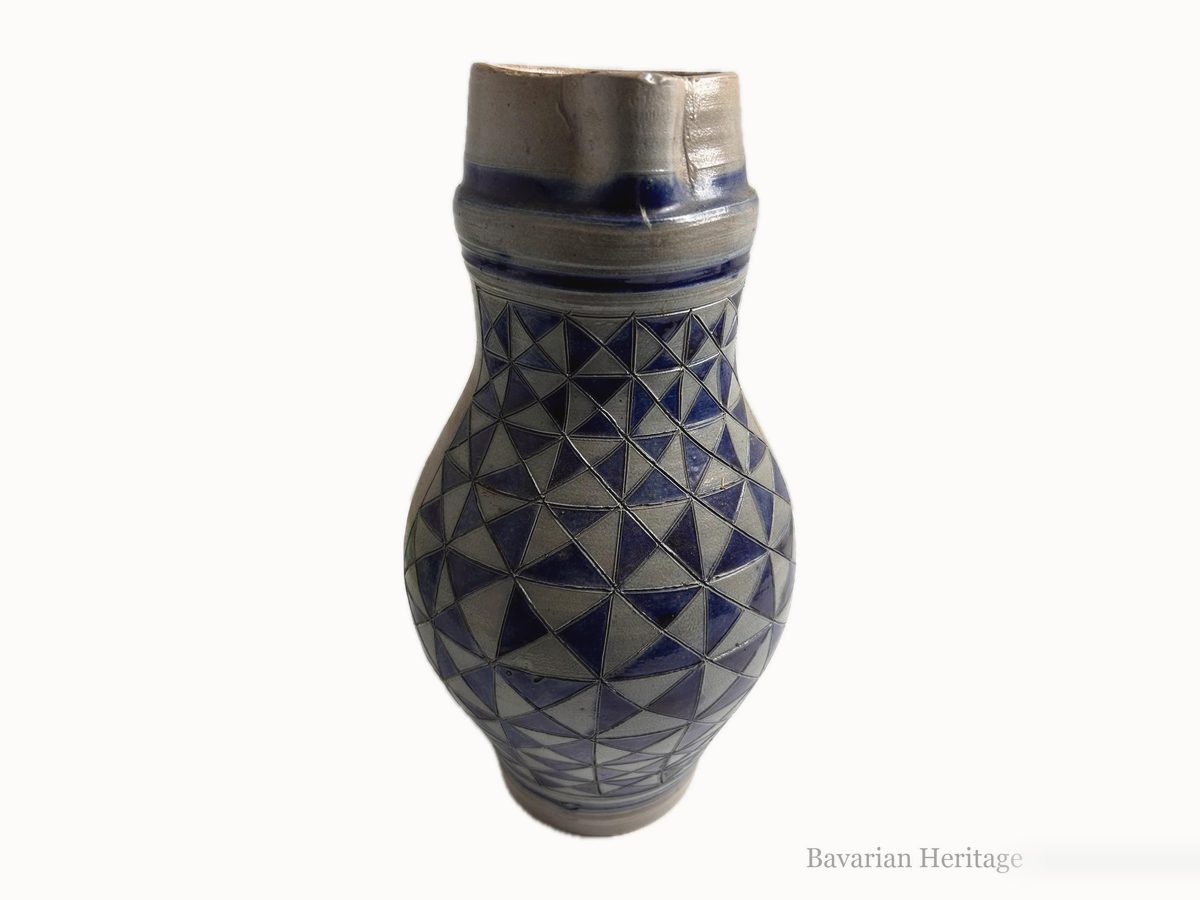
Around Höhr-Grenzhausen and Ransbach-Baumbach, pottery has been made since at least 1402. The area only got the name “Kannenbäckerland” (land of the jug bakers) in the late 18th century. The big upswing came with potters from Siegburg and Raeren who settled in the Westerwald at the end of the 16th century. With them came the grey stoneware with cobalt-blue decoration that is still typical today.
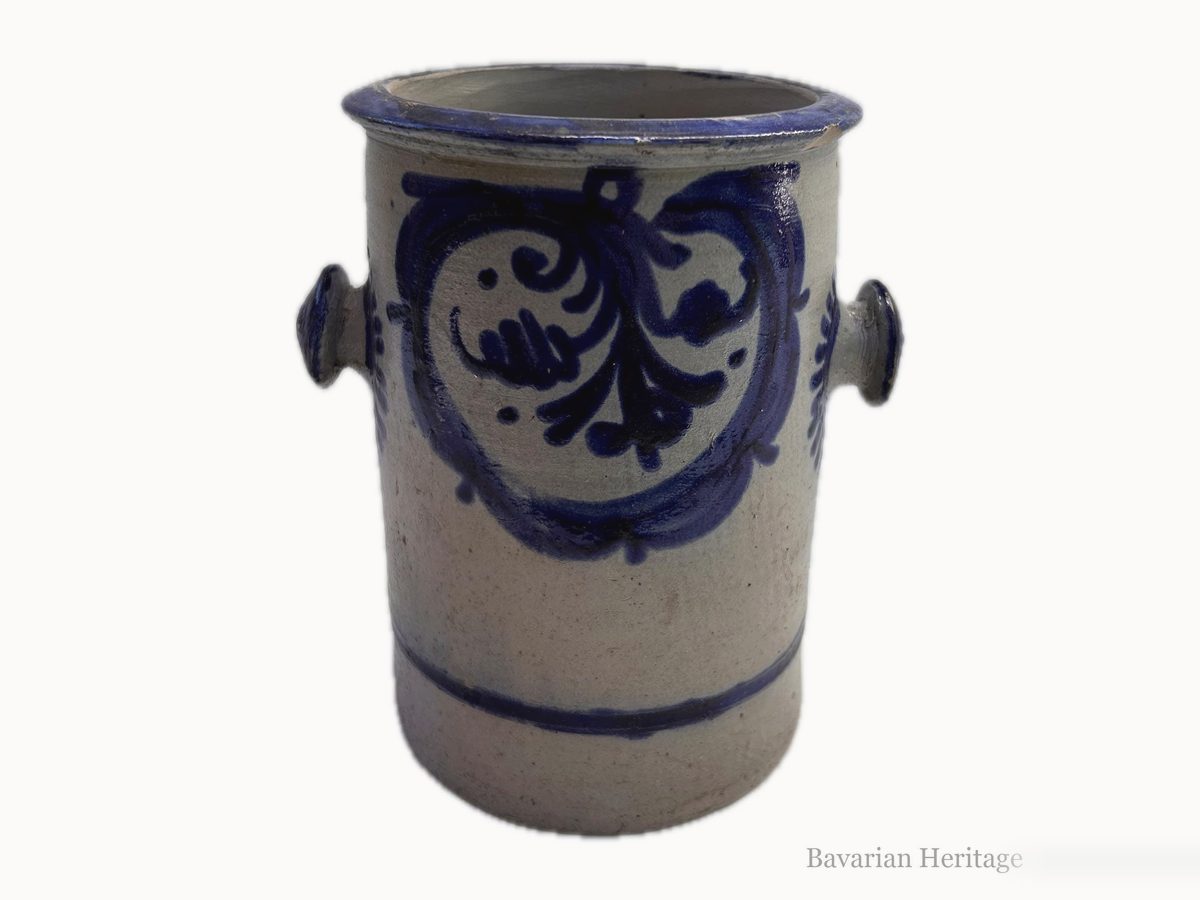
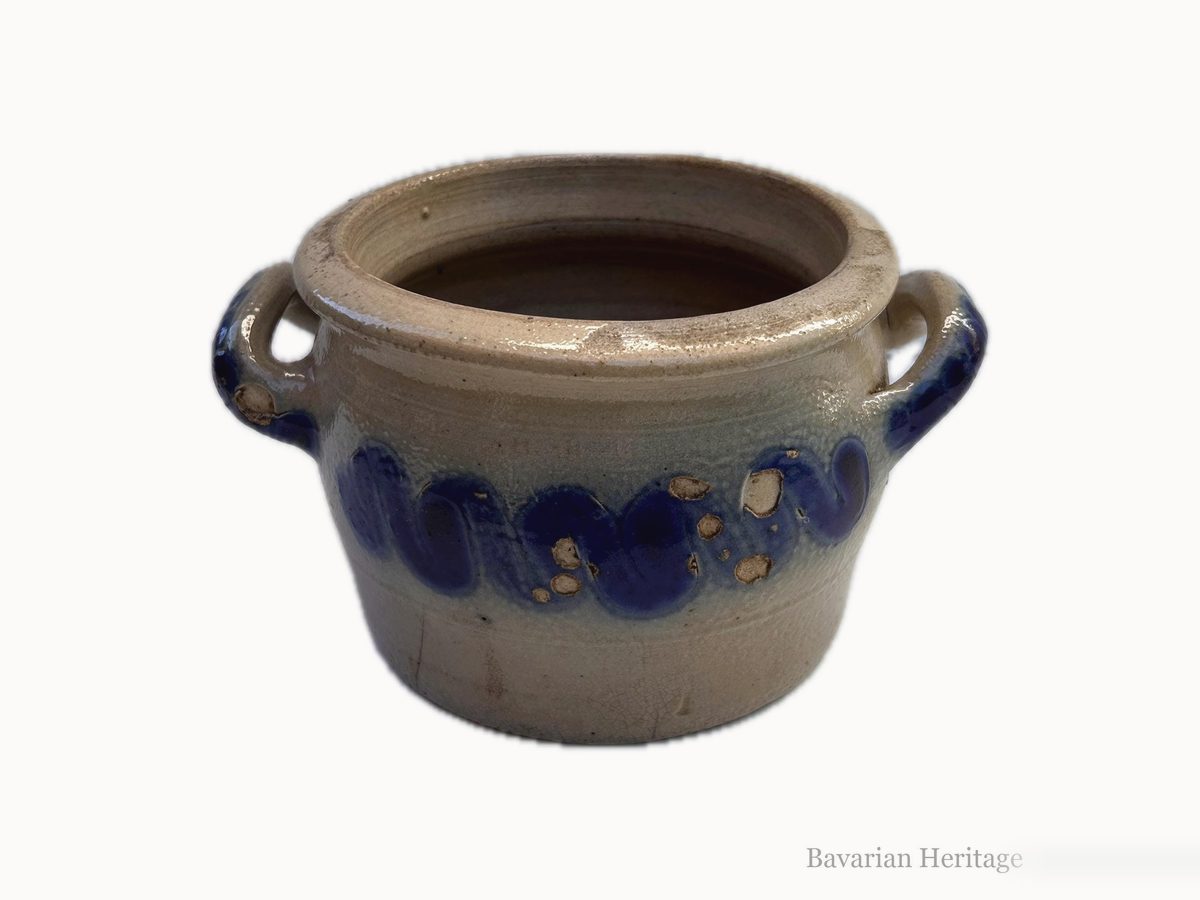
The pieces are fired at over 1,200 degrees. The potters then throw salt into the kiln, which combines with the surface to form a thin, shiny glaze. That is where the slightly pitted texture comes from. Manganese violet was later added to the cobalt blue as a second colour.
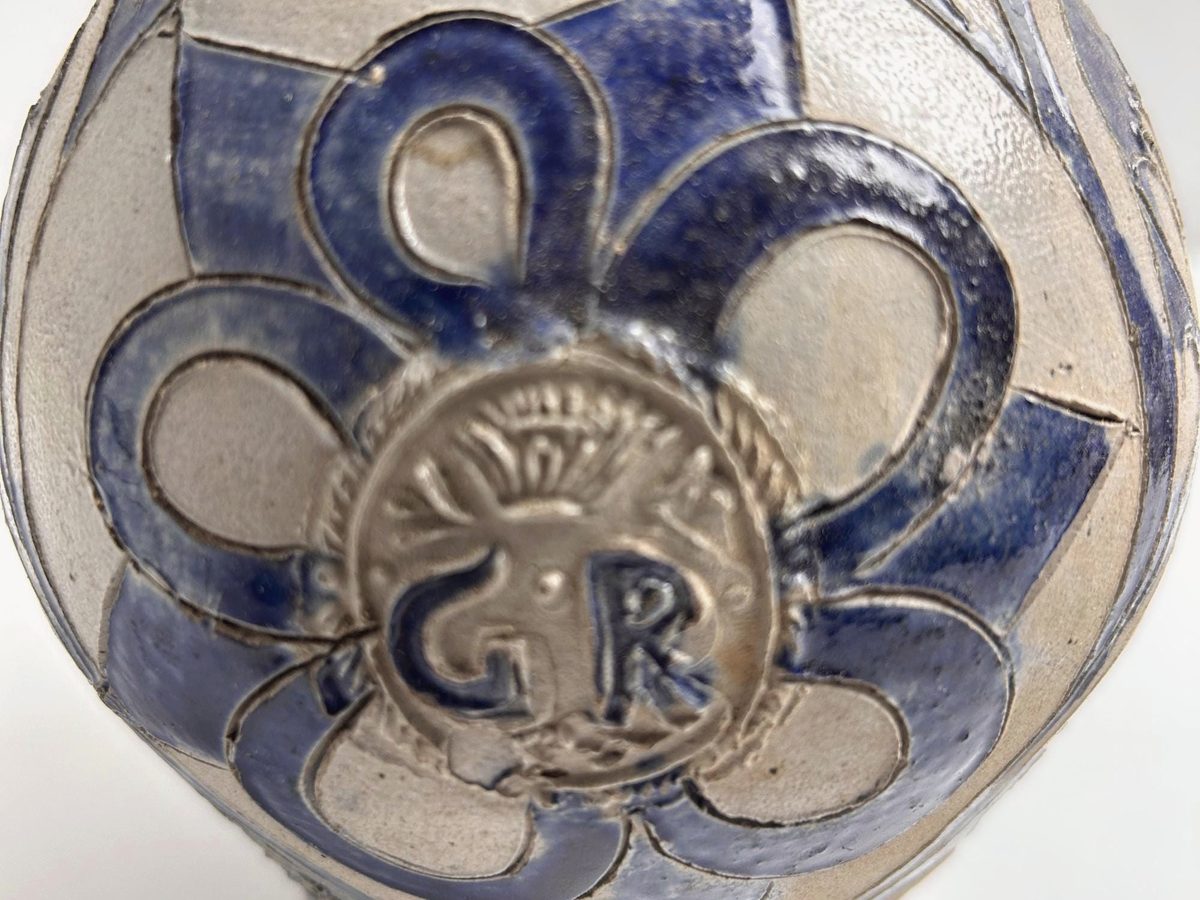
In the 18th century, Westerwald stoneware was a bestseller abroad. The so-called GR jugs bear the monogram of King George of Great Britain and were made in large numbers for English taverns. Around the middle of the century, some 600 jug makers worked in the Kannenbäckerland.
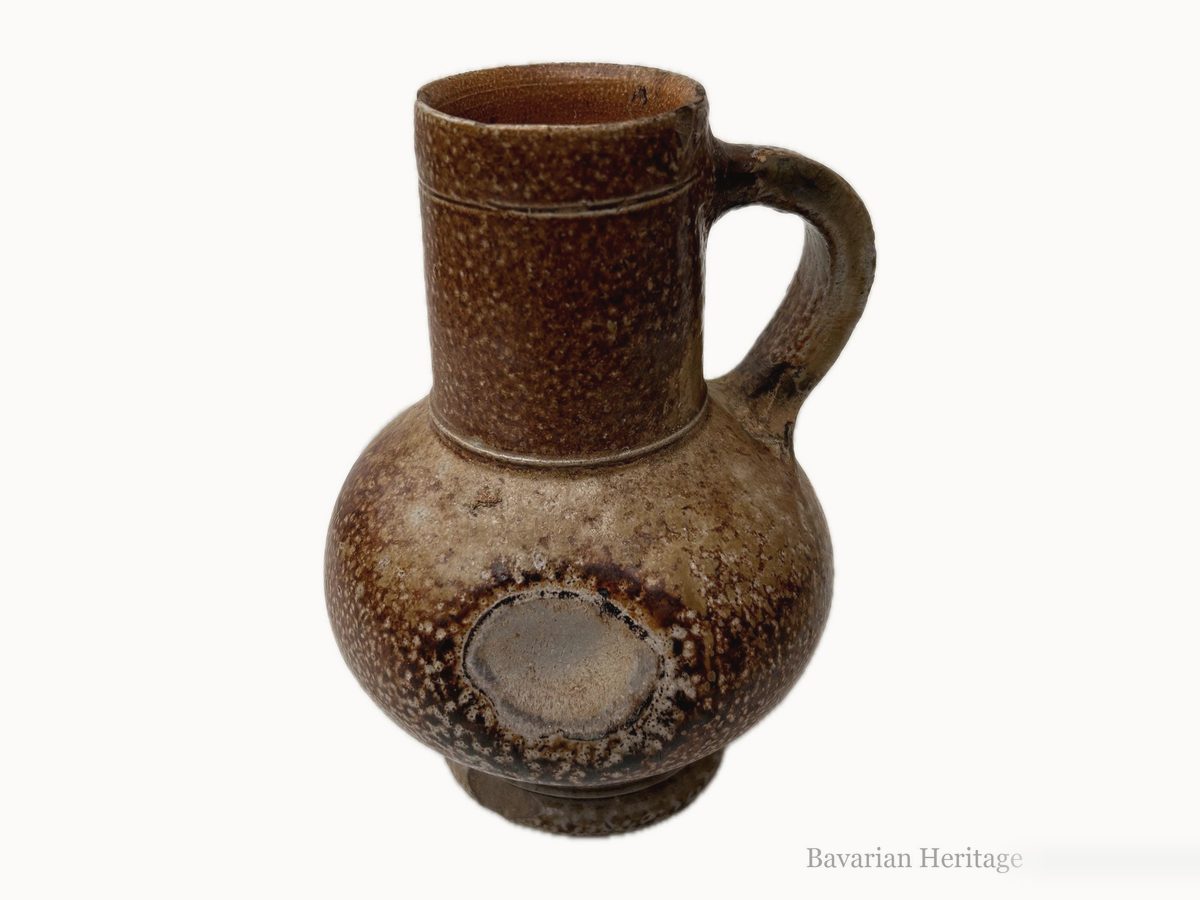
For comparison, next to them stands a jug from Frechen around 1600: Rhenish stoneware of that time was mostly glazed brown, while the Westerwald went for grey and blue.
From showpiece jug to storage crock
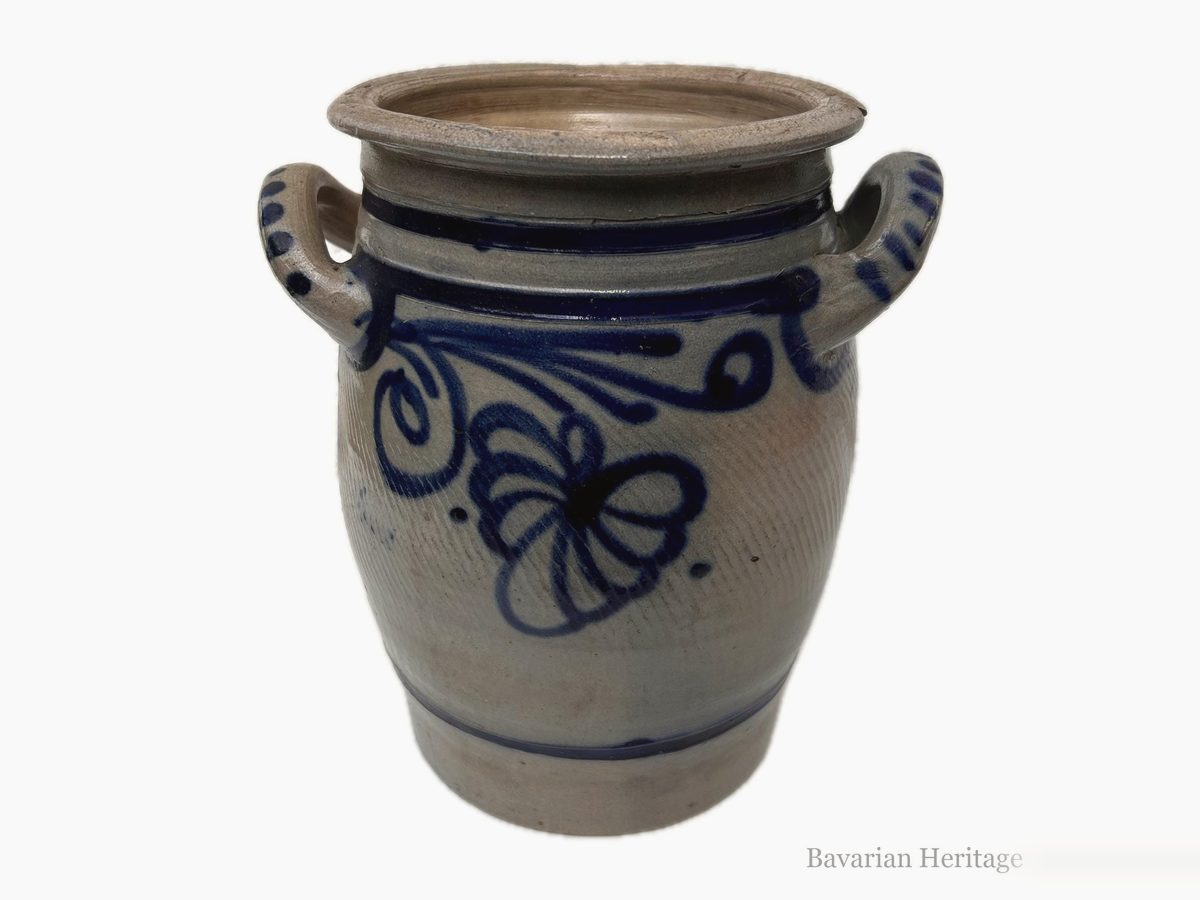
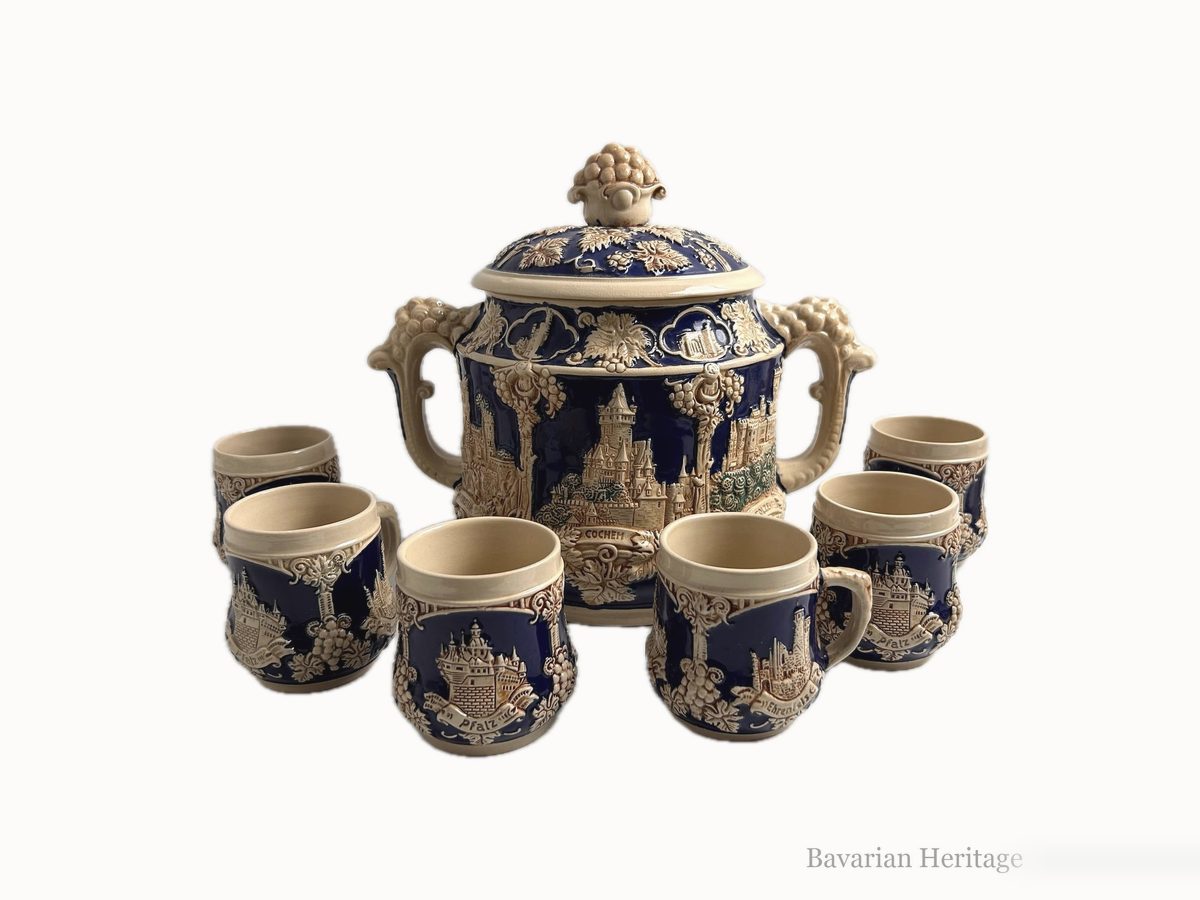
When porcelain came into fashion, many potters switched to everyday ware: storage crocks for sauerkraut and lard, milk and water jugs, painted freehand with flowers, tulips and tendrils. These simple pieces look wonderful today in a country kitchen, as a vase or as a utensil holder. It gets more festive with a punch bowl set in the Westerwald style: a bowl with lid and six cups, with castles on the Rhine and Moselle such as Cochem, Stolzenfels and Rheinstein in relief on cobalt blue, vine handles and a grape-shaped knob. Holding 4 litres, it is ready for the next garden party.
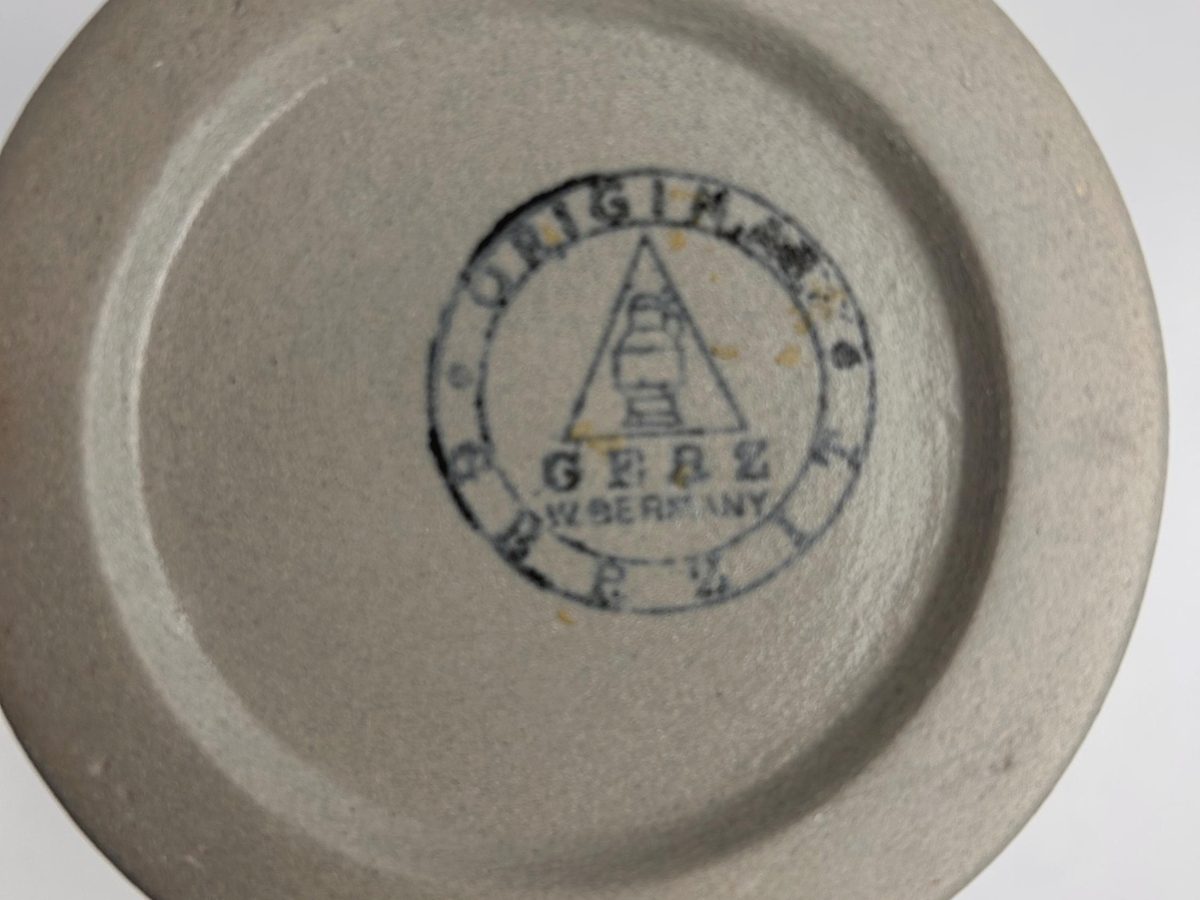
For every piece I state origin, age and condition as precisely as possible, including chips and hairline cracks. Orders ship within one working day, packed to prevent breakage and with tracking; gift wrapping is available on request. A Westerwald jug is a gift that lasts for generations. How to care for stoneware is explained in How to care for vintage items.
Each piece exists only once. You will find more Westerwald stoneware in the product overview and in the Bavarian Heritage Etsy shop. The Keramikmuseum Westerwald in Höhr-Grenzhausen is also well worth a visit.
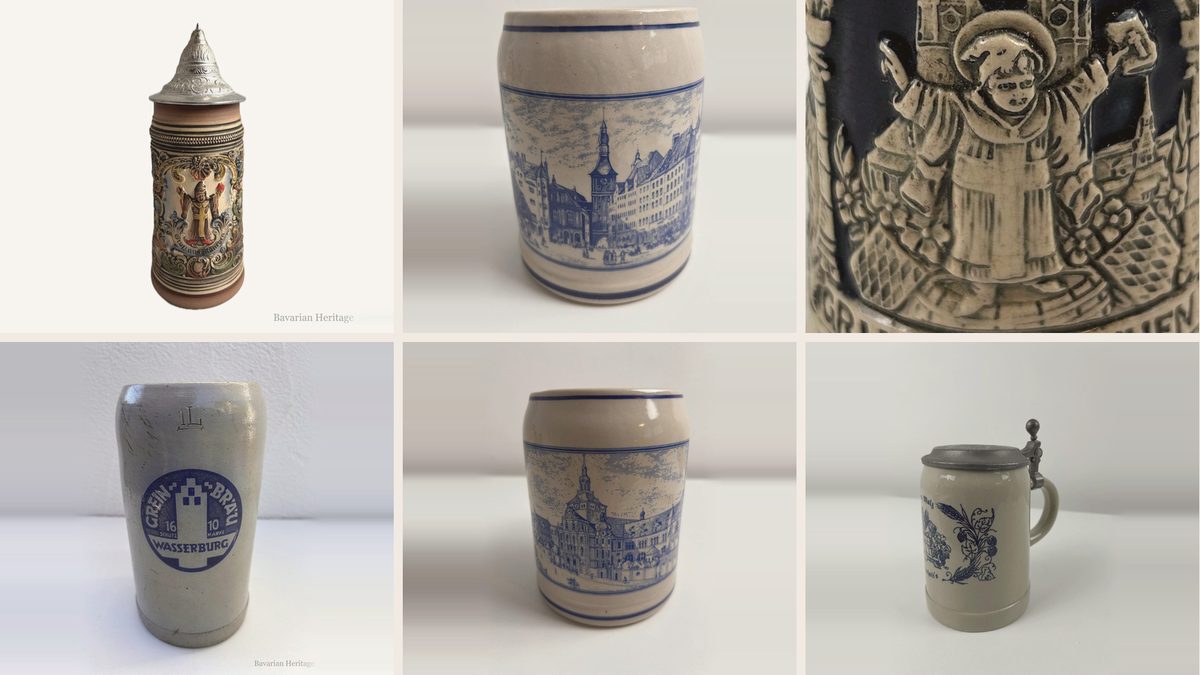
A beer stein is a piece of Bavaria you can hold: it brings back the beer garden, the Oktoberfest or a trip to Munich. My shop …
BH
Bavarian Heritage
Cookies & privacy
With your consent we use Google Analytics and the Meta Pixel to understand how our site is used and to show relevant ads on Facebook and Instagram. Without consent, these services are not loaded. You can change your choice at any time via “Cookie settings” in the footer.
More in our privacy policy
 View on Etsy ↗
 View on Etsy ↗
 View on Etsy ↗
 View on Etsy ↗
 View on Etsy ↗
 View on Etsy ↗
 View on Etsy ↗
 View on Etsy ↗
 View on Etsy ↗
 View on Etsy ↗
 View on Etsy ↗
 View on Etsy ↗
 View on Etsy ↗
 View on Etsy ↗
 View on Etsy ↗
 View on Etsy ↗
 View on Etsy ↗
 View on Etsy ↗