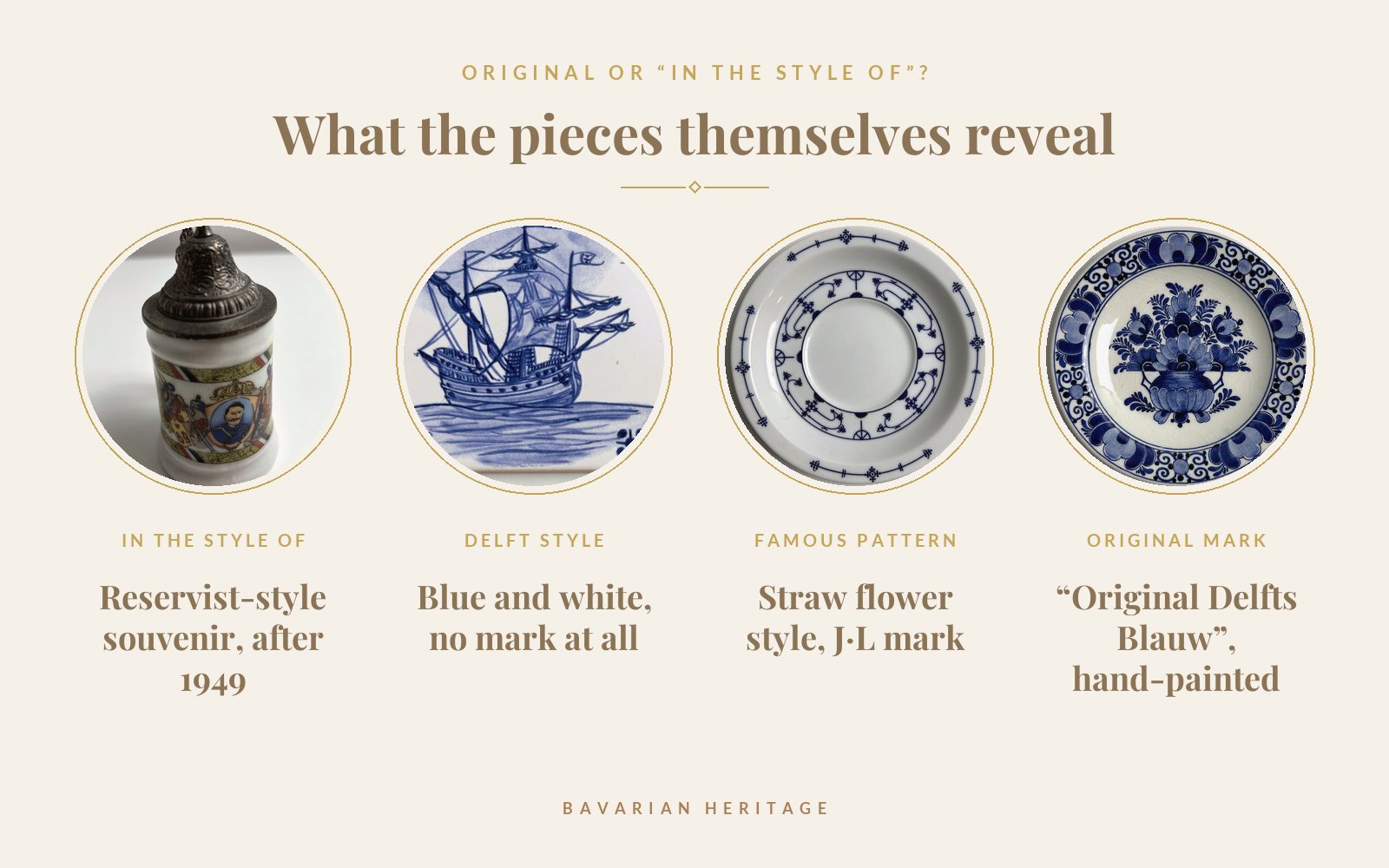
Not every copy is a fake. A replica, a souvenir in the style of a famous original or a decoration after a well-known pattern are perfectly fine, as long as they are sold as what they are. A piece only becomes a fake when someone claims it is the original.
How to tell the difference is something I’d like to show with pieces from my shop that I deliberately described as “in the style of”, “Delft style” or “replica”.
In the style of: the mini reservist stein
Reservist steins are a collecting field of their own. The originals date from the German Empire and reminded soldiers of their military service. This little stein, just 10 cm tall, borrows the motifs: a portrait beneath a crown, trophies of arms, black, white and red stripes.
But “W.-Germany” is impressed inside the metal lid. That makes it clear it was made after 1949, as a souvenir and not as an original from the imperial era. That is exactly what its description says.
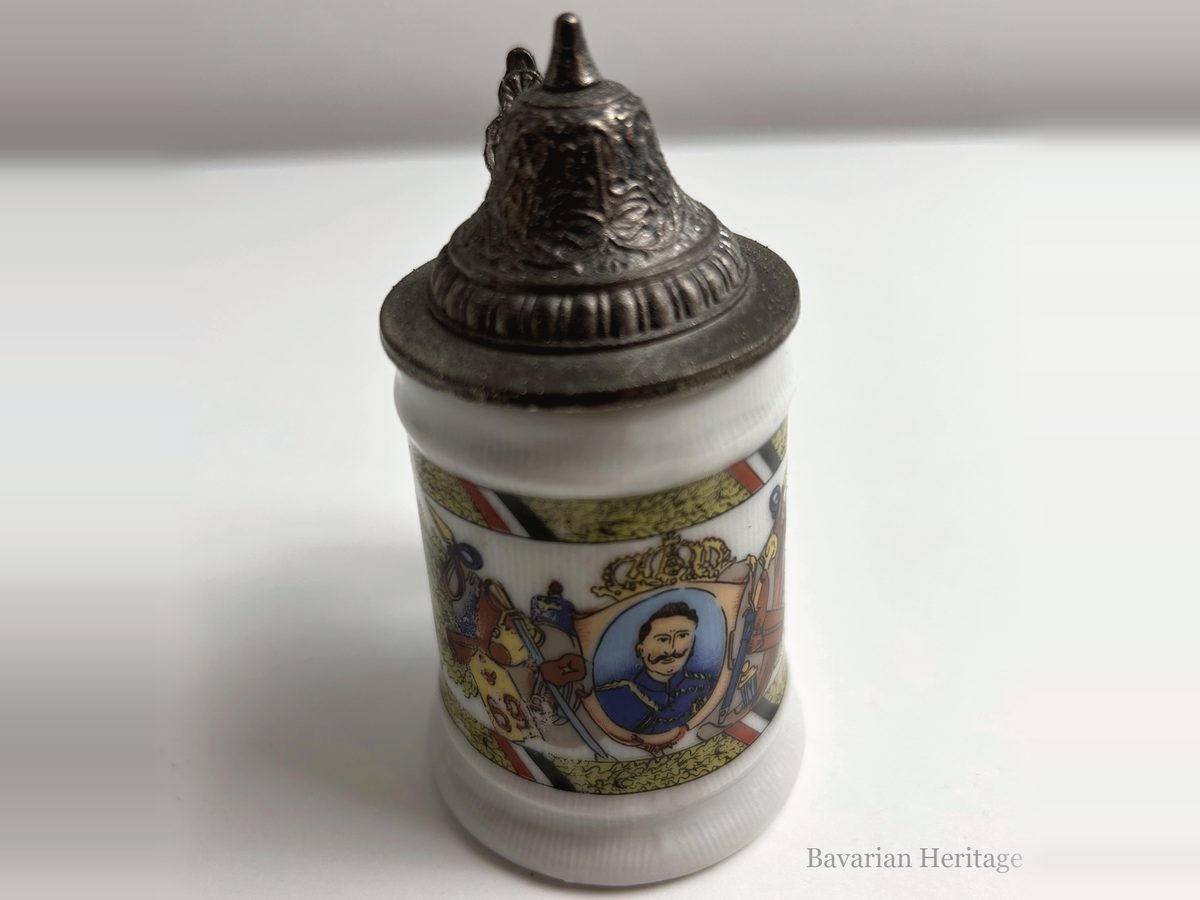
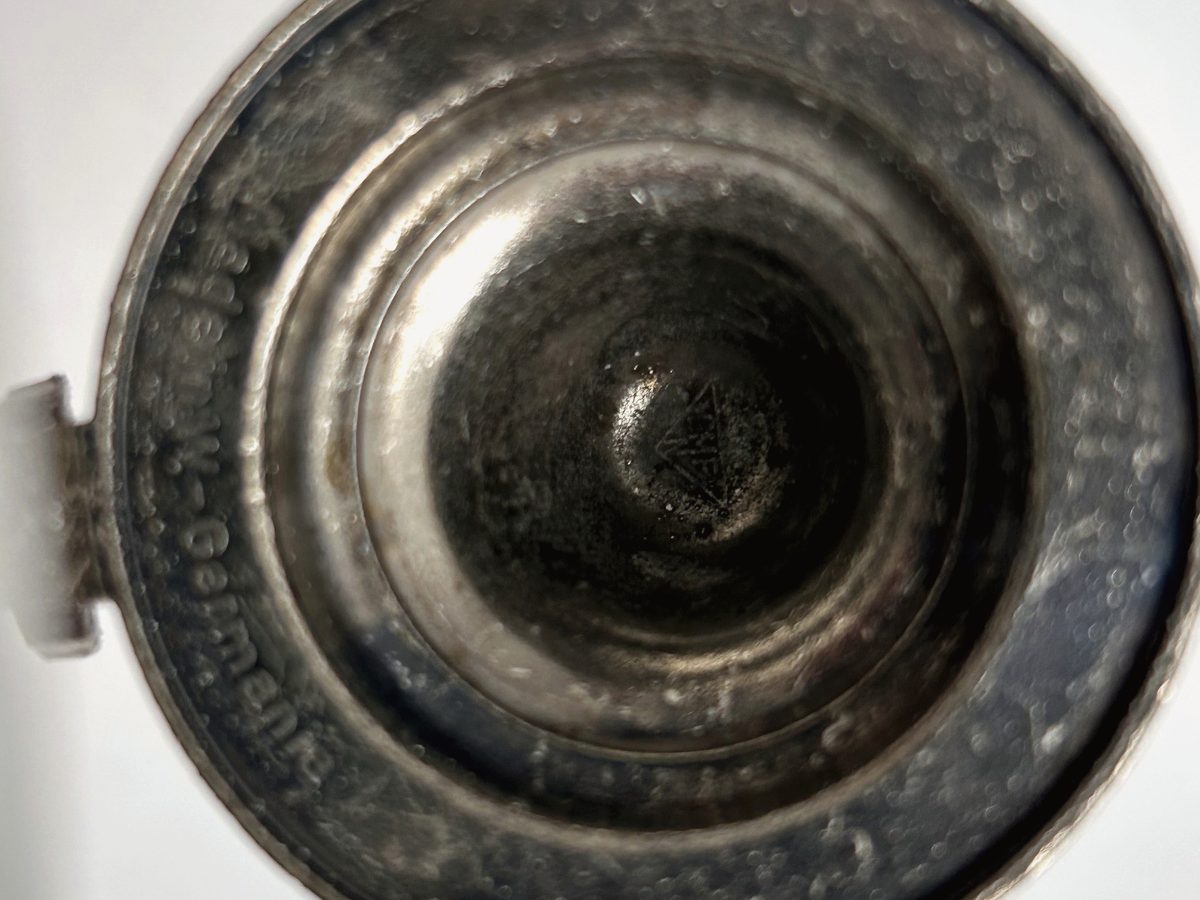
The example shows the most important rule: all parts of a piece have to fit together. Motif, mark, material and lid tell the same story, or they don’t.
Delft style: blue and white is not yet Delft
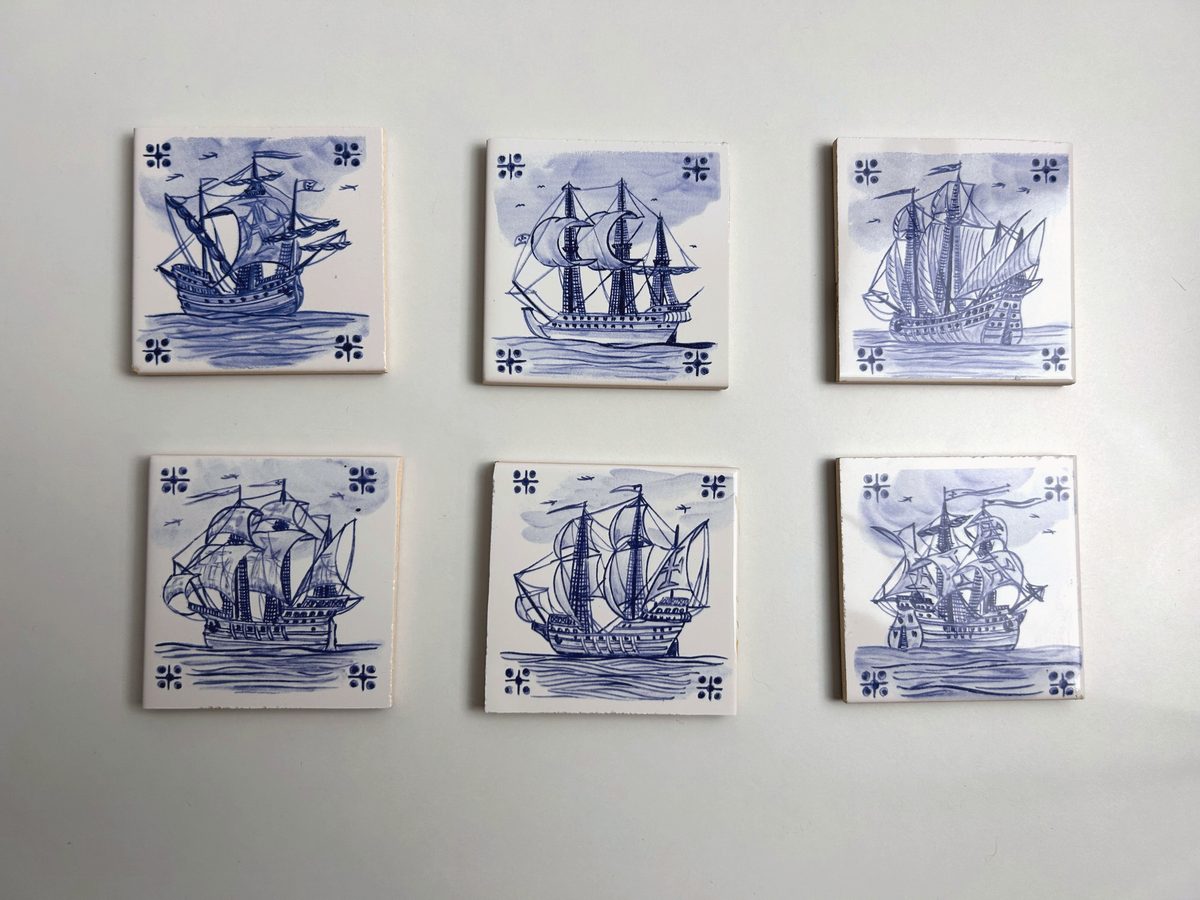
Blue and white ceramics with windmills and sailing ships have been made by countless manufacturers. These six tiles are painted by hand, and the brushstrokes are clearly visible. But they carry no mark, and their maker and origin are unknown. That is why I call them “Delft style” and not “Delft”.
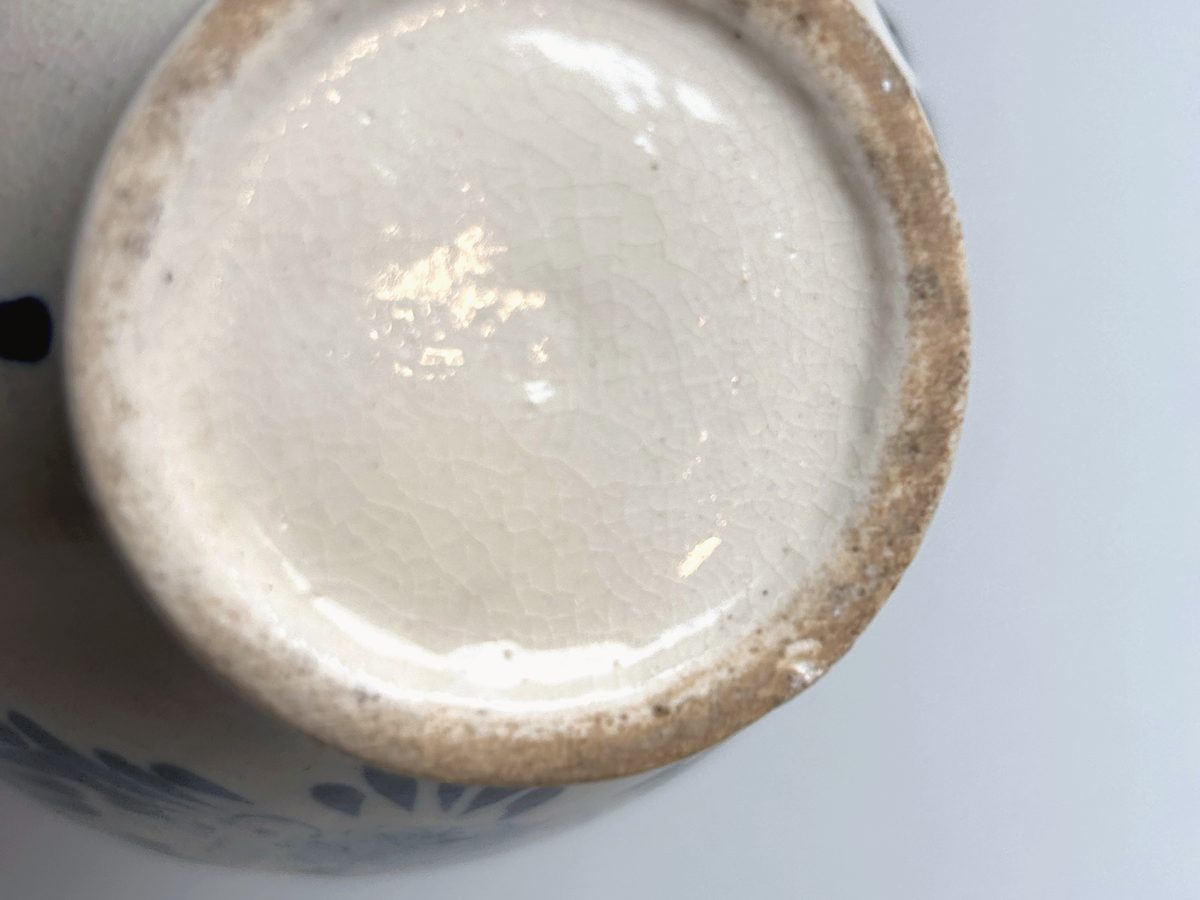
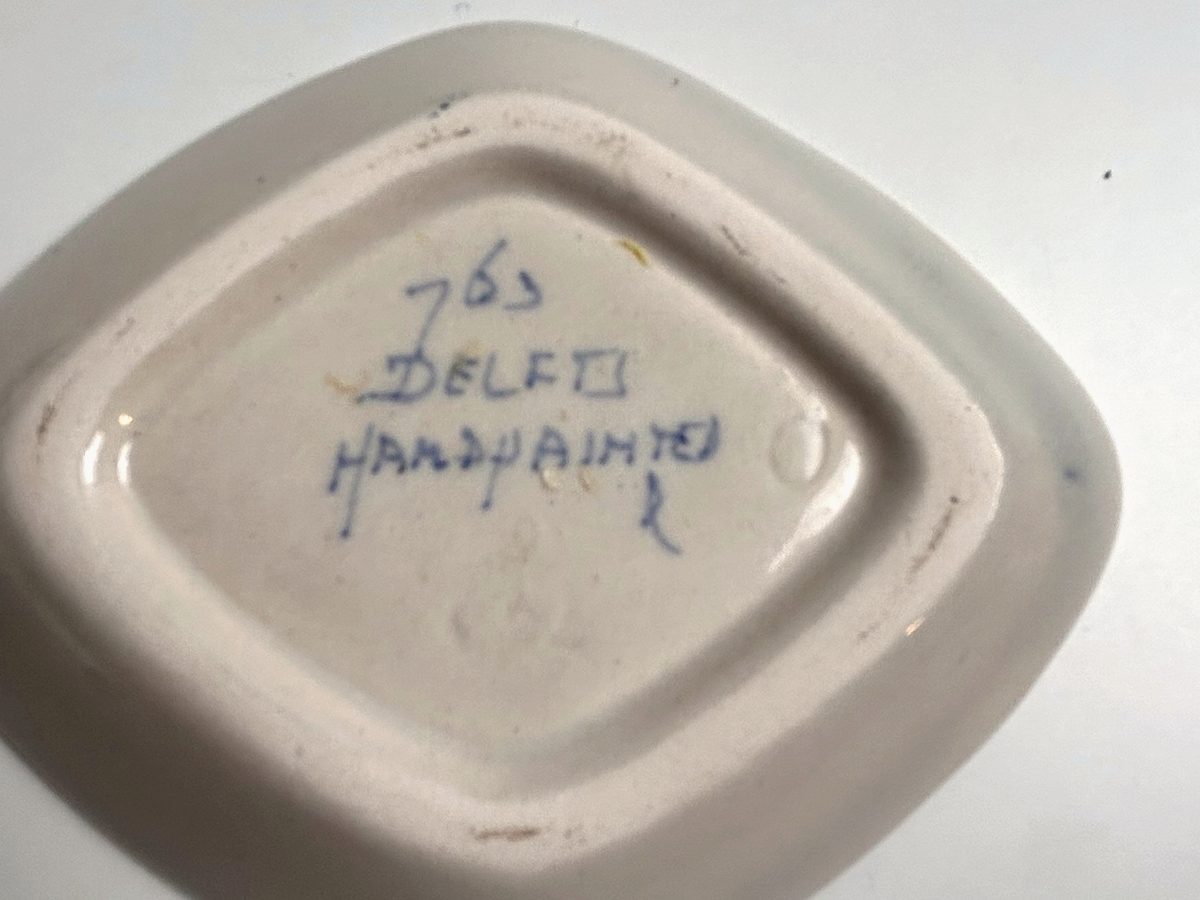
With vases and dishes, too, it pays to look underneath. The vase with the windmill medallion has no base mark at all, which is why its title says “Delft style”. The small dish at least carries “763 DELFT HANDPAINTED”. But even the word “Delft” on its own is no proof of a particular manufactory.

For comparison: the wall plate in the title image carries a complete mark with “Original Delfts Blauw”, RAAM, “handgemalt” and a signature. More on that in my post How to recognize valuable vintage items?
A famous pattern, an unknown maker
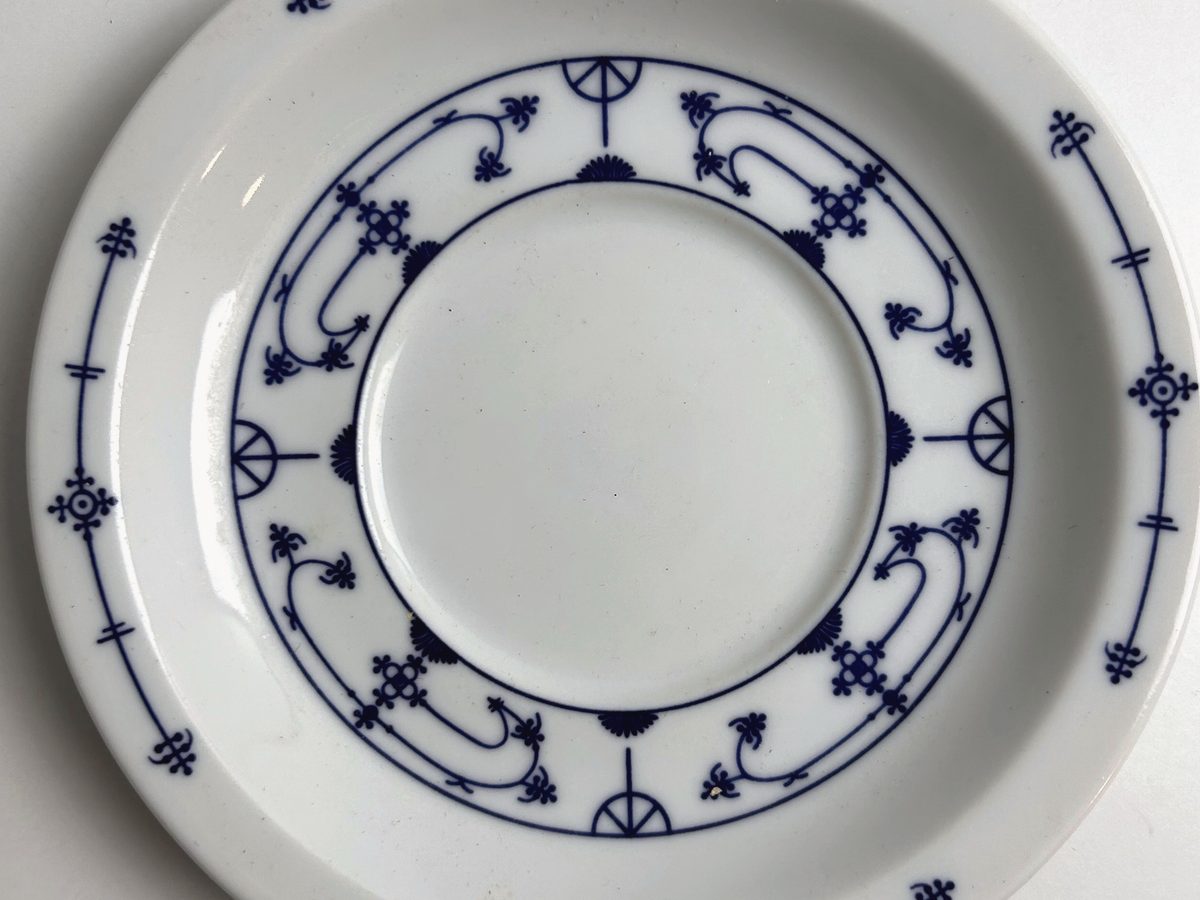
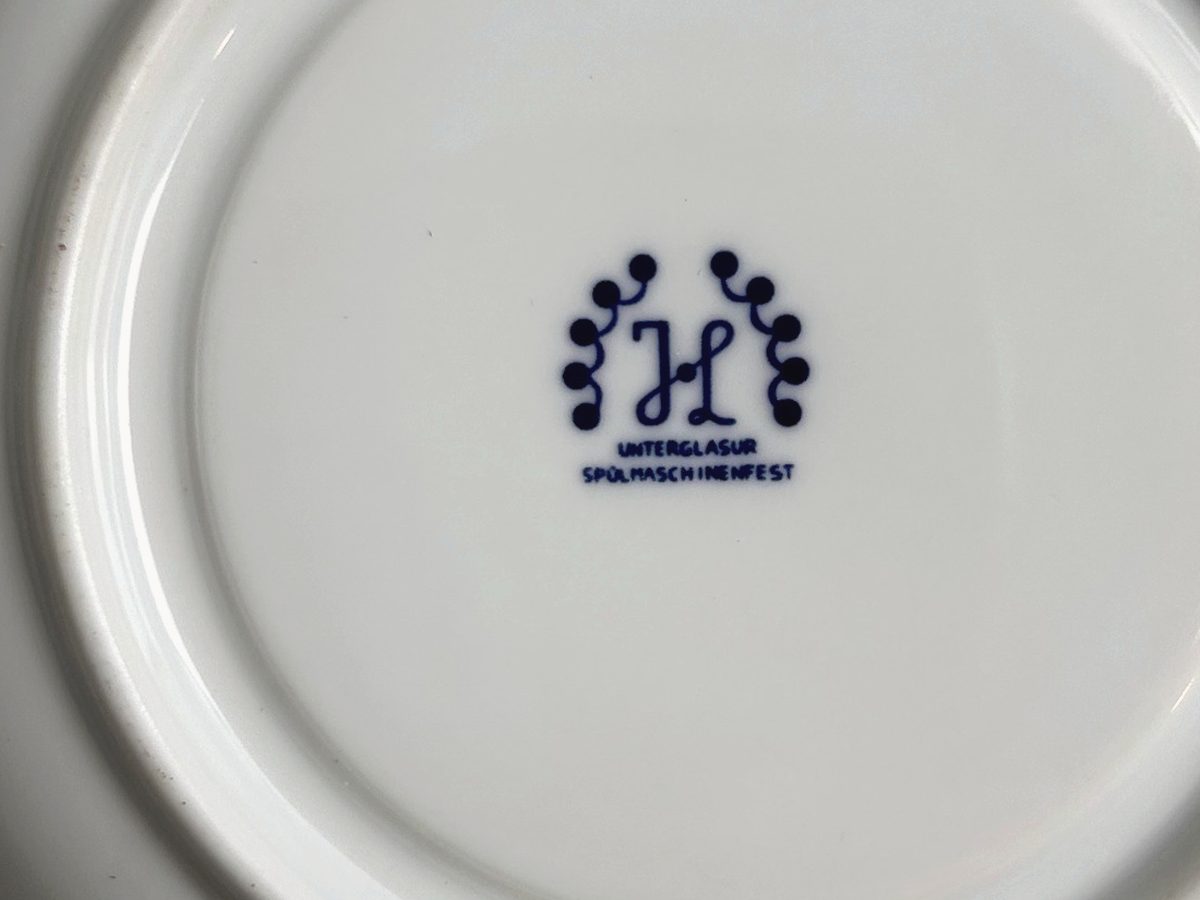
Famous decorations have been taken up by many porcelain factories. This saucer shows a cobalt blue decoration in the style of the straw flower pattern (“Strohblumenmuster”). On the base there is a J·L monogram in a ring of dots, plus “Unterglasur” (underglaze) and “spülmaschinenfest” (dishwasher safe). I have not been able to identify the maker.
That is why the description says “in the style of the straw flower pattern” and not the name of a famous manufactory. The pattern alone proves nothing. Only the mark tells you who made a piece.
A replica that says so
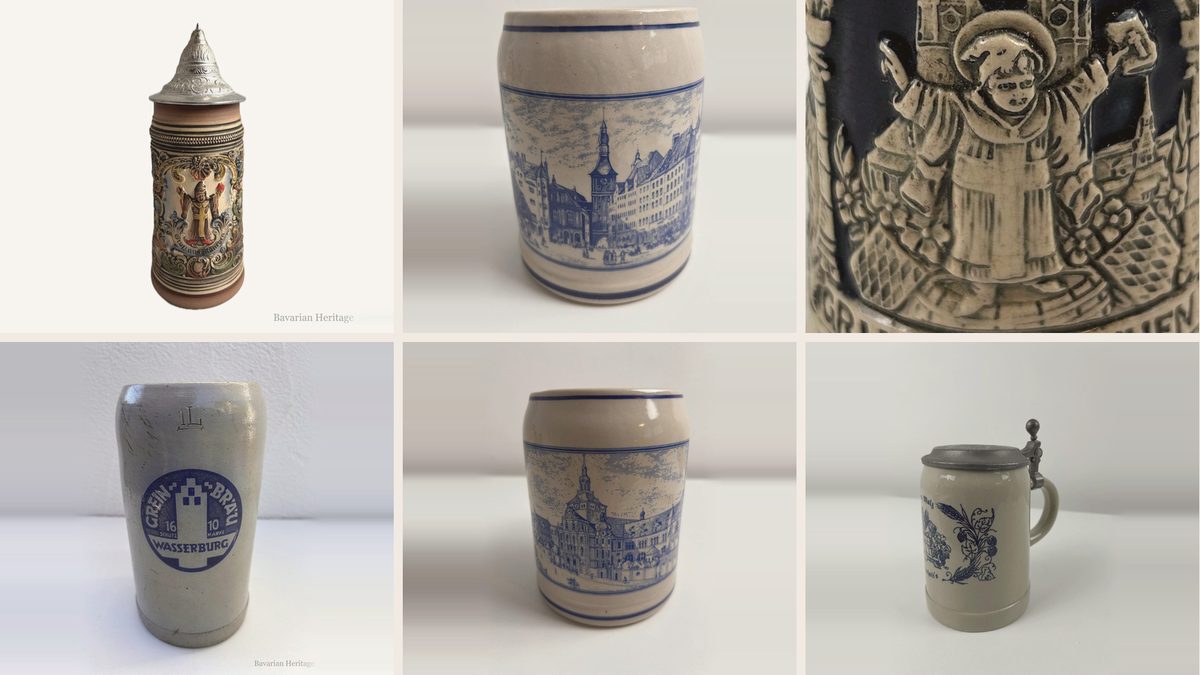
Sometimes the answer is already in the title. In my shop I listed a stoneware stein as a “detailed replica of a beer stein from 1890”. The model is old, the stein itself is not, and the title says exactly that. This is what an honest replica looks like. Had the title read “beer stein from 1890”, the very same replica would have become a deception.
Brushstroke or decal?
With painted ceramics, a magnifying glass helps. Hand painting shows brushstrokes, gradients and small irregularities, as here on the Delft wall plate. A decal is a printed transfer applied to the surface: even lines, often with fine printing dots and a visible edge. The colour picture on this souvenir stein from Garmisch-Partenkirchen, for example, was made this way.
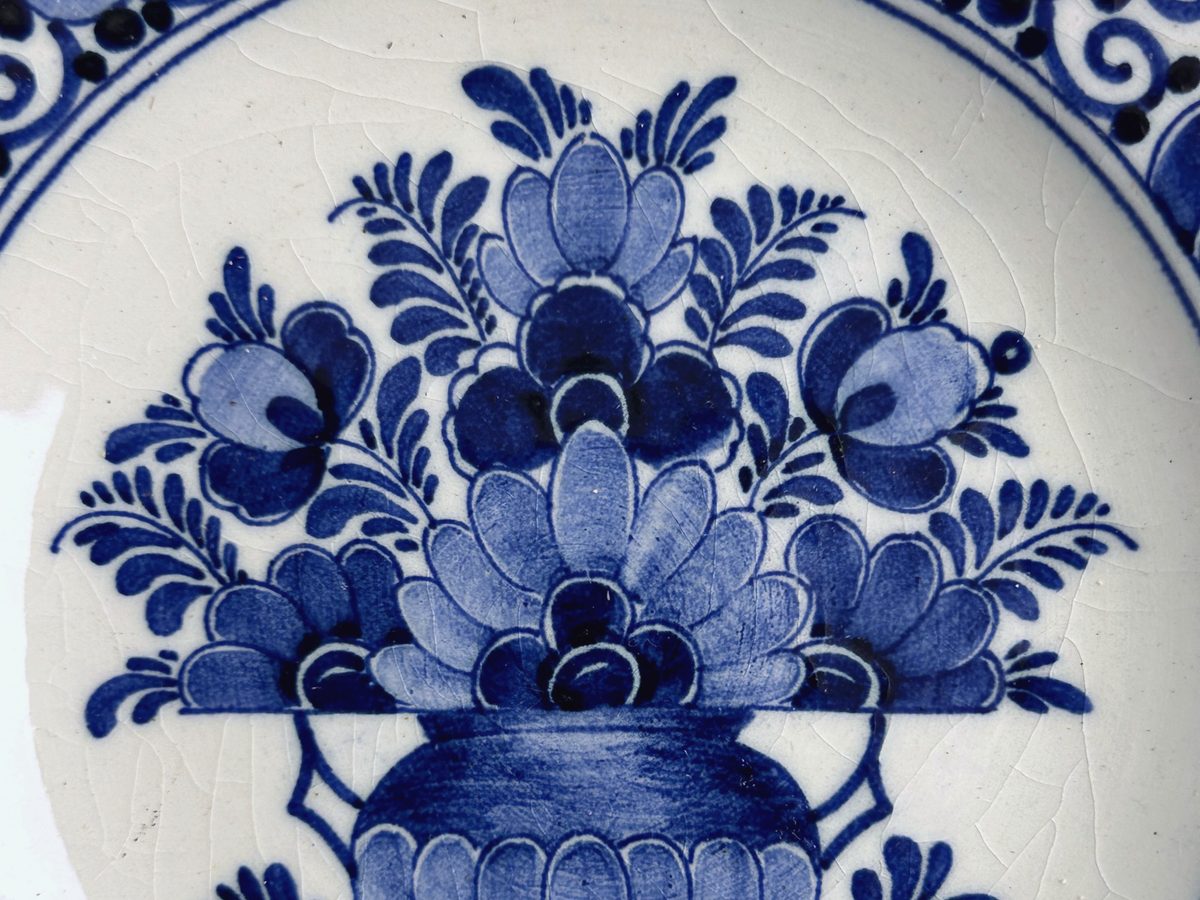
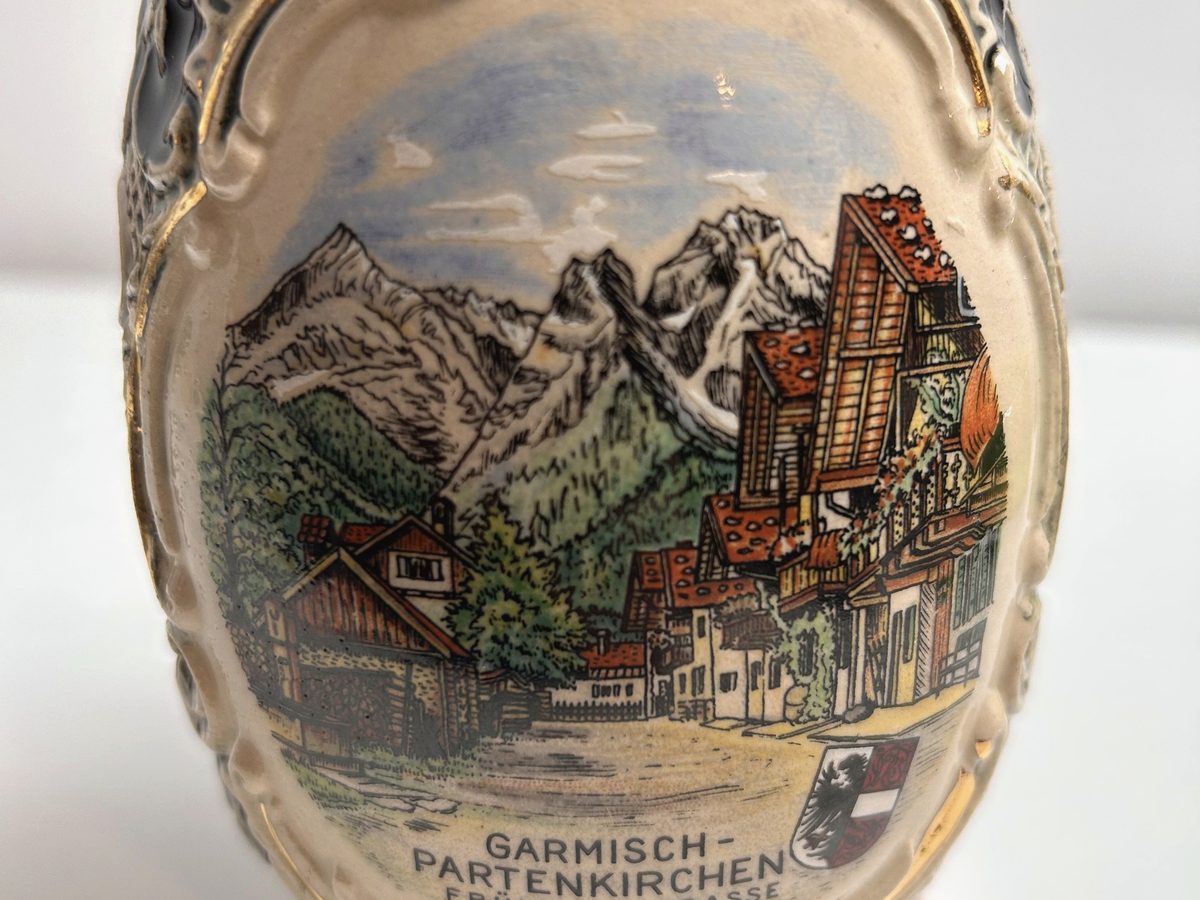
Both have their place. It only becomes a problem when a print is sold as hand painting.
My checklist
- Does everything fit together? Motif, mark, material and fittings should come from the same period.
- Take a missing mark seriously. No mark does not mean fake, but every attribution then remains a guess.
- Use a magnifier. Brushstroke or printing dots?
- Read the signs of wear. Genuine wear sits where a piece is handled and set down: on the foot ring, the handle, the lid.
- Pay attention to the wording. “In the style of”, “Delft style”, “replica” or “maker not identified” are not weaknesses of a description but signs of honesty. Be careful when big names are dropped without proof.
- Ask. Reputable sellers are happy to send more photos, including the underside. With me, a message is all it takes.
How age and classification fit together is explained in my post What is the difference between antiques and vintage items? All the pieces here come from my shop, in the product overview and in my Etsy shop.