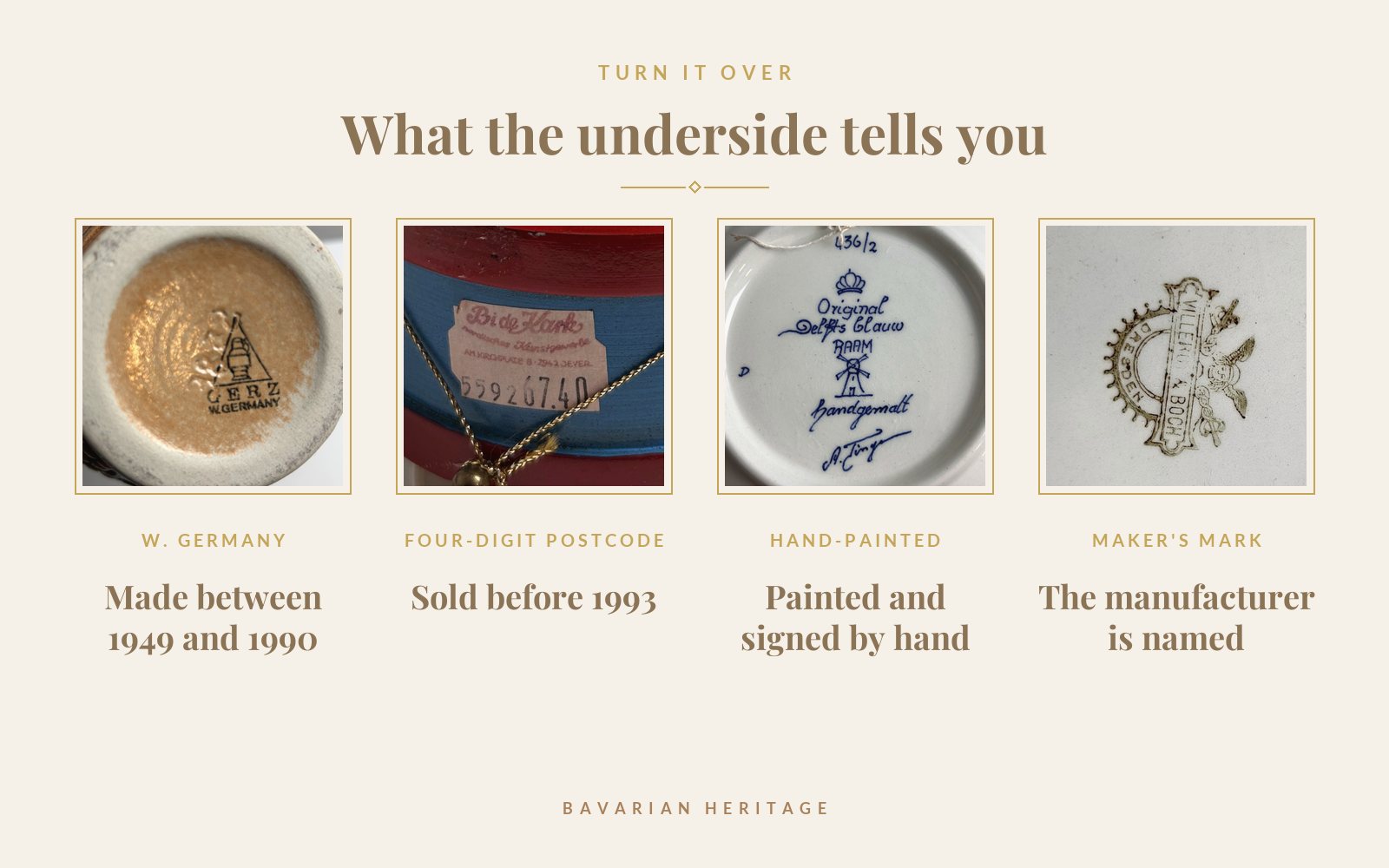
With every new find, the first thing I do is the same: I turn it over. The underside often reveals more than the front, namely who made a piece, roughly when, and whether by hand. Whether something is valuable is never decided by a single feature. But there are clues I look for on every piece. Here they are, with examples from my shop.
1. The mark: who made it?
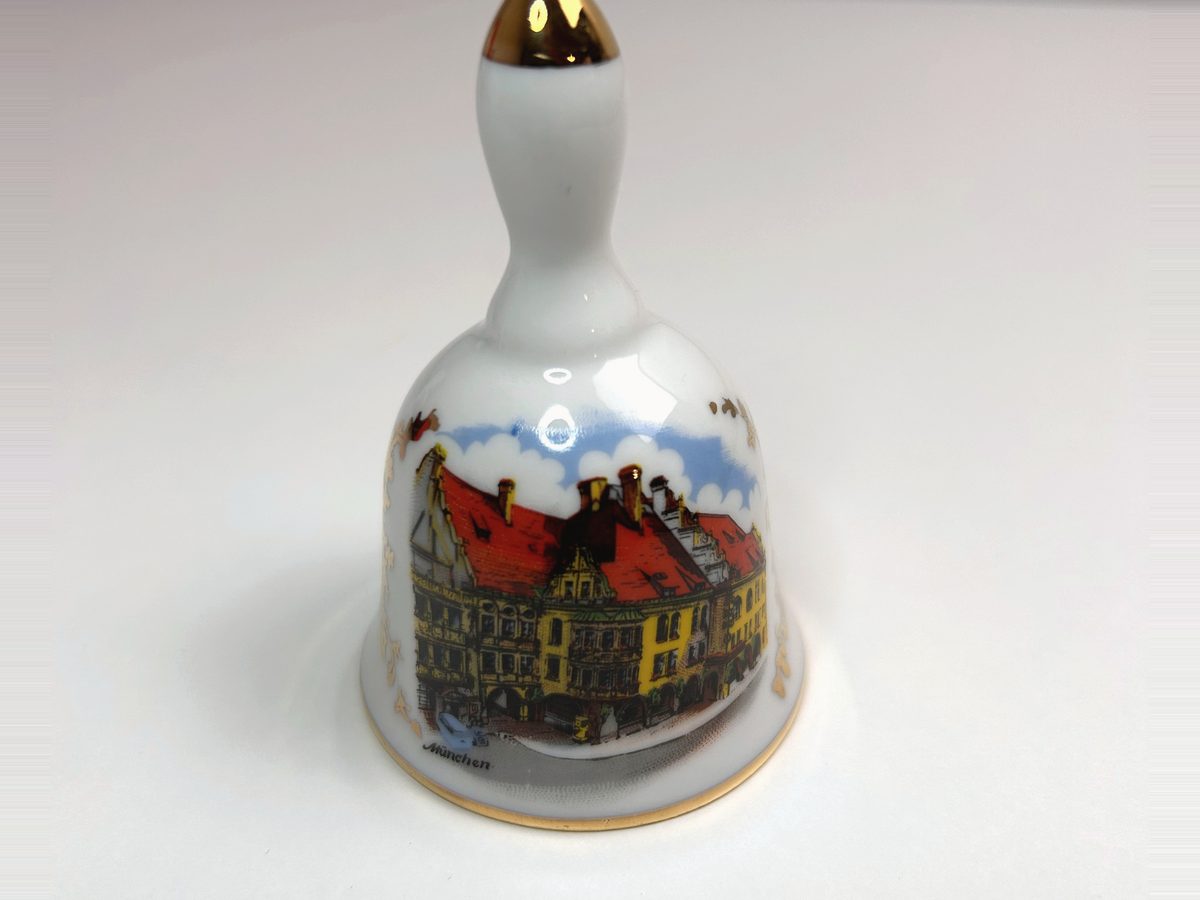
A maker’s mark makes a piece verifiable. Inside this porcelain bell with a view of Munich, the green mark gives everything you would want to know: the maker Kleiber, the town of Regnitzlosau in Upper Franconia, and the note “Handarbeit 22 Karat Goldauflage” (handmade, 22-carat gold decoration).

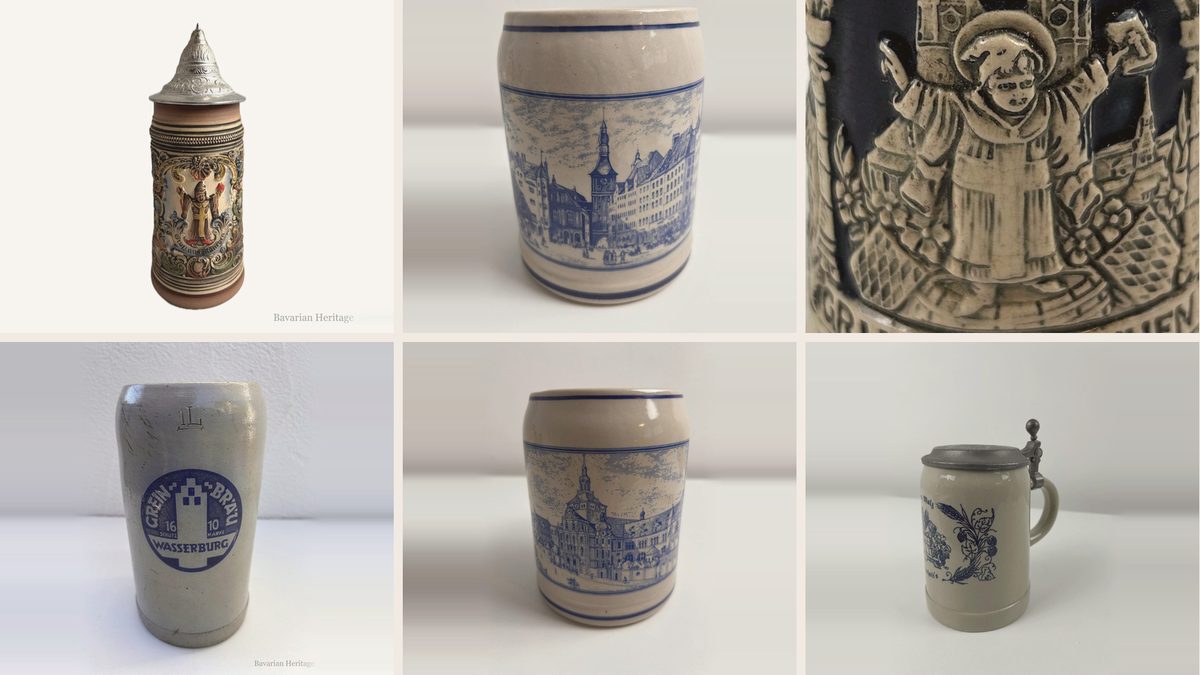
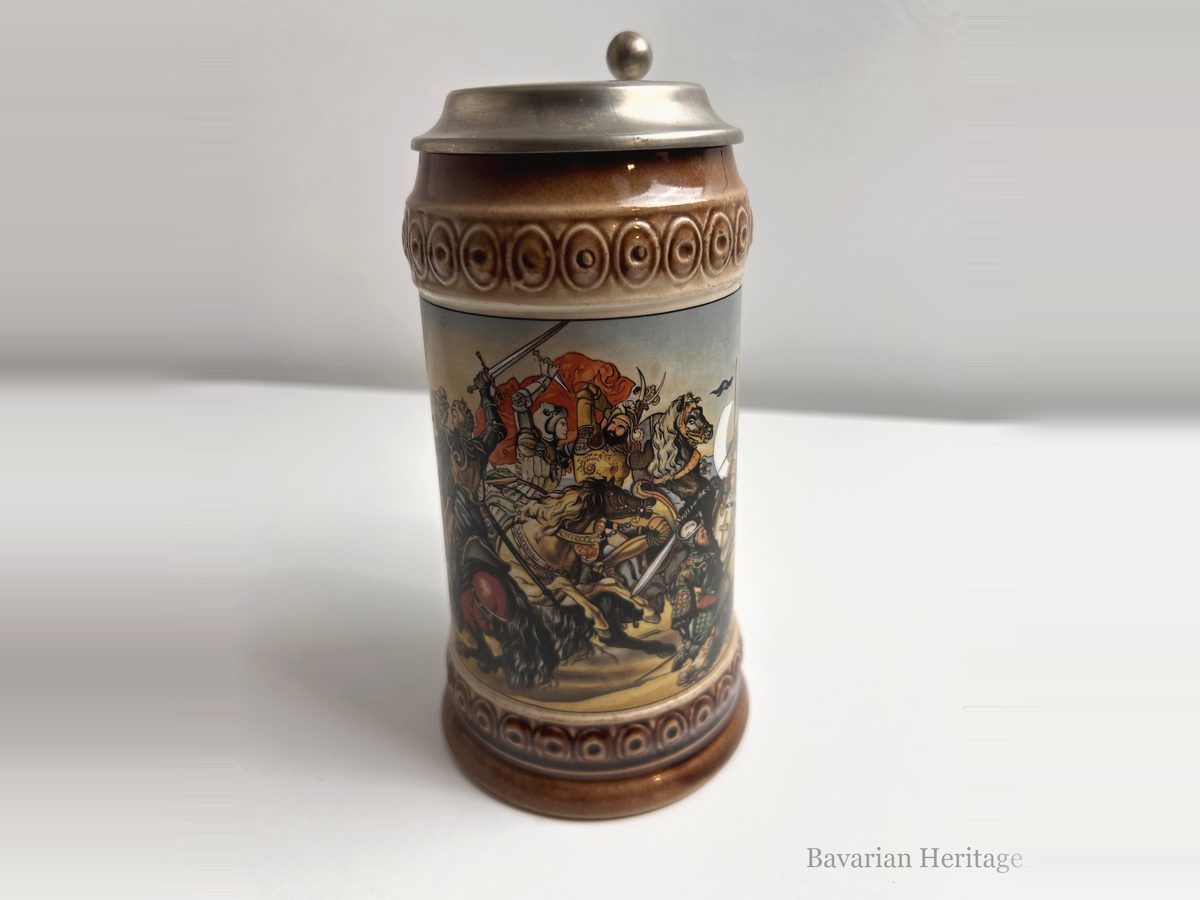
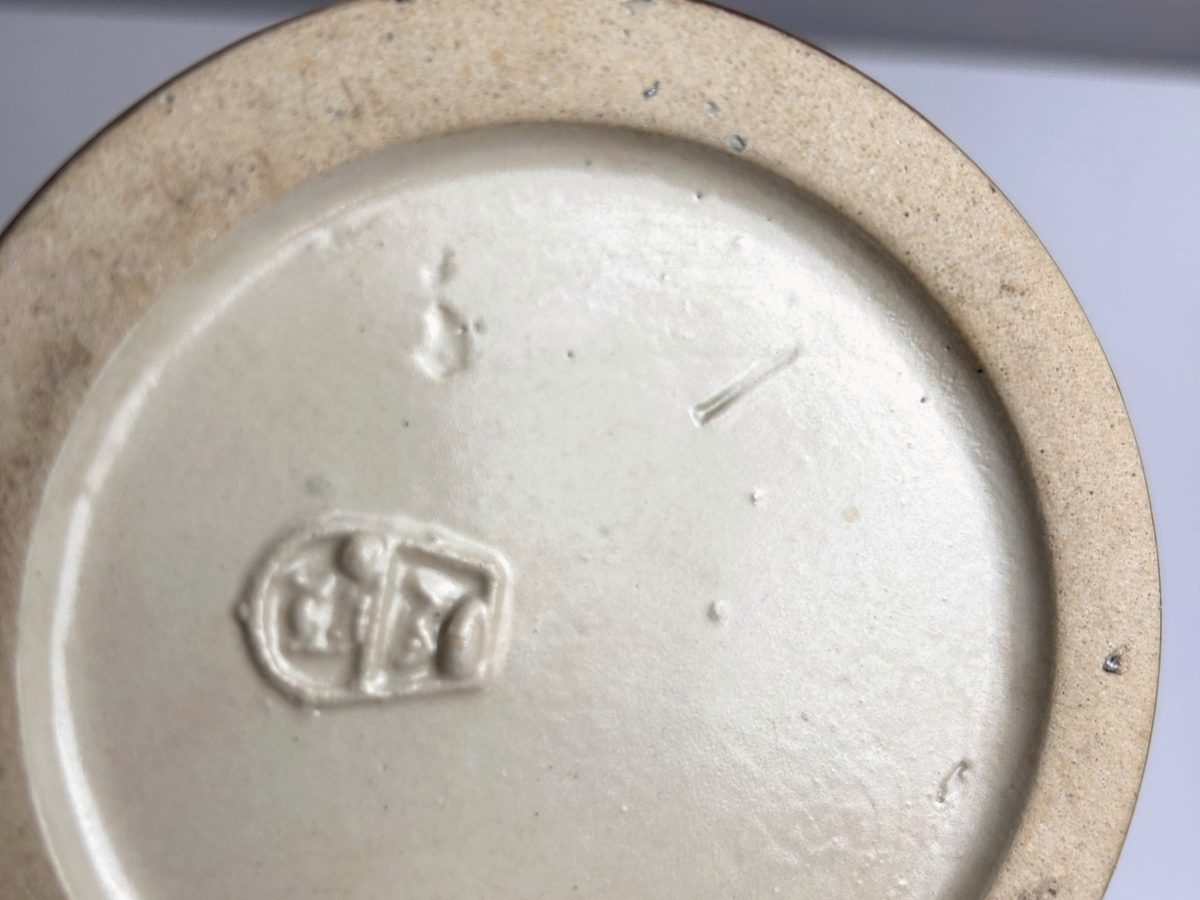
Not every mark is that easy to read. On the beer stein with the knights’ battle it is only impressed into the base and easy to miss: the sign of Marzi & Remy from Höhr-Grenzhausen in the Westerwald region.
And if there is no mark? Then that is exactly what I write in the description: “maker not stated”. A missing mark does not make a piece worthless. But it turns every attribution into a guess.
2. Handwork: painted or printed?
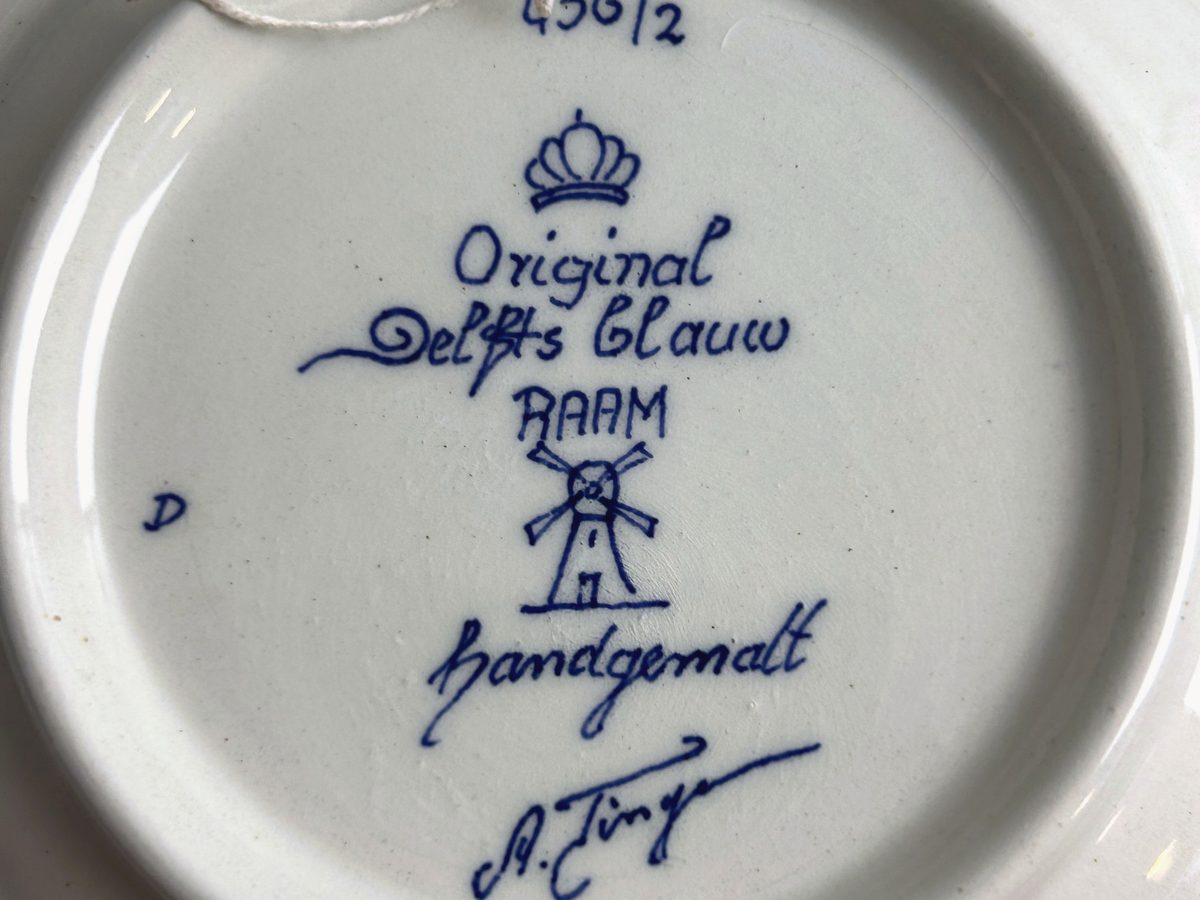
Hand-painted pieces show brushstrokes. The paint is thicker in some places and thinner in others, and no two flowers are alike. On the back of this wall plate it is also written in blue on white: “Original Delfts Blauw”, RAAM, “handgemalt” (hand-painted) and the painter’s signature.
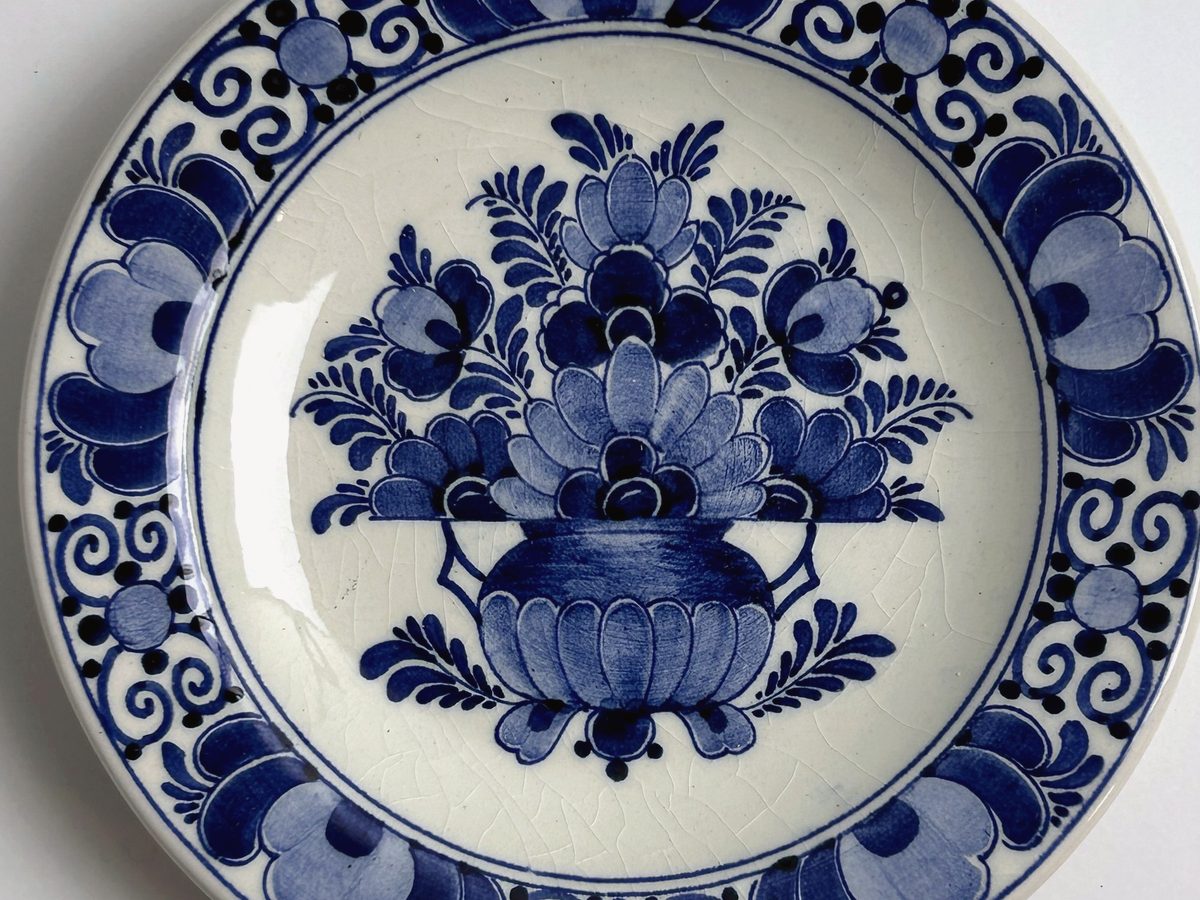
The counterpart is the decal, a printed transfer applied to the surface. Many lovely souvenir steins and porcelain bells are decorated this way, including the Kleiber bell above. That is not a flaw, but it is not painting either. How to tell the two apart is explained in my post How to distinguish fakes from genuine vintage products.
3. Dating clues: small details, lots of information
Most pieces do not carry a year of manufacture. Even so, their age can often be narrowed down:
- “W. Germany” or “West Germany” appears on pieces from the Federal Republic before reunification, in other words from between 1949 and 1990. The mugs and the wine jug by Gerz in my shop carry this mark.
- A four-digit postcode on a German label shows that a piece was sold before 1993. Since July 1993, German postcodes have had five digits.
- Year of printing, permission to print or a foreword date books. Examples are in my post What is the difference between antiques and vintage items?
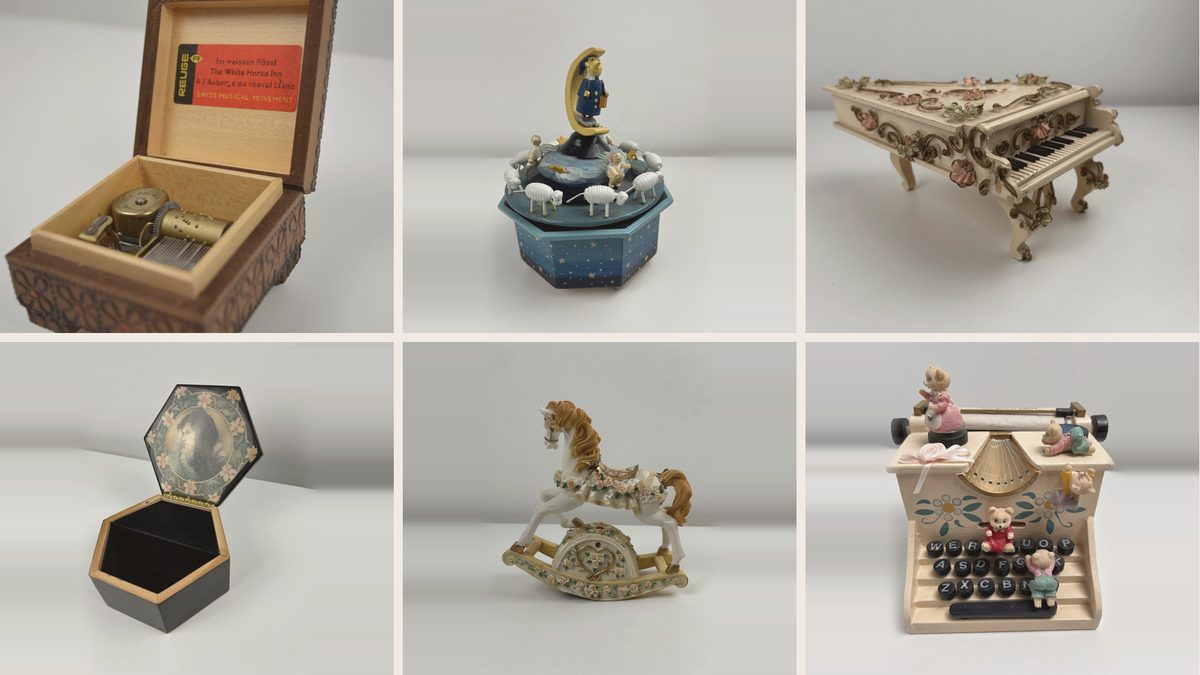
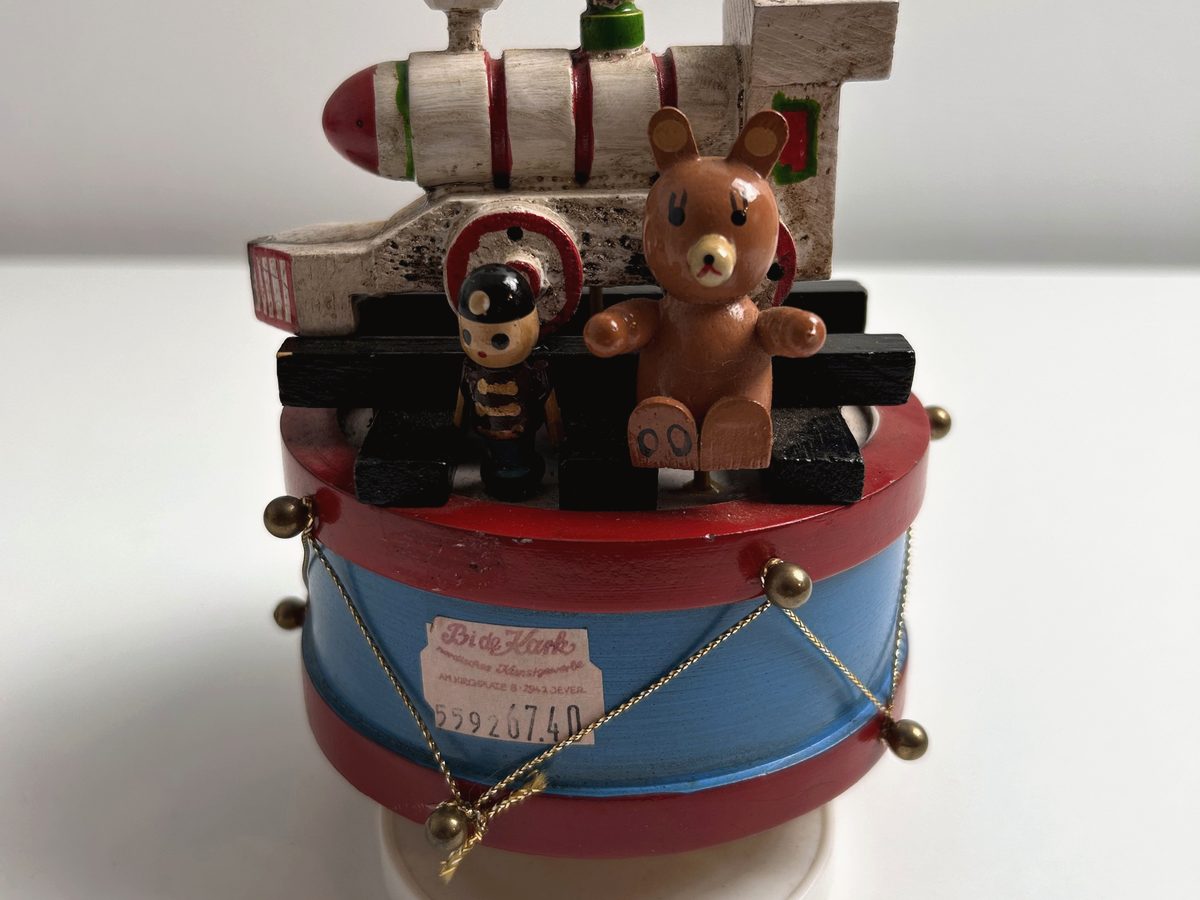
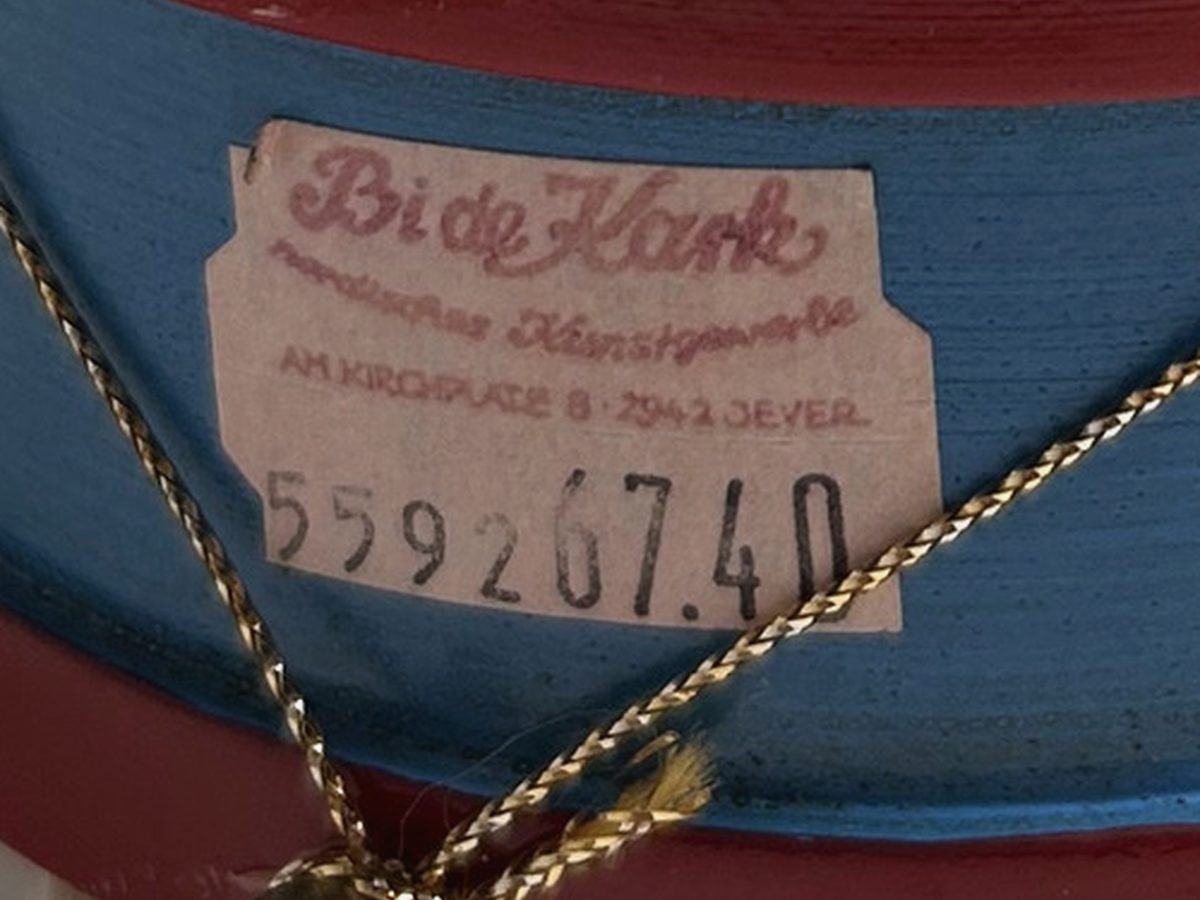
The original price label of a shop for Nordic crafts in Jever is still stuck to the drum of this music box, with the postcode 2942. The label does not say exactly when it was sold. The only certainty: before 1993. That is exactly what the description says.
Clues like these narrow things down; they do not date a piece to the year. Turning them into “around 1970” means making something up.
4. Condition counts too
Mark and age are only half the story. This oval platter by Villeroy & Boch has a good mark, but two cracks running from the rim into the centre. That makes it a lovely decorative or collector’s piece, but no longer one for serving food. That is why “damaged” is already in its title.
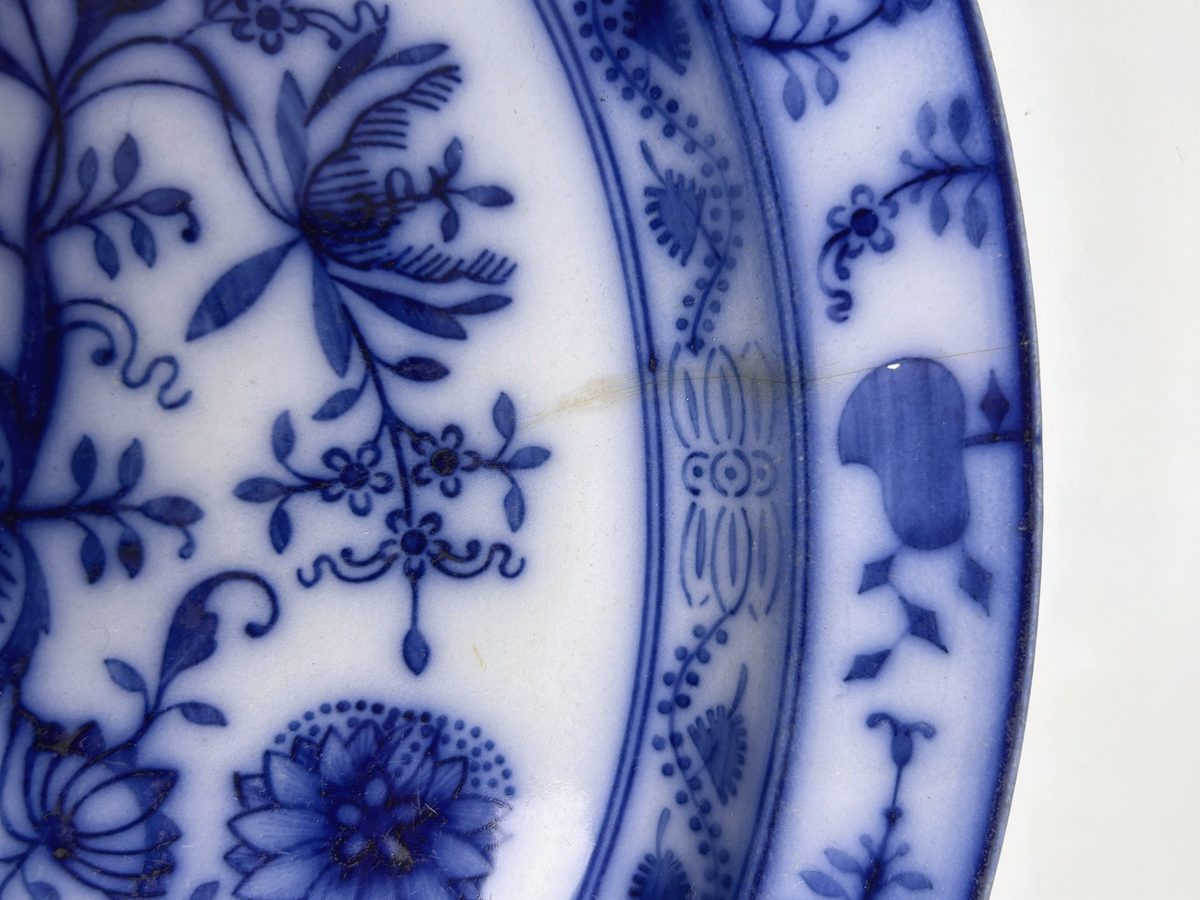
The same goes for anything mechanical: a music box whose movement plays is worth more than a silent one. How important it is to state defects clearly and near the top, I learned in my first year. You can read about it in My first year on Etsy.
5. An honest description is worth more
In the end, a piece’s value also depends on whether you can rely on its description. In 9 of the 45 reviews of my shop (as of June 2026), buyers say essentially the same thing: exactly as described. For example: “Excellent quality mug and exactly as described/pictured.” To me, that is the best compliment there is.
My checklist for a new find
- Turn it over: is there a mark, an impression, a label?
- Use a magnifier: brushstroke or print?
- Narrow it down: W. Germany, postcode, year of printing?
- Check the condition: cracks, chips, does the mechanism work?
- Classify honestly: is the age documented or estimated?
All the pieces in this post come from my shop. Some may already be sold, but new finds are added all the time: in the product overview and in my Etsy shop.