After 1945, modernism becomes fit for everyday use. What the Bauhaus and the Werkbund had thought up now arrives in series production in homes, offices and children’s rooms: clear forms, new materials, things that work and look friendly while doing so. You see this best not in design classics but in perfectly ordinary objects. Three areas, three examples from my shop.
Mid-Century Modern (c. 1945–1970): function with optimism
The style of the post-war decades combines clear lines with soft, organic forms. Wood stays visible, metal becomes slender, plastic joins in. And everything has to hold up in everyday life.
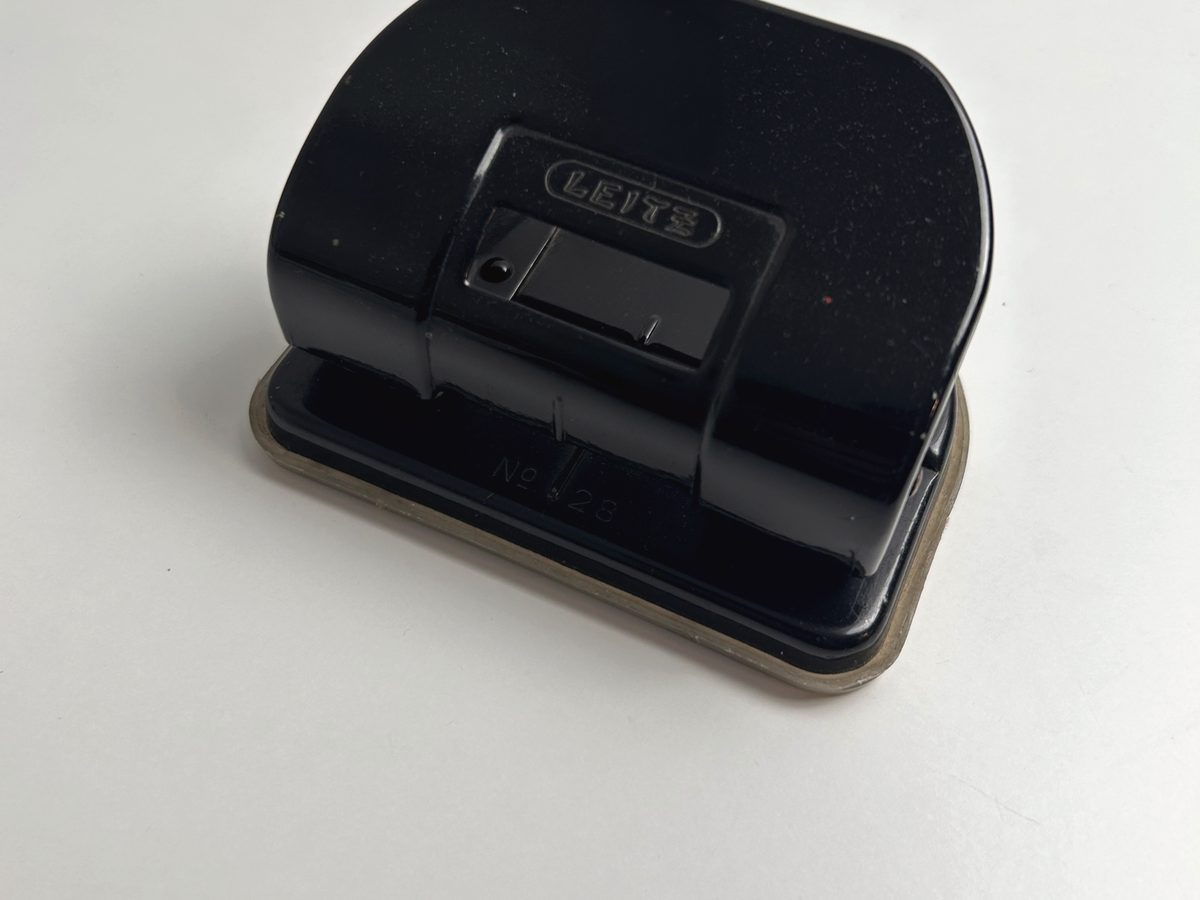
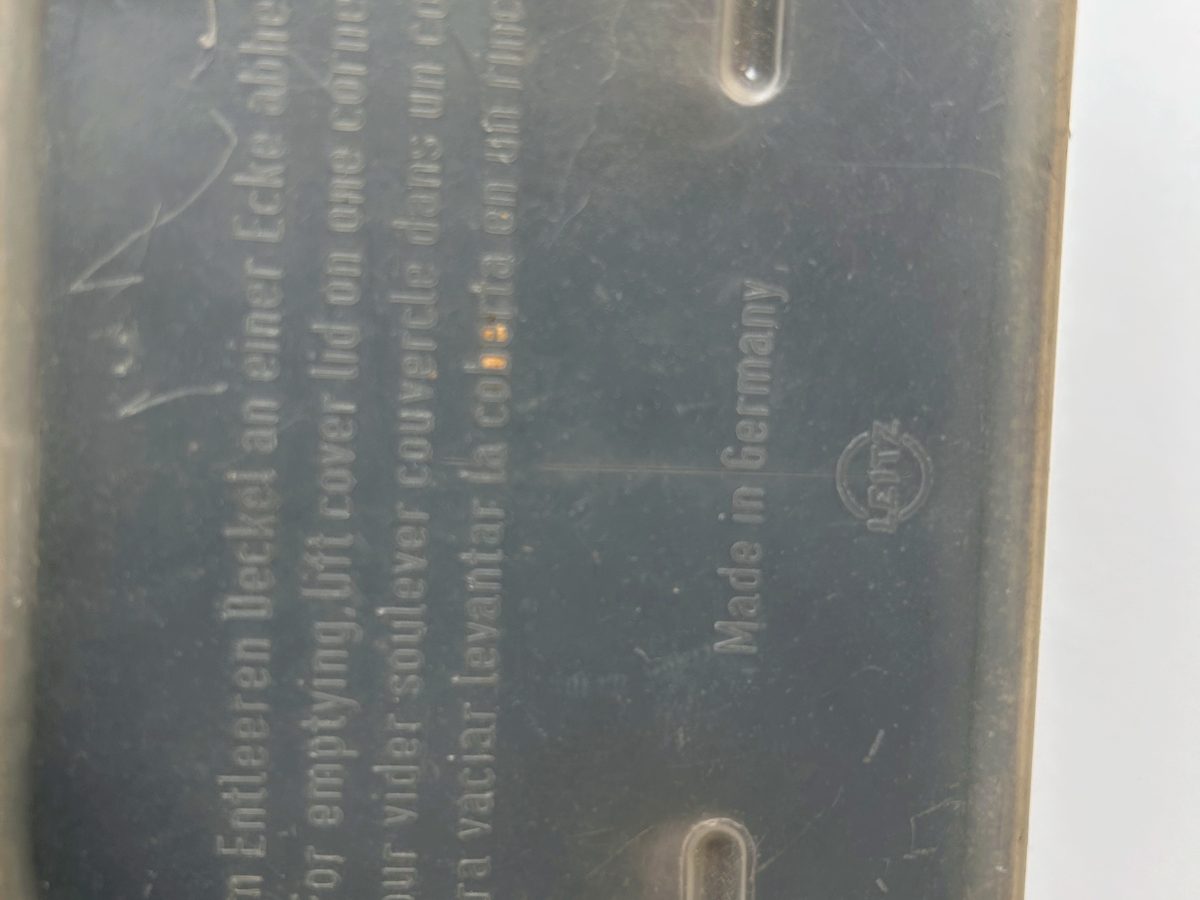
At the office. This flat two-hole punch, Leitz No. 128, has a transparent catch tray so you can see when it needs emptying. The instructions for that are printed in four languages, together with “Made in Germany”. A small detail that shows how many countries such office supplies were made for.
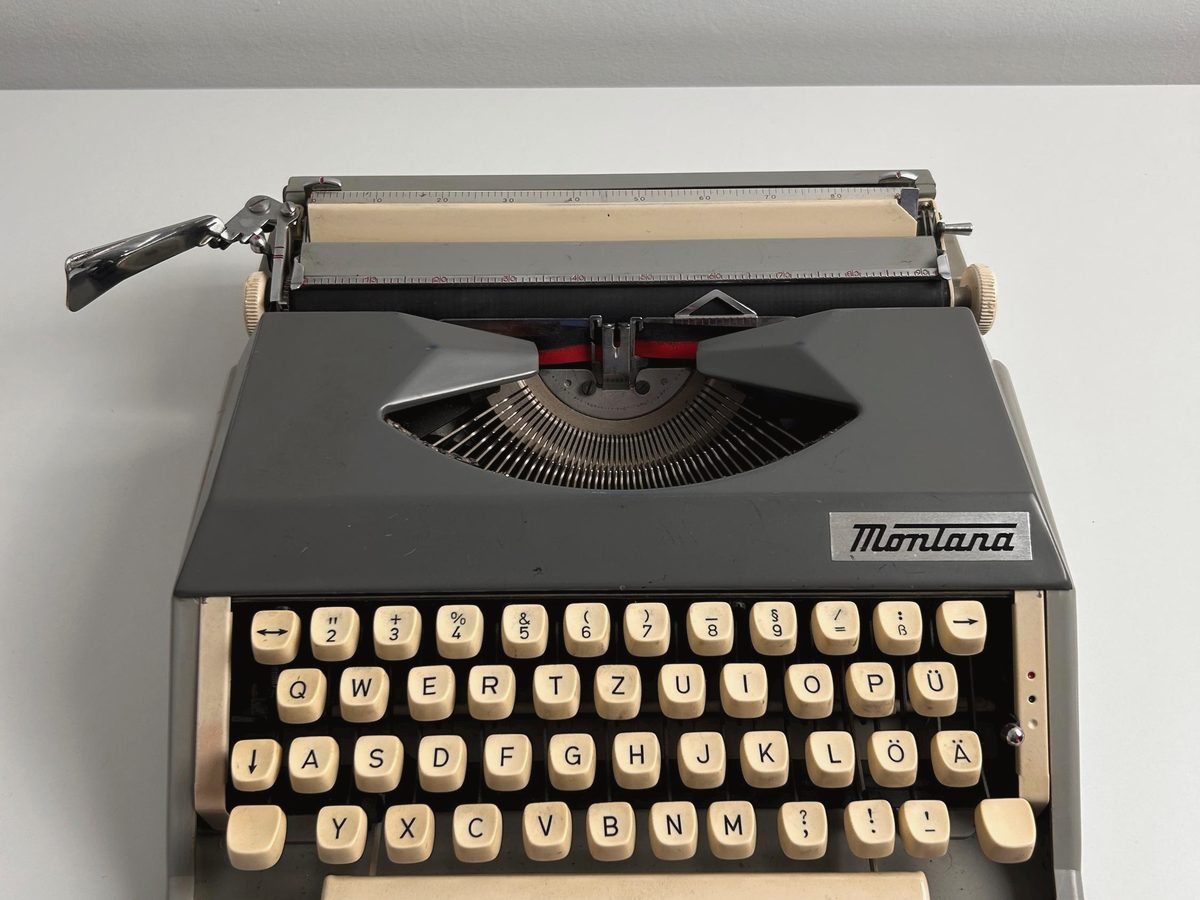
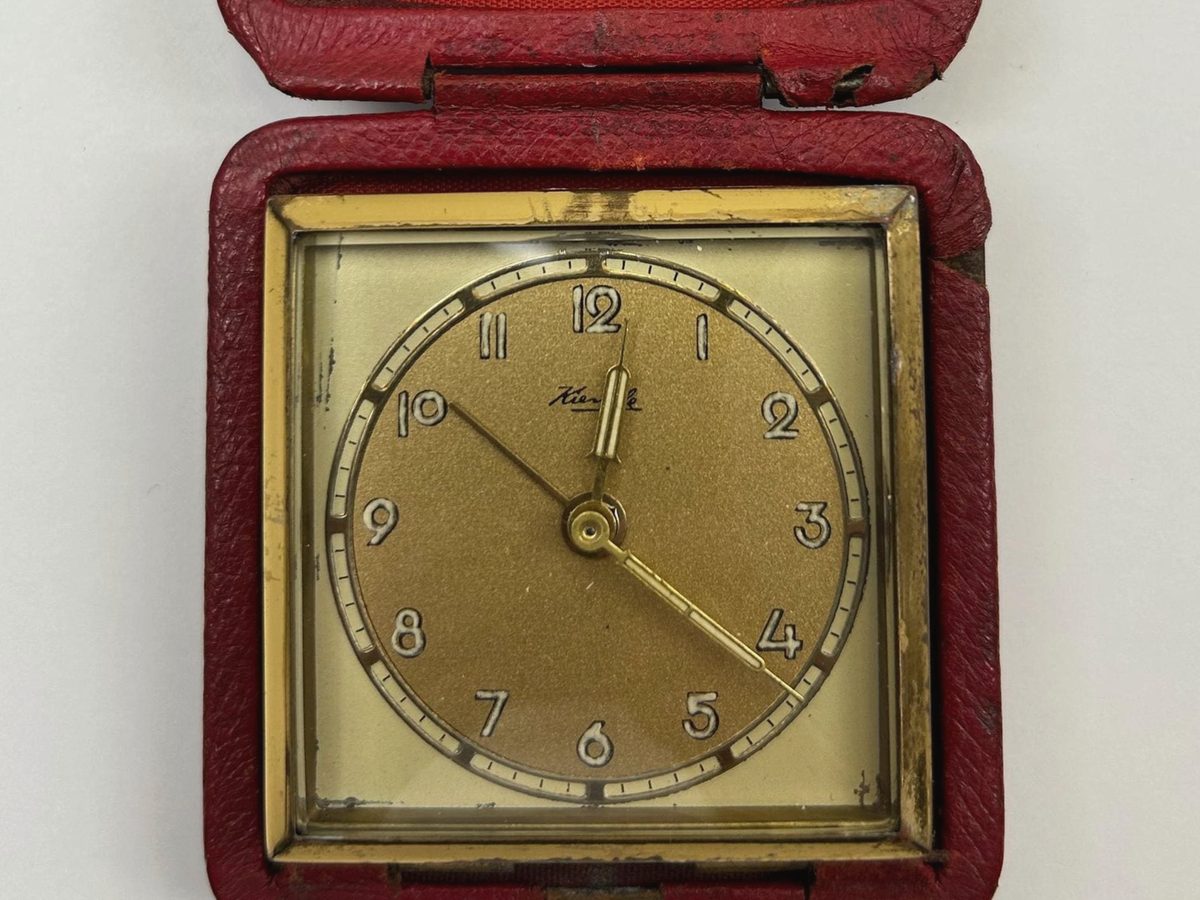
On the road. Portable typewriters like this Montana from the 1950s made writing mobile: compact, light and built to be carried. The same principle is found in the travel alarm clocks of the time, which I present in my post Vintage travel alarm clocks.
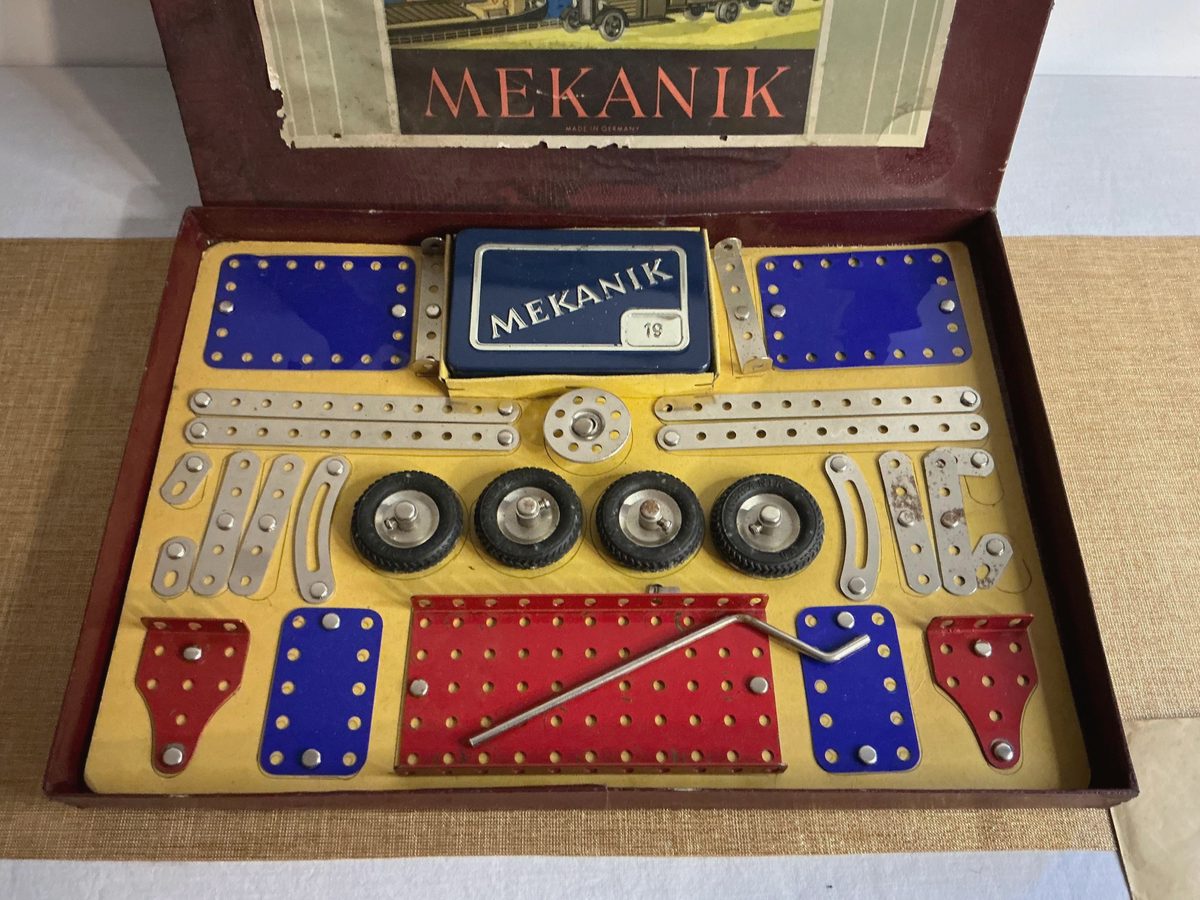
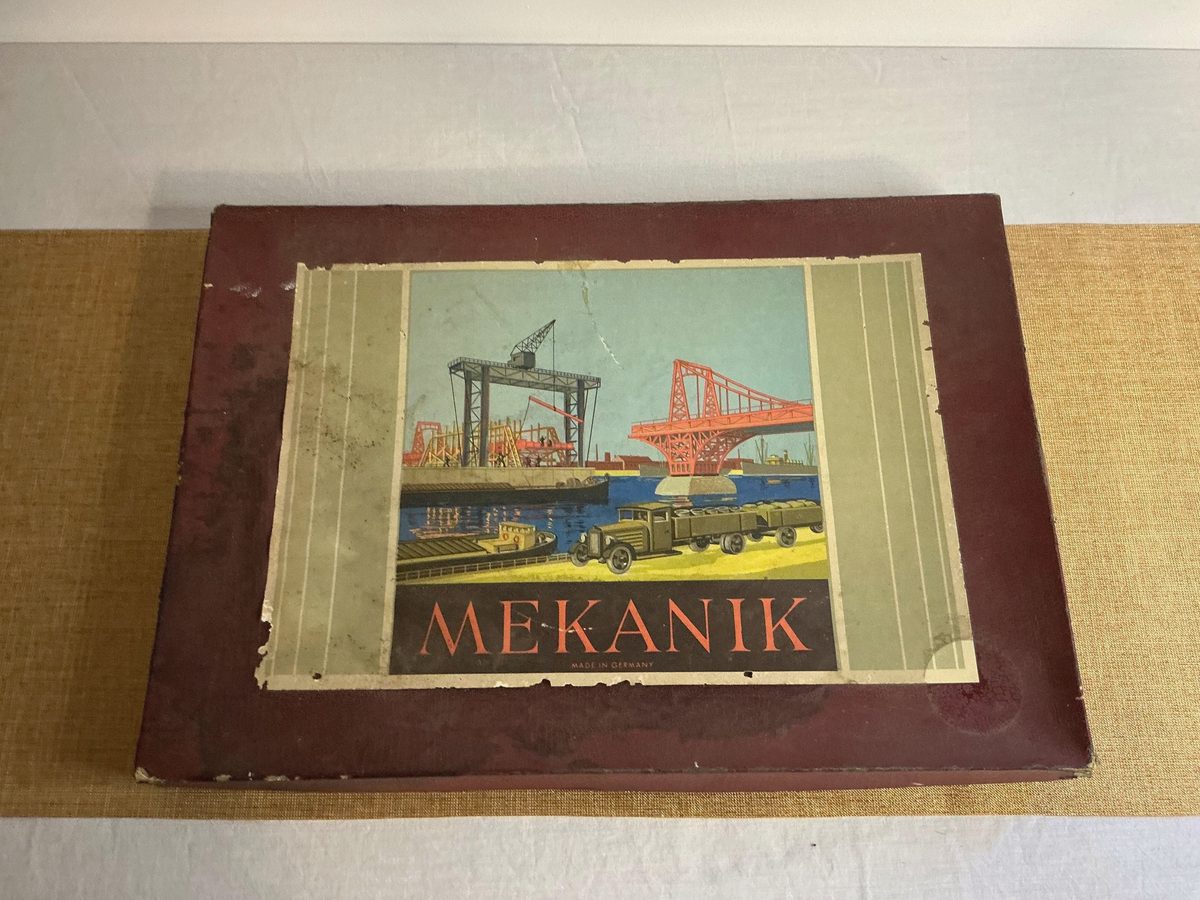
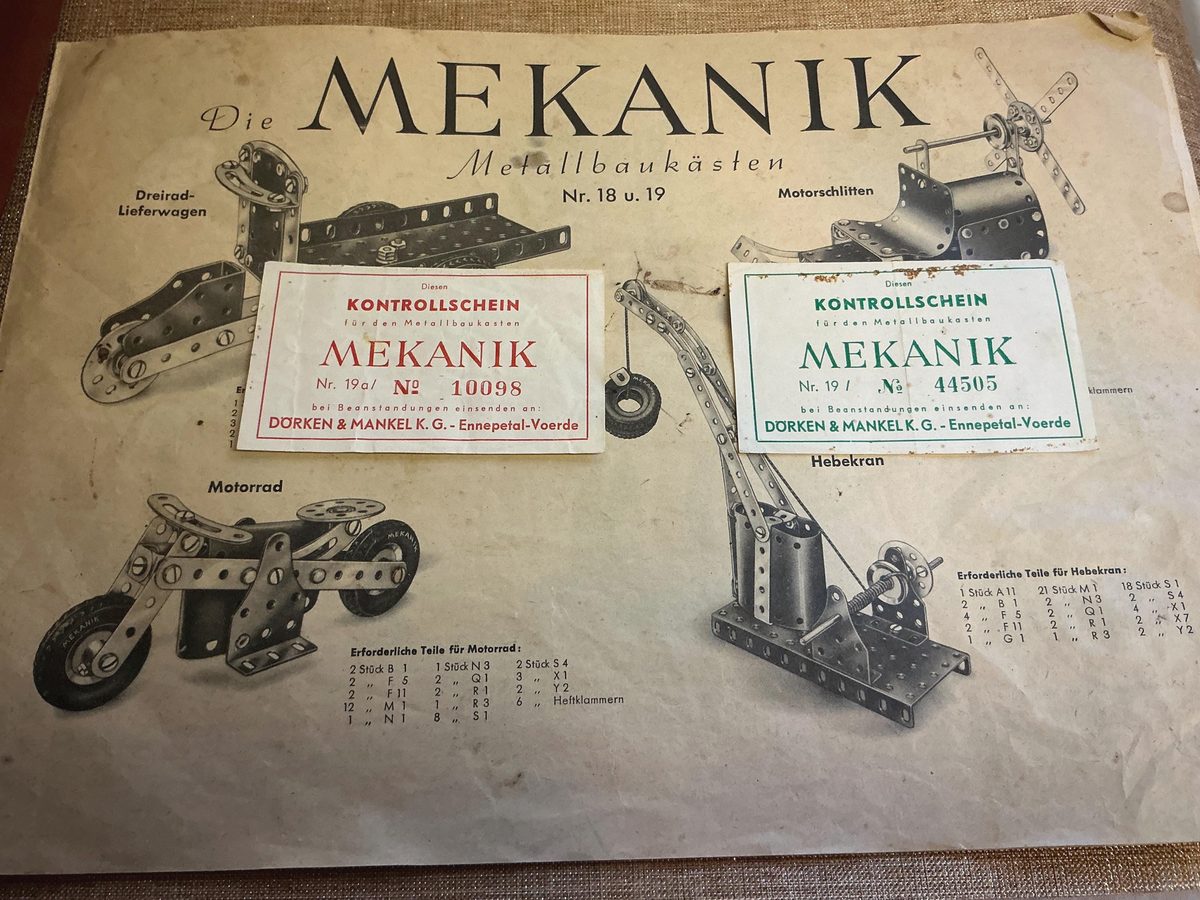
In the nursery. The “Mekanik” metal construction set from the 1950s is full of perforated strips, screws, wheels and plates. The model sheet shows what you can build with it: a crane, a three-wheeled delivery van, a motorbike. Toys that make technology tangible fit perfectly with the belief in progress of those years.
 View on Etsy ↗
 View on Etsy ↗
 View on Etsy ↗
Scandinavian design (c. 1950–1970): light and restrained
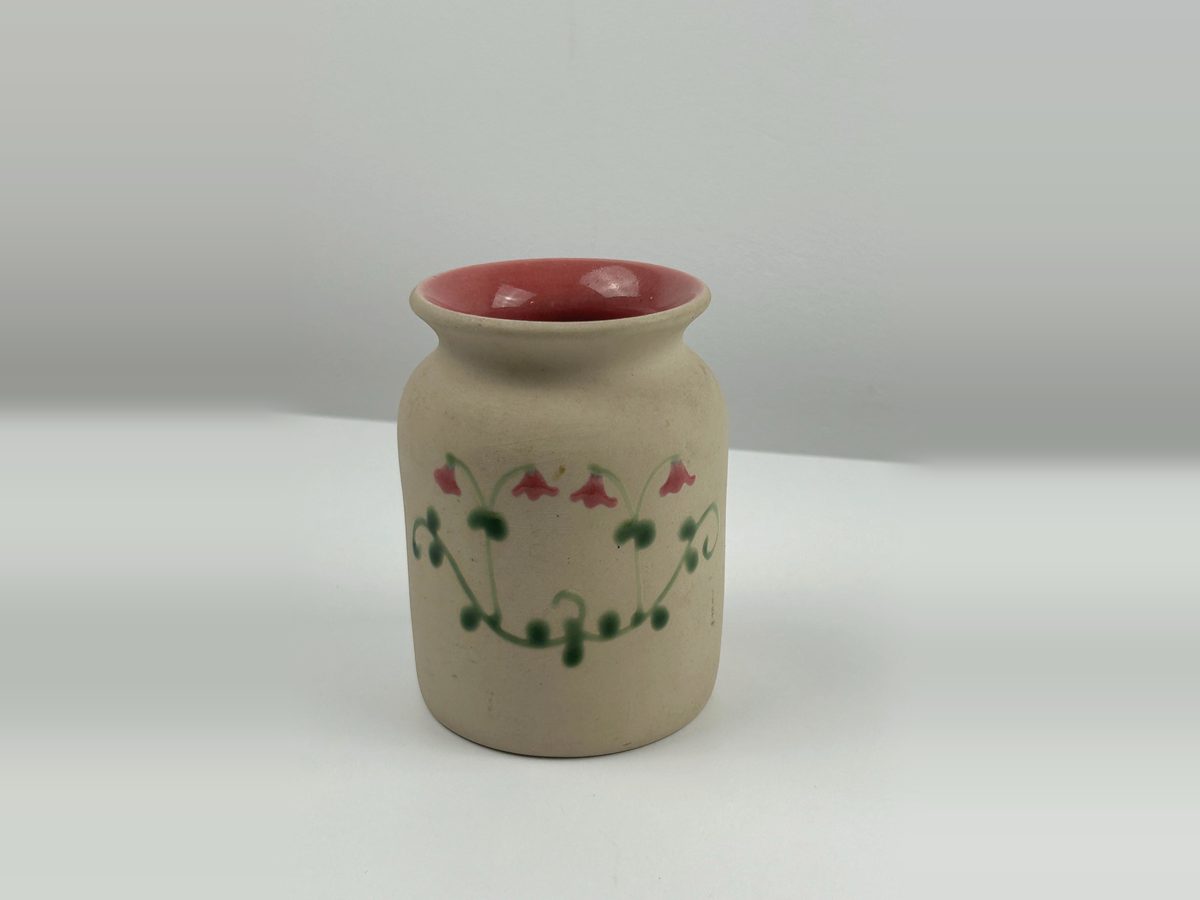
In these years, furniture and household objects came from Denmark, Sweden and Finland that are still regarded as the epitome of good design: light wood, simple forms, quality craftsmanship. Scandinavian design is rare in my shop. A small example is this stoneware pot by Gabriel from Sweden with painted flowers.
Space Age (c. 1965–1975): plastic and the future
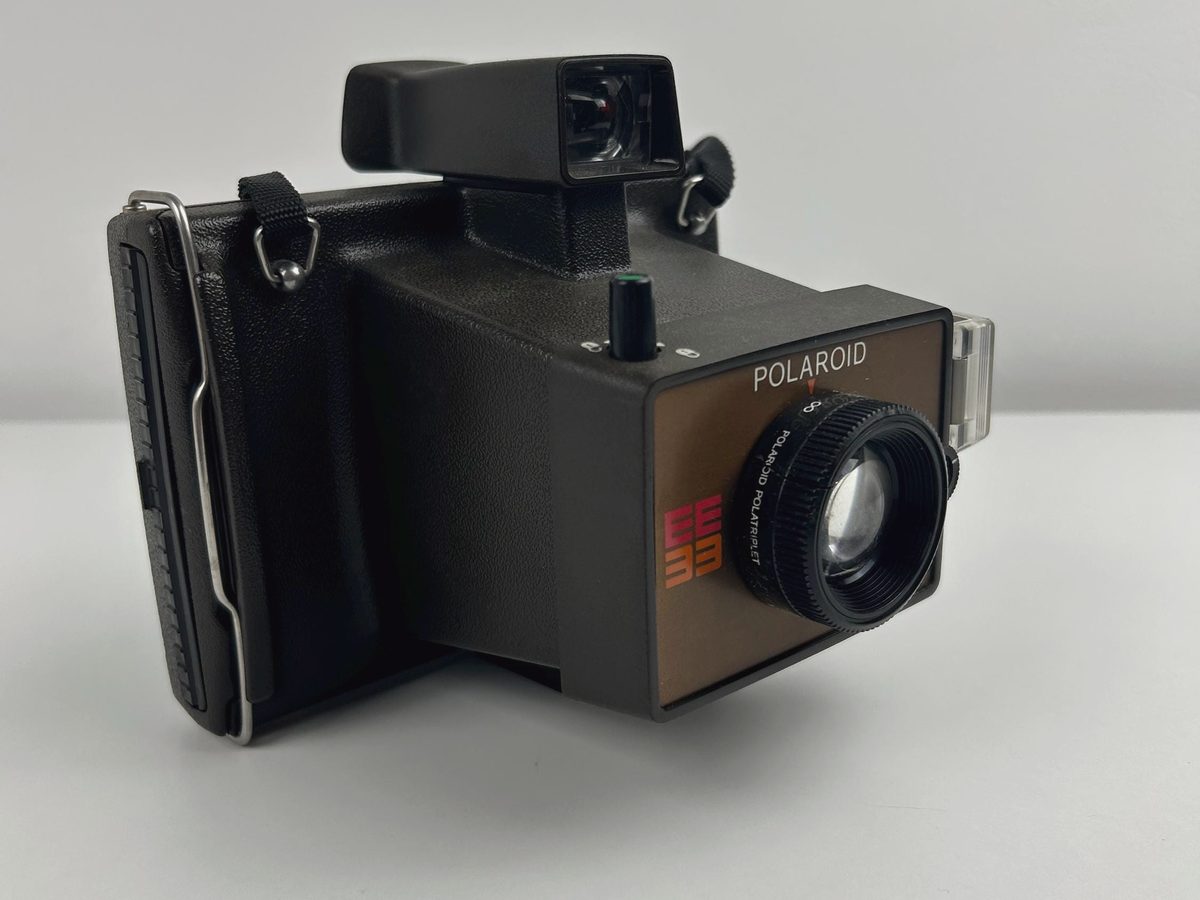
Space travel brought a new optimism into people’s homes: round, futuristic forms, strong colours, plastic as the material of the future. I have no genuine Space Age furniture in my shop. But an instant camera like the Polaroid EE 33 with its plastic body also shows how naturally plastic entered everyday life.
What remains
Post-war modernism did not want to impress; it wanted to make life easier. Perhaps that is why its everyday objects are so sought after today: they often still work, and you can see that someone thought about their purpose. More about the best-known style of the time is in my post Mid-Century Modern: The era that still shapes our living rooms today. What came before is described in The turn of the 20th century: nature and modernity.
Everyday design from my shop
Hole punches, typewriters, alarm clocks and toys from the decades after 1945 are in the product overview and in the Bavarian Heritage Etsy shop.